 How-to
How Do You Fix a Commercial Door Closer That Won't Close?
Last Updated: November 7, 2026
Quick Summary
Most door closer repair jobs come down to three things: loose fasteners, dry pivot points, and adjustment valves set wrong. Tighten the mounting screws, lubricate the arm and hinge pivots, then turn the sweep and latch valves a quarter turn at a time. A leaking closer can't be refilled and needs replacement.
- Wipe and inspect monthly, lubricate quarterly, and do a full inspection yearly on low-traffic doors.
- Never spray oil into the closer body because the hydraulic fluid inside is sealed.
- Turn the latch speed valve clockwise in small steps and test after each quarter turn.
- Slamming means the sweep speed is set too fast, so turn the sweep valve counterclockwise.
- A leaking closer has lost hydraulic fluid and needs replacement, not repair.
Table of Contents
- Start With a Safety Check and a Maintenance Schedule
- Step 1: Inspect the Closer Body, Arm, and Mounting Hardware
- Step 2: Clean and Lubricate Pivot Points, Fasteners, and Hinges
- Step 3: Check Door, Frame, and Closer Alignment
- How to Fix a Door Closer Not Closing All the Way
- How to Fix a Door Closer Slamming
- When a Hydraulic Door Closer Is Hard to Open
- Commercial Door Closer Oil Refill: What You Can and Can't Fix
- Start With a Safety Check and a Maintenance Schedule
- Frequently Asked Questions
Start With a Safety Check and a Maintenance Schedule
A commercial door closer that won't close is usually a door closer repair problem, not a death sentence for the hardware. On storefronts, a closer that won't close often just needs adjustment or a quick clean, not a full replacement.
Before you touch anything, run a safety check. Prop the door open and confirm it won't swing free. Check for pinch points near the arm, and keep hands clear of the arm's scissor action while the door is in motion.
Then set a schedule by usage level rather than a single calendar. Facility maintenance often tiers the interval to traffic:
- Low traffic (under about 50 cycles a day, such as a back office door): wipe and inspect monthly, lubricate quarterly, full inspection yearly.
- Moderate traffic (roughly 50-200 cycles a day, such as a retail entrance): wipe and inspect every two weeks, lubricate quarterly, full inspection twice a year.
- High traffic (over about 200 cycles a day, such as a main street entrance or vestibule): inspect weekly, lubricate monthly, full inspection quarterly.
Write down what you find each time, with the date, the closer model, the adjustment valves you touched, and any symptom you noticed. A dated log does two things: it shows a slowly failing closer before it strands a door, and it gives a service technician or inspector a maintenance record.
What You'll Need Before You Touch the Closer
Gather these first so you're not running back and forth:
- Screwdriver set, including the right bit for the mounting screws
- Adjustable wrench
- Clean rags and a mild cleaner
- Light machine oil or silicone spray for pivot points
- Flashlight
- Manufacturer's adjustment instructions for your closer model
- A photo of the closer body and arm before you start
If you don't know the closer model, snap a photo of the body before you start. Most adjustment valves are labeled, and the manual tells you which valve controls sweep, latch, and backcheck. Model matters: a surface-mounted closer, a concealed overhead closer, and a floor-spring closer each adjust differently, and the arm type (regular, parallel, or top-jamb) changes which valve does what. If the label is missing, match the body shape and mounting pattern to the manufacturer's catalog before turning any valve.
Watch out: on a fire-rated door, do not remove the closer or its arm to make the door easier to open. That disables the door's self-closing function and can violate the assembly's listing.
Step 1: Inspect the Closer Body, Arm, and Mounting Hardware
Start with your eyes, not your tools. Look for oil streaks on the closer body and floor, which point to a leaking seal. Check the arm assembly for bends or cracks. Then test every mounting screw and fastener by hand.
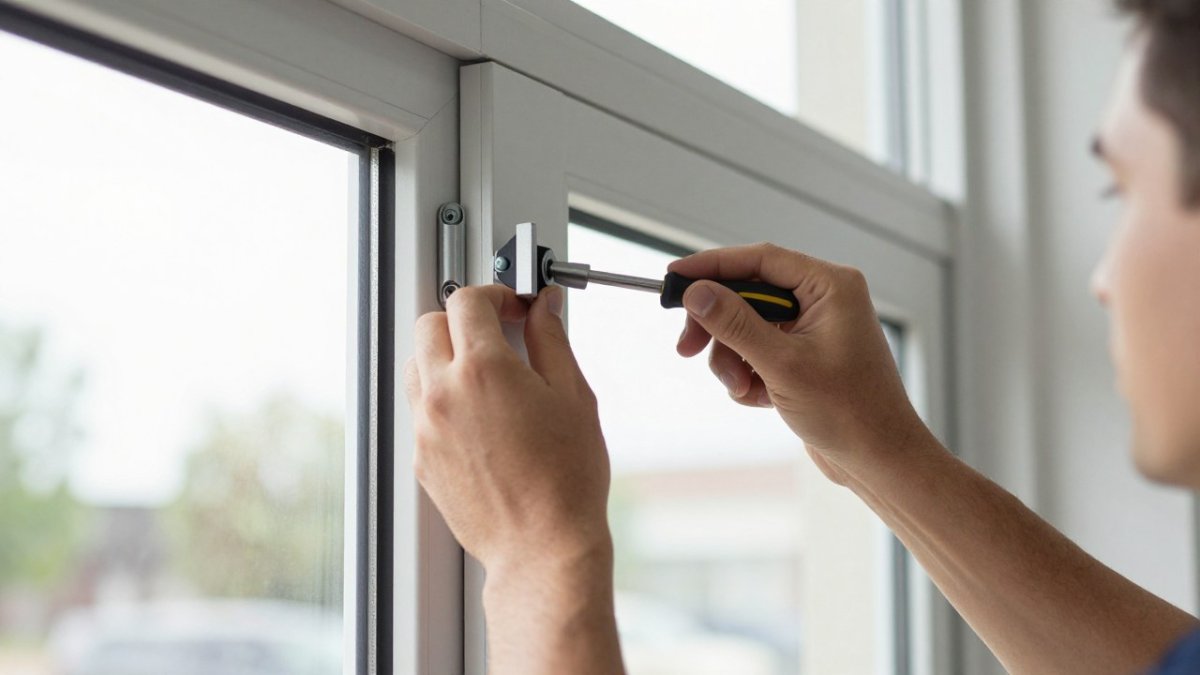
A loose mounting bracket is one of the most common causes of a door that drags or fails to latch. Tighten any loose fasteners, but stop if a screw spins freely.
If the inspection turns up worn or damaged hardware, our guide to commercial door hardware installation walks through what professional replacement involves.
Step 2: Clean and Lubricate Pivot Points, Fasteners, and Hinges
Dirt and dry pivot points cause most binding and dragging complaints. Wipe down the closer arm, the arm assembly, and the door hinges with a clean rag. Then apply a light machine oil to the pivot points on the arm and the hinge pins.
A few rules that save you trouble:
- Don't over-lubricate. A thin film is enough. Excess oil attracts dust.
- Never spray oil into the closer body. The hydraulic fluid inside is sealed.
- Check the latch and strike plate. A dry latch or misaligned strike makes the door stick even when the closer is fine.
After lubricating, open and close the door several times. It should move smoothly with no grinding or catching.
Step 3: Check Door, Frame, and Closer Alignment
A closer can't fix a door that's out of alignment. Open the door halfway and let go. If it drifts on its own, the hinges, pivots, or frame are pulling it off square.
Work through these checks in order, because each one changes what the next check means:
- Door-to-frame gap: look at the gap along the latch side and the hinge side. An uneven gap points to hinge wear or a frame out of square. A gap that changes as the door swings suggests a bent hinge or a loose jamb.
- Hinge condition: check each hinge pin for wear and each leaf for looseness. A dry or bent hinge adds resistance the closer can't overcome and can pull the door out of alignment.
- Door seals: swollen or torn seals push against the door and fight the closer. A seal that drags on the latch side can make a properly adjusted closer look weak.
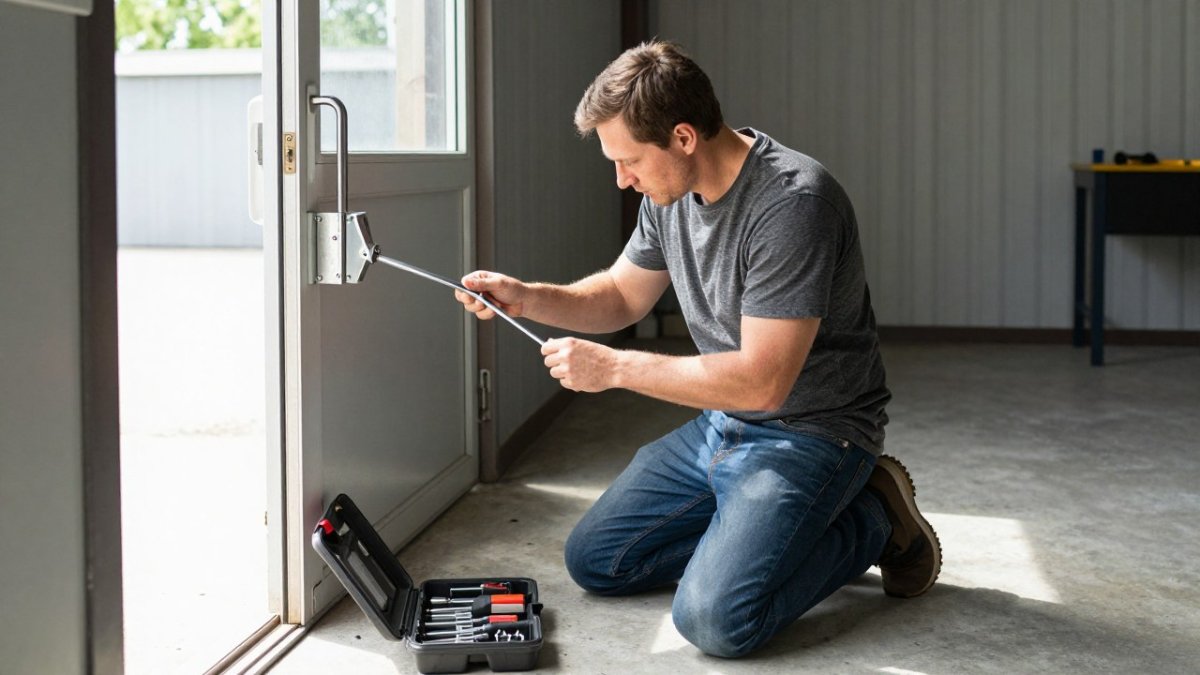
- Closer mounting: confirm the closer body sits parallel to the door and frame. A twisted mounting bracket changes how the arm pulls, and a bracket mounted too high or too low changes the arm's geometry. On a parallel-arm installation, the arm should sit at the angle the manufacturer specifies; on a regular-arm installation, the arm should not bind against the frame or a door stop.
- Arm and stop contact: open the door fully and confirm the arm isn't hitting the frame, a door stop, or the wall before the door reaches its intended opening angle.
Fix alignment issues before you adjust the closer. Adjusting a closer on a misaligned door just hides the real problem, and it can mask a door that no longer latches reliably.
This is also where accessibility and life-safety performance come in. Closing speed, opening force, and reliable latching affect occupants, and on fire-rated doors the closer must reliably close and latch the door.
Watch out: if the door drifts, binds, or fails to latch after alignment checks, stop adjusting the closer. A door that won't latch on a fire-rated assembly is a life-safety issue, not a convenience issue.
How to Fix a Door Closer Not Closing All the Way
A door that stops short of the latch is almost always a speed or latch adjustment issue. Find the two adjustment screws on the closer body: one controls sweep speed, the other controls latch speed.
Turn the latch speed valve clockwise in small steps. Test the door after each quarter turn. The door should close fully and the latch should click into the strike plate without slamming.
If the door still won't close all the way:
- Check for a binding door or dragging door against the frame.
- Confirm the arm isn't hitting the frame or a door stop.
- Look for a worn latch that no longer catches.
Small adjustments go a long way. Turn the valve a quarter turn at a time, never a full turn.
How to Fix a Door Closer Slamming
Slamming means the sweep speed is set too fast. Locate the sweep adjustment valve and turn it counterclockwise in small increments to slow the closing speed.
Then check the backcheck setting. Backcheck controls how firmly the door resists opening past a certain angle. A weak backcheck lets the door fly open and slam back.
Common causes of door slamming:
- Sweep speed valve turned too far open
- Worn or missing door seals that remove resistance
- A closer sized too small for the door weight
Test after each adjustment. A properly set closer closes firmly and quietly, with no bang at the frame.
When a Hydraulic Door Closer Is Hard to Open
A hydraulic door closer that's hard to open usually has the backcheck set too high, or the closer is fighting a binding door. Turn the backcheck valve down slightly and test the door pressure by hand.
If the door still fights you, check the hinges and pivots for wear. A dry or bent hinge adds resistance the closer can't overcome.
Watch out: if the closer body is leaking oil, no adjustment will fix it. A leaking closer has lost hydraulic fluid and needs replacement, not repair.
Before you call anyone to service a stubborn closer, our guide on choosing a reliable locksmith covers what to ask and what to avoid.
Commercial Door Closer Oil Refill: What You Can and Can't Fix
You can't refill a sealed commercial door closer. The hydraulic fluid sits inside a sealed body, and there's no service port on standard units. If the closer is leaking, the seal has failed, and the fix is a replacement unit.
What you can do:
- Clean oil residue off the door and floor to prevent slips.
- Confirm the leak is coming from the closer and not a hinge or seal.
- Match the replacement closer to the original model and mounting configuration.
For property managers dealing with recurring closer problems across multiple units, our guide to locksmith services for property management explains how to plan maintenance instead of reacting to every failure.
Start With a Safety Check and a Maintenance Schedule
Wait, that heading is already used above. Let me close this out properly.
Most door closer repair jobs come down to three things: loose fasteners, dry pivot points, and adjustment valves set wrong. A monthly wipe-down, a quarterly lubrication pass, and a dated log catch nearly all of them before they become emergency calls.
When a closer is leaking, cracked, or beyond adjustment, it's time for professional service. If you're in Omaha or western Iowa and need help with a locked or unsecured door, commercial locksmith service in Council Bluffs or commercial locksmith service in Omaha is a good place to start.
A closer that won't latch is a security risk, and a slammed door wears out hinges and frames fast. Don't let a small adjustment turn into a broken door.
Frequently Asked Questions
What are the most common problems with commercial door closers?
The usual culprits are loose or stripped mounting screws, a bent or binding closer arm, worn pivot points, and hydraulic fluid leaks from the closer body. Each one changes how the door swings: a loose closer drags, a leaking one loses control of sweep and latch speed, and a misaligned arm can make the door hard to open. Most door closer repair starts with a visual inspection of the body, arm, and fasteners before touching any adjustment valves.
Can you refill the oil in a commercial door closer?
In most cases, no. A commercial door closer oil refill is not a routine service because the hydraulic fluid sits in a sealed chamber and the manufacturer does not provide a fill port. If you see oil weeping around the adjustment screws or the body, the internal seal has failed. Adding fluid from outside will not restore pressure and usually makes the mess worse. Plan on a replacement unit rather than a refill.
How long does a commercial door closer last?
A well-maintained closer on a standard interior door often runs for years, while a unit on a high-traffic exterior door in a windy spot can wear out much faster. Lifespan depends on cycle count, door weight, and whether the closer is adjusted correctly. Closers that slam or get forced open put extra stress on the seals and arm. Regular inspection and lubrication of pivot points is the cheapest way to stretch the service life of any commercial door closer.
When should I call a locksmith for door closer repair?
Call a professional when the closer body is leaking oil, the arm or bracket is cracked or bent, mounting screws keep backing out of stripped holes, or the door fails to latch reliably. Those are signs the hardware is past adjustment. A mobile locksmith can confirm the closer model, check alignment with the frame, and replace the unit on site. For a business in Council Bluffs, on-site service avoids leaving a storefront door unsecured while you hunt for parts.