 ultimate-guide
Locksmith Services for Property Management: A 2026 Guide
Table of Contents
- Why Locksmith Services Matter for Property Managers
- Emergency Lockout Services for Property Managers
- Tenant Turnover and Rekeying Services
- Master Key System Installation for Apartments
- Access Control and Electronic Security Solutions
- Locksmith Service Agreements for Property Management Companies
- Preventative Maintenance and Security Audits
- Frequently Asked Questions
Last Updated: August 30, 2026
Why Locksmith Services Matter for Property Managers
Property managers face relentless tenant transitions, emergency lockouts, and security concerns that demand immediate, reliable solutions. Rekeying after turnover, managing master key systems, and responding to 2 a.m. lockouts aren't optional, they're core operational requirements. A delayed lockout response triggers tenant complaints, property damage, and liability exposure. Poor rekeying practices leave buildings vulnerable to security breaches. When you outsource to unreliable providers, you're gambling with tenant satisfaction, property security, and your own liability. This guide covers essential locksmith services for property management, from emergency response to long-term security planning.
Emergency Lockout Services for Property Managers
Emergency lockout assistance defines a locksmith's reliability. When a tenant can't access their unit at midnight, response time becomes everything. Blackshirt Lock & Key operates with transparent rates and no hidden fees.
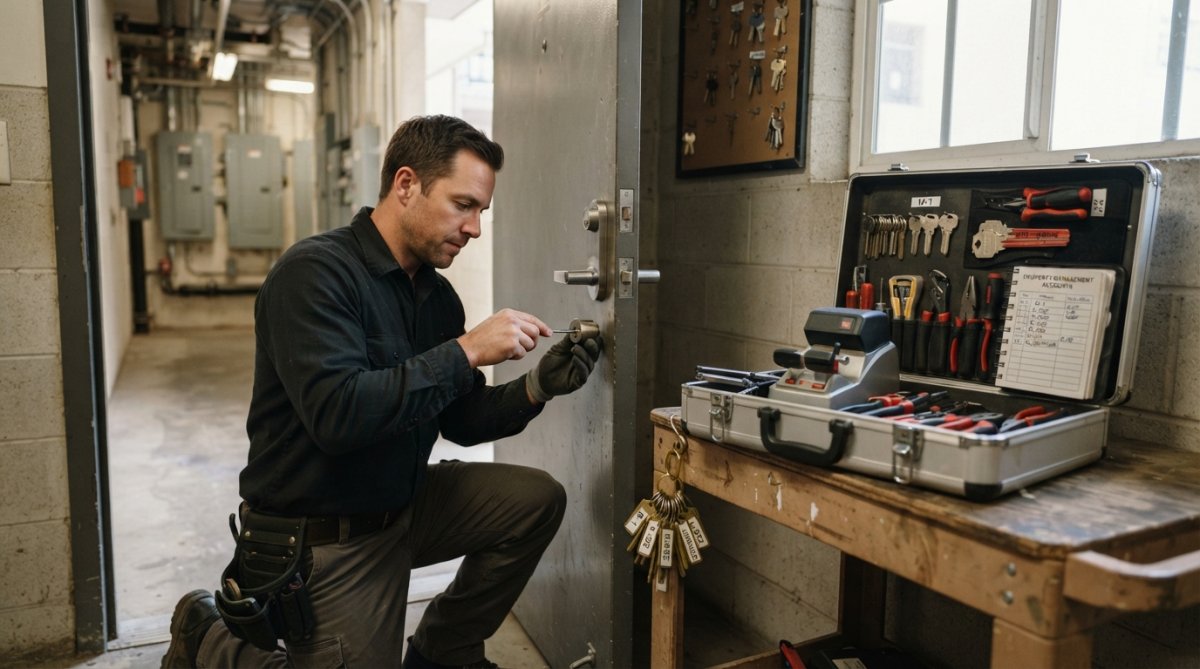
Emergency services typically involve non-destructive entry techniques: picking or manipulating the lock without damage, or controlled lock removal and replacement. This approach minimizes property damage while restoring access quickly.
Establish a clear protocol with your locksmith before emergencies occur. Know the response time guarantee, after-hours availability window, and billing structure. Some charge flat fees for emergency service; others apply hourly rates. Understanding these terms prevents surprises.
Tenant Turnover and Rekeying Services
Each tenant move-out requires rekeying, altering the lock's internal mechanism so the previous tenant's key no longer works. Rekeying is faster and cheaper than full lock replacement and integrates the new key into your master key system.
A common mistake is delaying rekeying weeks after move-out, creating a security window. Best practice is to rekey within 48 hours of move-out. For high-turnover properties, batch rekeying appointments handling multiple units in a single visit reduce costs and ensure consistency.
Master Key System Installation for Apartments
A master key system is the backbone of access control for multi-unit properties. A single master key allows authorized personnel to access any unit, while individual tenant keys only open their own unit. The system works through hierarchical pin configuration: the master key manipulates all pins, while tenant keys manipulate only some.
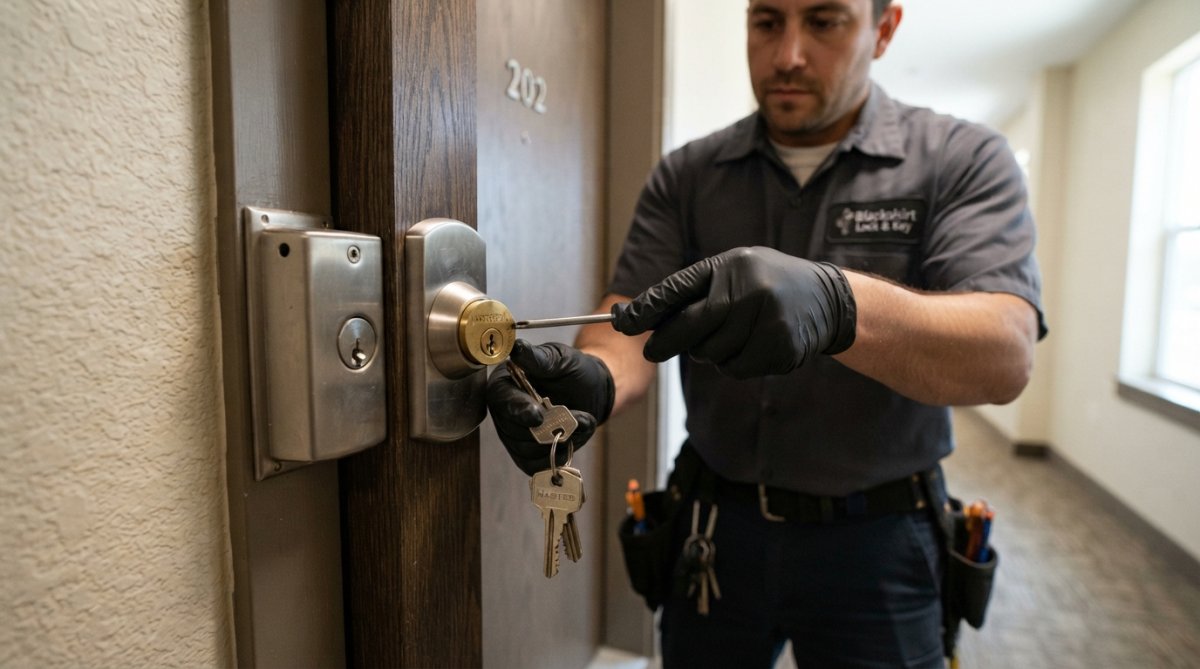
Installing a master key system requires precision. High-security cylinders, which resist picking and manipulation, should be standard for apartment buildings. These cost more than standard cylinders but reduce liability and break-ins.
Consider whether you need sub-master keys for different areas. A 40-unit property might benefit from separate master keys for each floor, so maintenance staff only access assigned areas. This compartmentalization reduces risk if a key is lost.
Schedule installation strategically during vacancy periods or as part of a broader security upgrade. Piecemeal installation creates inconsistency and extends timelines unnecessarily.
Access Control and Electronic Security Solutions
Modern property management increasingly relies on electronic access control, keyless entry systems, card readers, and biometric scanners, rather than traditional locks alone. These systems offer audit trails, remote access management, and instant access revocation without physical key replacement.
Electronic strikes integrate with existing deadbolts, allowing remote unlock via PIN, card swipe, or smartphone app. When a tenant reports a lost key, you simply revoke their access code instead of rekeying the entire unit.
Biometric scanners are particularly valuable for high-security areas or properties with frequent staff turnover. A departing maintenance worker loses access instantly, no physical key retrieval or rekeying required.
Digital Key Management Software Integration
Electronic access control's operational advantage extends beyond convenience. When integrated with your property management software (PMS), the system creates a unified access log allowing you to:
- Track which staff, contractors, or emergency responders accessed which units and when
- Automatically revoke access when a tenant's lease ends
- Generate compliance reports for audits or insurance
- Identify unauthorized access attempts or unusual patterns
A locksmith experienced in PMS integration will work with your software provider to ensure proper communication. Without integration, you manage access control separately from tenant records, creating operational friction.
When evaluating locksmiths for electronic access control, ask about experience integrating with your specific PMS. Some locksmiths handle only hardware, leaving software integration to IT specialists, which delays implementation and creates audit trail gaps.
Hybrid Access Control Strategies
Most properties benefit from hybrid approaches rather than full electronic conversion. Electronic access works well for common areas (mailrooms, laundry facilities, storage closets) where multiple staff and contractors need temporary or rotating access. Residential unit doors typically remain on traditional master key systems or high-security cylinders.
This hybrid model reduces complexity and cost while capturing operational benefits where they matter most. Common area access is managed remotely and audited, while unit-level access remains simple and reliable. If power outages occur, tenants can still access units with physical keys.
Electronic systems introduce dependencies: power supply, network connectivity, and software management. System failures during power outages can lock out legitimate users. Budget for ongoing support, not just installation.
Locksmith Service Agreements for Property Management Companies
A formal service agreement protects both parties and ensures consistent, reliable service. Without a written agreement, you're vulnerable to unexpected pricing, poor response times, and service disputes.
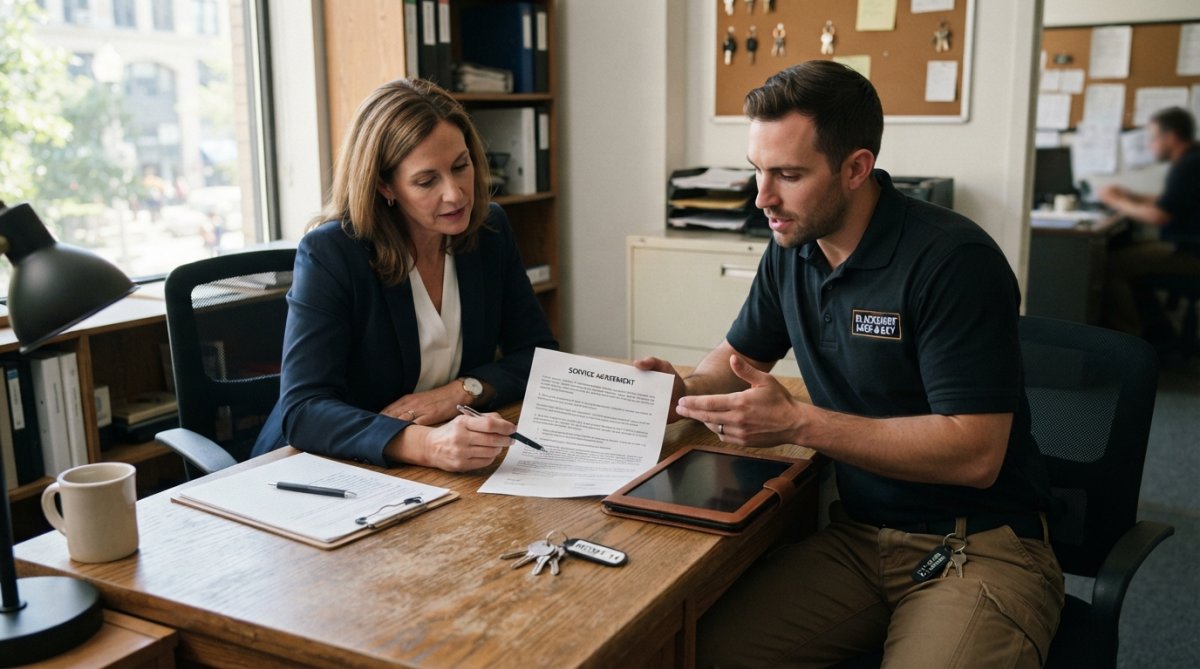
A strong agreement should include response time guarantees (typically 30-60 minutes for emergencies) and clear pricing for routine services. Volume pricing is standard for properties with multiple units. Negotiate per-unit rates reflecting batch work rather than per-call pricing.
Define which services are covered under maintenance plans versus charged separately. Some locksmiths offer annual packages including rekeying jobs, inspections, and emergency calls. Compare total annual costs to determine which model saves money.
Confirm 24/7 availability for residential properties, tenants get locked out at inconvenient times. Verify after-hours rates and whether they're flat fees or premium multipliers.
Liability, Insurance, and Compliance Documentation
Before signing, your locksmith must provide proof of commercial general liability insurance and workers' compensation coverage. Request a Certificate of Insurance naming your company as additional insured. This protects you if the locksmith damages property or is injured on premises.
The agreement should state the locksmith is responsible for damage caused during installation, rekeying, or emergency entry. Include language requiring minimum coverage limits (typically $1 million for residential properties).
Request confirmation that the locksmith complies with local safety codes and regulations (nfpa.org). Many jurisdictions have specific requirements for residential locks and deadbolts. For properties in jurisdictions with tenant protection laws, confirm the locksmith understands legal requirements for lock changes and access control.
Service Agreement Checklist
When reviewing a locksmith service agreement, ensure it includes:
- Response time guarantee: 30-60 minutes for emergencies, with defined consequences if standards aren't met
- Pricing schedule: Itemized rates for rekeying, lock installation, master key maintenance, emergency calls, and after-hours service
- Volume discounts: Per-unit pricing for properties with 10+ units
- Insurance requirements: Minimum coverage limits and your company named as additional insured
- Liability and damage: Clear statement that the locksmith is responsible for property damage during service
- Compliance statement: Confirmation that all work meets local safety codes
- Key management: Documentation of key issuance, rekeying dates, and key retirement
- Availability and coverage area: Service hours, geographic coverage, and backup availability
- Termination clause: Notice period (typically 30 days) for either party
- Dispute resolution: Process for addressing billing disputes or service failures
Include language addressing long-term hardware upgrades. High-security cylinders cost more upfront but last longer and resist picking better than standard cylinders. Over 10 years, upgrading reduces total cost of ownership compared to repeatedly replacing cheaper locks.
Preventative Maintenance and Security Audits
Preventative maintenance prevents costly emergencies. Regular lock inspections, lubrication, and minor adjustments catch problems before they become lockouts or security breaches.
A security audit assesses your current lock hardware, master key system configuration, and access control practices, identifying vulnerabilities. The audit evaluates whether all entry points meet current security standards. Older properties often have inconsistent or outdated hardware creating security gaps.
During an audit, a professional locksmith checks for cylinder wear, evaluates whether high-security locks are in place, and reviews key management practices. Are old keys properly retired? Are master keys controlled and tracked? Do duplicate keys exist that shouldn't?
The audit results in a prioritized upgrade list. Some are urgent (broken locks on main entrances, compromised master key systems), while others are longer-term improvements (upgrading to high-security cylinders). This prioritization helps you budget strategically rather than react to crises.
Preventative maintenance contracts typically include quarterly or semi-annual inspections, minor adjustments, and lubrication. The modest cost is offset by preventing emergency calls and liability exposure.
Choosing the right locksmith services for property management isn't about finding the cheapest provider, it's about finding a partner who understands your operational needs, responds reliably, and charges fairly. Blackshirt Lock & Key offers fully mobile service, transparent pricing with no hidden fees, and expertise handling everything from routine rekeying to complex master key system design. Call now to discuss your property's specific security needs and get a straightforward quote.
Frequently Asked Questions
Q: What is the typical response time for emergency lockout services?
A: Response time depends on current demand and your location within the service area. Professional locksmith services for property managers typically prioritize emergency calls and aim for fast arrival. Ask your locksmith partner about their standard response time guarantee and 24/7 availability before signing a service agreement. Confirm their commitment to meeting your property's emergency needs, especially for after-hours tenant lockouts.
Q: How often should rental properties be rekeyed between tenants?
A: Best practice is to rekey locks every time a tenant moves out. This ensures previous tenants cannot access the unit and protects your property security. Some property managers also rekey annually as preventative maintenance. The cost and effort of rekeying is minimal compared to the liability and security risk of allowing old keys to remain in circulation. Master key systems can streamline this process by allowing you to rekey multiple units efficiently.
Q: What should I look for in a locksmith service agreement for my rental properties?
A: A strong locksmith service agreement should include response time guarantees, volume pricing for multiple units, emergency availability, liability and insurance documentation, and transparent pricing with no hidden fees. Confirm the locksmith is fully insured for commercial work and understand what services are covered, rekeying, emergency lockouts, lock replacement, and access control installation. Ask about preventative maintenance schedules and whether they offer digital key management software integration for easier tenant access coordination.
Q: Can a master key system work with electronic locks and access control?
A: Modern master key systems can integrate with electronic strikes, keyless entry, and biometric scanners for multi-unit residential properties. This hybrid approach gives you traditional key backup while enabling digital audit trails and remote access control. Electronic systems allow you to grant temporary access to contractors or maintenance staff without creating new physical keys. Discuss integration options with your locksmith to determine the best combination of security, convenience, and cost for your property portfolio.
Q: What liability and insurance documentation should I require from a locksmith?
A: Request proof of general liability insurance and commercial coverage before allowing any locksmith to work on your properties. Verify the insurance is current and covers lock installation, rekeying, and emergency services. Ask for certificates of insurance listing your property management company as an additional insured. Keep these documents on file for each vendor. This protects you in case of property damage or security breaches and demonstrates due diligence to your tenants and insurance carrier.
Q: How can digital key management software improve property security?
A: Digital key management software tracks who accesses which units, when, and for how long. This creates audit trails useful for security investigations and tenant disputes. You can grant temporary digital access to contractors or maintenance staff without creating physical keys, then revoke access remotely when the job is complete. Some systems integrate with electronic locks and access control, reducing reliance on traditional keys. Ask your locksmith whether they support software integration and what platforms they work with.