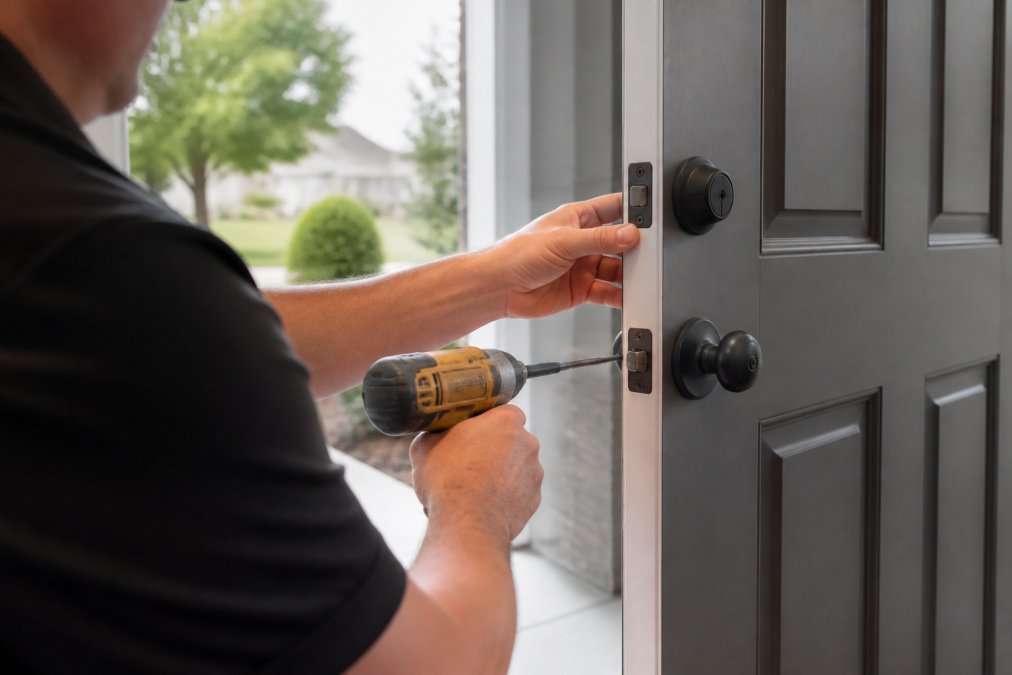
 ultimate-guide
Residential Lock Installation Cost 2026: Full Pricing Guide
Table of Contents
- Residential Lock Installation Cost 2026: What You Will Pay
- Average Locksmith Service Call Fee vs. Flat-Rate Pricing
- Deadbolt vs. Smart Lock Installation: Price Drivers
- Cost to Rekey Locks vs. Replace: Which Saves More?
- Hidden Costs Most Quotes Miss
- When to Hire a Pro vs. DIY Installation
- Get a Straight Answer on Your Installation
- Frequently Asked Questions
Last Updated: September 8, 2026
Residential Lock Installation Cost 2026: What You Will Pay
The residential lock installation cost 2026 ranges widely depending on lock type, door condition, and whether you hire a professional or go the DIY route. Most homeowners pay more than they expect because they underestimate labor and hidden preparation work. At Blackshirt Lock & Key, we handle installations daily across Omaha and Council Bluffs. This guide breaks down what drives the final bill.
Quick answer: A standard deadbolt replacement runs less than a smart lock installation because the latter adds configuration and integration work. The single biggest price driver is not the hardware itself but the labor and site conditions attached to the job.
Below, we will walk through service call structures, hardware categories, rekeying versus replacement, and the hidden costs most written quotes omit.
Average Locksmith Service Call Fee vs. Flat-Rate Pricing
Locksmiths generally price residential work one of two ways: a service call fee plus hourly labor, or a flat rate quoted for the entire job. A service call fee covers the trip to your door. Flat-rate pricing bundles the visit and installation into one number.
Ask which model applies before anyone arrives. Hourly billing creates uncertainty because the final cost depends on how long the job takes. Flat-rate quotes shift the risk to the installer. Many providers advertise a low service call fee, then add hourly rates on top.
The Better Business Bureau guidance on locksmith pricing recommends confirming the total price structure and any trip charges before service begins. A written estimate protects you from the common complaint of surprise fees after the work is done.
Deadbolt vs. Smart Lock Installation: Price Drivers
The type of lock you choose determines most of the residential lock installation cost. Mechanical deadbolts are simpler to mount, while smart locks add wiring, app configuration, and network setup.
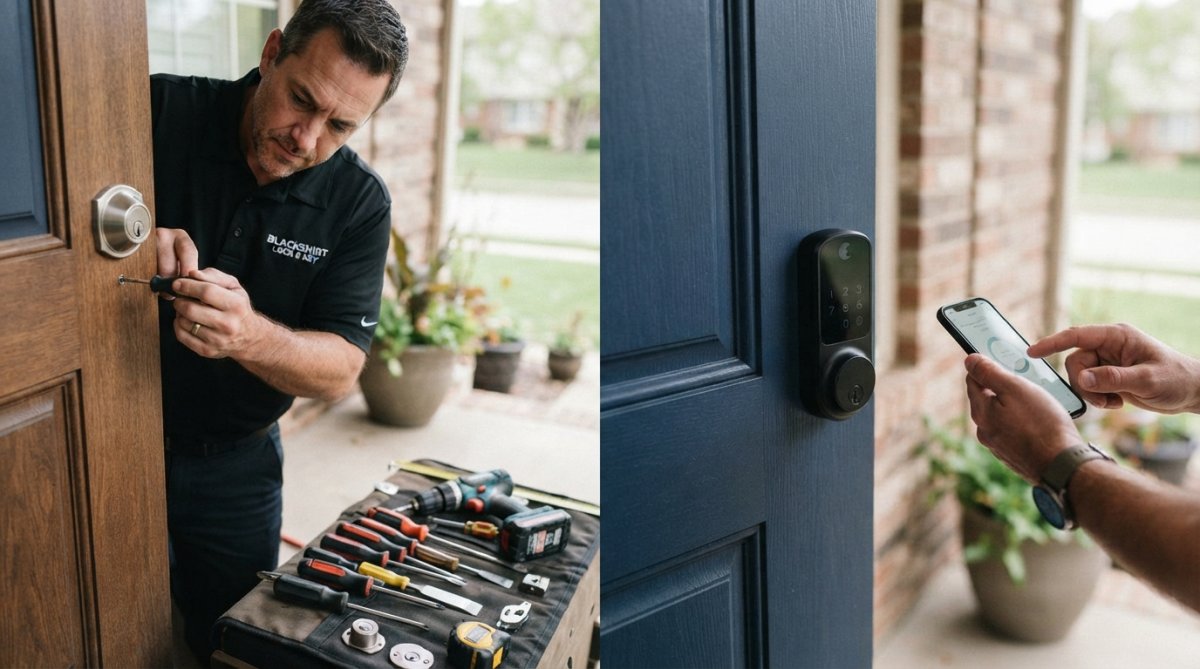
Mechanical Deadbolt and Lockset Costs
A mechanical deadbolt or standard lockset replacement is the most straightforward residential lock installation a professional performs. The job involves removing the old hardware, confirming alignment, and mounting the new unit. Most installations finish within 30 to 45 minutes when the door is standard thickness and holes line up.
The main variables are the quality of the deadbolt and whether the door needs preparation work. A common mistake is assuming any new lock fits the existing bore hole.
Door preparation is the hidden cost driver here. A new deadbolt only drops into the existing hole if it has the same backset (typically 2-3/8 or 2-3/4 inches) and bore hole diameter (usually 2-1/8 inches). If not, the installer must drill a new hole and patch the old one, adding 30 to 60 minutes of labor and material costs. A metal or steel-core door requires a carbide-tipped hole saw, a specialty tool some locksmiths charge extra to use.
Another overlooked cost is the strike plate. If your door frame has a non-standard recess or the strike plate is misaligned, the installer must chisel a new recess and possibly install a reinforced strike plate, a labor line item that can add $20 to $50.
Smart Lock Installation Service Cost and Setup Fees
Smart lock installation service cost runs higher because the job includes more than mounting hardware. A professional must fit the lock, connect it to your network, configure the app, and test keyless entry.
Setup fees often appear as a separate line item for keypad and biometric locks. This covers programming user codes, linking the lock to a hub or Wi-Fi network, and walking you through the app. Skipping this leaves you with a lock that fails on remote access.
The tech setup is where most quotes get vague. Physical installation is often comparable to a mechanical deadbolt. The extra cost comes from the configuration phase, which includes:
- Pair the lock to your 2.4 GHz Wi-Fi network (most smart locks do not support 5 GHz bands, which is a common point of failure)
- Download and configure the manufacturer's app (e.g., August, Schlage, Yale, Kwikset)
- Create and assign user codes for family members, guests, or service providers
- Test auto-lock and unlock features, which require adjusting sensitivity settings
- Verify that the lock's firmware is up to date
This configuration work typically adds 20 to 40 minutes of labor. Some providers bundle it into a flat rate; others charge an additional $25 to $50 as a 'smart setup fee.' Ask directly whether Wi-Fi pairing and app configuration are included or billed separately.
Compatibility is another silent cost. Smart locks are not universal. A Schlage Encode Plus uses a different mounting plate than a Yale Assure Lock 2. Replacing an older smart lock with a different brand may require a different tailpiece or adapter plate. Doors outside the standard 1-3/8 to 1-3/4 inch thickness need a spacer kit, and a different latch size requires swapping the latch assembly, a $10 to $20 part often not included in the quote.
Battery and connectivity maintenance is a recurring cost most guides ignore. Smart locks run on AA or CR123 batteries, replaced every 6 to 12 months depending on usage (consumerreports.org). Models like the August Wi-Fi Smart Lock draw more power due to constant Wi-Fi connection. Budget roughly $10 to $15 per year for batteries. If the Wi-Fi module fails out of warranty, the module or entire lock may need replacing.
The bottom line on smart vs. mechanical: A mechanical deadbolt replacement is a $100 to $200 job. A smart lock installation with full tech setup typically runs $250 to $450. The extra cost buys convenience, remote access, and home automation integration, but only if the setup is done correctly.
Cost to Rekey Locks vs. Replace: Which Saves More?
The cost to rekey locks vs replace comes down to the condition of your existing hardware. Rekeying changes the internal pins and springs so old keys no longer work, while replacement installs entirely new hardware. Rekeying costs less because you reuse the existing lock bodies.
Rekeying makes sense when your locks are in good working condition and you want to control who has access, such as after moving into a new home. Replacement is better when hardware is worn, damaged, or outdated.
Property managers with multiple rental units often choose rekeying between tenants because it secures each unit at a lower per-door cost. The tradeoff is that rekeying does not upgrade your security level.
Hidden Costs Most Quotes Miss
The price quoted over the phone rarely matches the final invoice because several factors only surface once the installer sees the door. Site conditions such as a settled door, swollen frame, or misaligned strike plate add labor time.
Door preparation costs appear when the existing bore hole is the wrong size or the door lacks holes entirely. Drilling and chiseling takes time and specialty tools, and not every quote accounts for this.
Warranty, insurance, and long-term ownership costs. Most guides stop at the installation invoice. But the true cost extends beyond the day of service:
Warranty Voidance Risk
Many high-security and smart lock manufacturers require professional installation as a condition of their warranty. If you install a smart lock yourself and the internal motor fails, the manufacturer may deny your claim. Warranty terms vary by brand, so check the language before choosing DIY.
Home Insurance Implications
Your home insurance policy may have specific requirements for door locks. Most standard policies require a deadbolt on all exterior doors. If you install a lock that does not meet your policy's minimum security standard, your insurer could deny a burglary claim. Some insurers offer discounts for high-security locks, but those require documentation of professional installation.
Post-Installation Maintenance Costs
Lock installation is not a one-time expense. Long-term ownership costs vary by lock type:
- Mechanical deadbolts require annual lubrication with a graphite-based or Teflon-based lubricant (never oil-based). A $5 tube and 5 minutes per lock per year prevents sticking and premature wear.
- Smart locks require battery replacements every 6 to 12 months. A set of four AA batteries costs $8 to $12. Ignoring the low-battery warning risks a lockout, and an emergency locksmith visit costs far more than preventive replacement.
- Keypad locks have a separate issue: the keypad membrane can wear out after 3 to 5 years. Replacement keypads are available for some models, but for others, the entire lock must be replaced.
The 'Second Visit' Fee
A hidden cost that appears in reviews but rarely in quotes is the second visit. This happens when the homeowner purchases the wrong lock size, the smart lock fails to pair, or the door requires unanticipated prep work. Some locksmiths charge a reduced rate; others charge a full service call fee again. Ask upfront: 'If the lock does not fit or the network setup fails, is there an additional charge for a return visit?'
A Hidden-Cost Checklist to Use Before You Book
Before you schedule an installation, ask the provider these five questions to surface hidden costs before they appear on the invoice:
- Does your quote include door preparation work, such as drilling a new bore hole or chiseling a strike plate recess? If not, ask what the additional charge would be.
- Is smart lock setup (Wi-Fi pairing, app configuration, user code programming) included, or is it billed separately?
- What is your policy if the lock does not fit the existing holes or the door is non-standard?
- Do you charge a second service call fee if a follow-up visit is needed?
- Does your work carry a labor warranty, and does the manufacturer's warranty require professional installation?
Warranty and insurance implications matter more than most homeowners realize. Installing a high-security lock yourself can void its warranty if the manufacturer requires professional installation, and incorrect mounting can compromise your home insurance coverage in some cases. The Consumer Product Safety Commission resources on home safety highlights that properly installed and maintained locks are a basic element of home security. Post-installation maintenance, such as lubricating the mechanism and checking screw tightness, also extends lock life and prevents early failure that would otherwise lead to another service call.
When to Hire a Pro vs. DIY Installation
DIY installation works for a standard mechanical deadbolt replacement on a wooden door with existing holes that match the new hardware. The job takes a screwdriver and about 30 minutes.
Professional installation becomes the better choice when the job involves smart locks, non-standard doors, or any preparation work. Smart lock installation service cost includes network configuration that most homeowners cannot complete without troubleshooting. A door with the wrong bore hole size, a metal frame, or alignment issues requires tools most people do not own.
Emergency situations also justify hiring a pro. If you are locked out or your lock fails, the speed of a mobile locksmith outweighs the cost of a DIY fix. A fully insured professional carries liability coverage, so if the installation damages your door, the repair is covered.
| Installation Type | Best Choice | When to Choose It |
|---|---|---|
| Standard deadbolt swap | DIY | Existing holes match, wooden door, basic tools |
| Smart lock with app setup | Professional | Requires network config, keypad programming |
| Rekeying multiple locks | Professional | Bulk work, tenant turnover, key control |
| Lockout or emergency | Professional | Immediate response, no tools available |
| Non-standard door | Professional | Wrong bore hole, metal frame, alignment issues |
Get a Straight Answer on Your Installation
The residential lock installation cost 2026 depends on more than the lock you buy. Hardware type, labor structure, door condition, and hidden preparation work all shape the final number. Understanding service call fees versus flat-rate pricing, when rekeying beats replacement, and when DIY saves versus costs you money puts you in control.
At Blackshirt Lock & Key, we provide professional installation of residential and commercial-grade locks with fully mobile service that comes to your Omaha or Council Bluffs location. Our fully insured team offers straightforward, honest pricing with no hidden fees, so the quote you receive matches the invoice you pay. We handle on-site key cutting, programming, and installation alongside quick rekeying for homes, vehicles, and businesses.
Call now to get a straight answer on your installation and secure your home with pricing you can trust.
Frequently Asked Questions
What is the average cost to install a door lock in 2026?
The total for residential lock installation depends on whether you choose a basic deadbolt or a smart lock, plus the labor involved. A standard mechanical deadbolt installation is the most budget-friendly route, while smart locks cost more due to the hardware and the extra setup time. Your door's condition also matters: a pre-drilled standard bore hole means less work, but a door that needs new holes or adjustments will push the price up. For an exact quote, contact a local mobile locksmith.
How much does a locksmith charge to install a deadbolt?
Locksmiths typically charge a service call fee plus a flat labor rate per lock, so the final price depends on the deadbolt grade you select and your door's existing preparation. If your door already has a standard bore hole and a matching strike plate, the job is quick. If the locksmith must drill new holes or reinforce the strike plate, labor time increases. Always ask for a flat fee upfront that includes the service visit.
Is it cheaper to rekey locks or replace them?
Rekeying is almost always the cheaper option when your existing hardware is in good condition. The locksmith changes the internal pins so old keys stop working, which costs less than a full replacement and avoids the price of new hardware. Replace locks only when the mechanism is worn, damaged, or you want an upgrade like a smart lock. For a new home, rekeying every exterior lock makes sense and is far more affordable than installing brand-new locksets.
Are there hidden fees when hiring a mobile locksmith?
Reputable mobile locksmiths often quote a flat fee that covers the service call, labor, and the lock hardware itself. Hidden fees usually appear when a company charges a low call-out rate and then adds separate charges for the after-hours visit, the lock mechanism, or extra parts like a reinforced strike plate. Before you book, ask for a total price that includes everything. A fully insured local provider should give you a straightforward number with no surprises at the end.