 How-to
How Do You Report a Fraudulent Locksmith?
Last Updated: November 4, 2026
Quick Summary
To report a fraudulent locksmith, document everything first: the invoice, the original phone quote, the company name, vehicle details and your payment record. Then dispute the charge with your card issuer, file a consumer complaint with the Iowa Attorney General, and report the fraudulent locksmith to the Better Business Bureau and your local police.
- Under Fair Credit Billing Act rules from the FTC, you generally have 60 days from the statement date to dispute a billing error.
- A debit card dispute follows different rules and generally offers weaker protection than a credit card.
- Submit your Iowa Attorney General complaint online through the Consumer Protection Division with company name, dates, amounts and evidence.
- File a BBB complaint to warn other local customers, and contact your local police non-emergency line if threatened or overcharged under pressure.
- Pay by card when you can, so you keep dispute rights if the price changes after the work.
Table of Contents
- Signs of a Locksmith Scam You Need to Recognize
- Step 1: Document Everything Before You Do Anything Else
- Step 2: How to Dispute a Locksmith Charge With Your Card Issuer
- Step 3: Filing a Consumer Complaint With the Iowa Attorney General
- Step 4: Report the Fraudulent Locksmith to the Better Business Bureau and Local Police
- How to Report a Fraudulent Locksmith in Council Bluffs: Local Resources
- Protecting Yourself From Retaliation and Future Scams
- Call Blackshirt Lock & Key for Honest, Insured Service
- Frequently Asked Questions
Signs of a Locksmith Scam You Need to Recognize
Spotting a scam early is the fastest way to avoid one. A fraudulent locksmith usually shows warning signs before the job is done: a vague or missing business name, a price quoted only over the phone, no marked vehicle, and a demand for cash before any work starts. Homeowners and drivers often describe these stories, and the pattern is usually the same.
Here's what to watch for:
- No company name on the truck or uniform
- A quote that changes once the lock is already drilled
- Pressure to pay cash and skip a receipt
- A "technician" who won't show a license or ID
- A phone number that routes to a call center, not a local shop
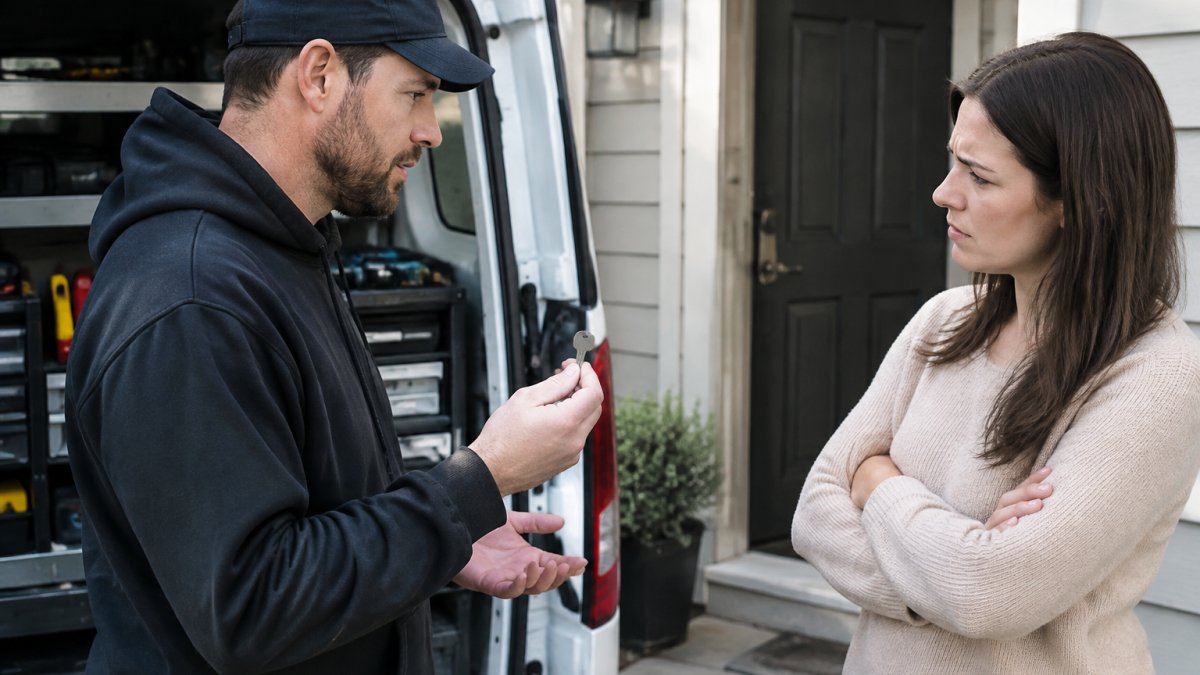
The most common tactic is the bait and switch. A low phone quote pulls you in, then the final bill jumps once you're locked out and have no choice. Predatory pricing like this is a form of consumer fraud.
Watch out: paying in cash with no invoice is the single biggest mistake. Without a service invoice, you have almost nothing to dispute later.
If you want a deeper look at how hidden-fee scams work, our guide on avoiding locksmith hidden fee scams breaks down the exact tactics to watch for.
Step 1: Document Everything Before You Do Anything Else
Before you call anyone, build a record. Evidence documentation is what turns a bad experience into a case that regulators and card issuers can actually act on. The more you capture now, the stronger your complaint later. A single, organized evidence folder is often more useful for a complaint than a long narrative, because agencies typically ask for the same core items.
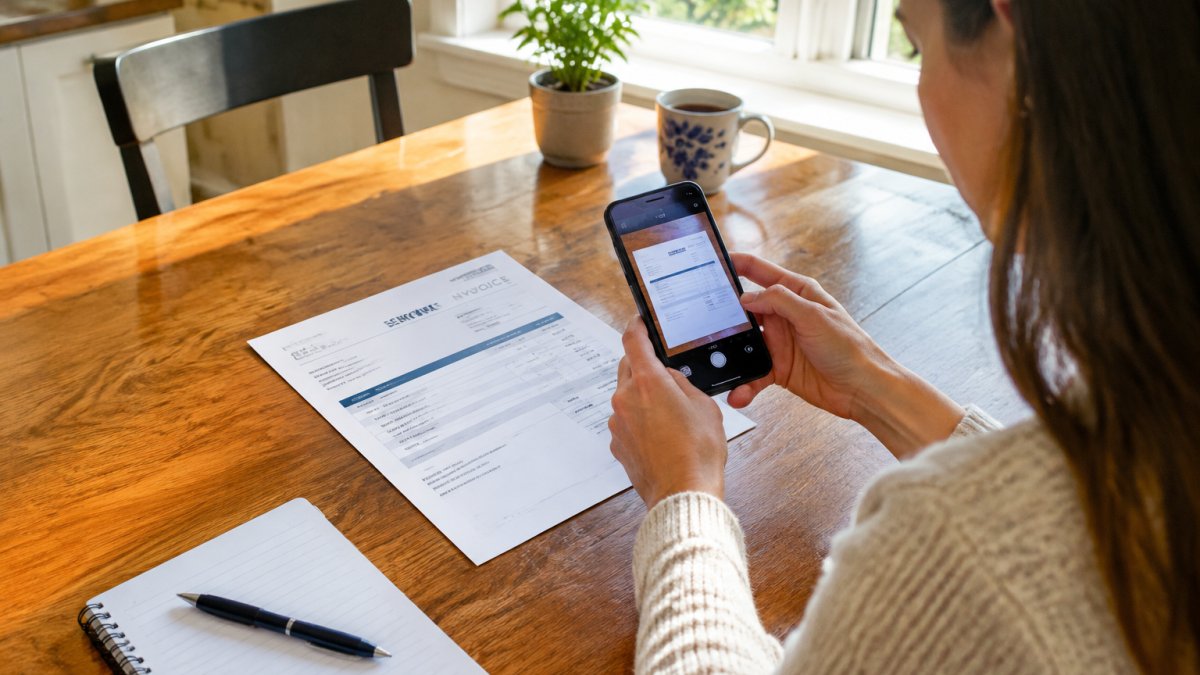
Use this checklist and save it somewhere you can find it later. Work through it in order, because the first items are the hardest to reconstruct once time passes.
- The service invoice or receipt, photographed front and back
- The original phone or text quote, screenshotted with the date and time visible
- The company name exactly as it appeared, plus any DBA or alternate name
- The technician's name or badge number, if given
- The vehicle's make, color, plate, and any markings or lack of markings
- Your payment record: card statement line, cash receipt, or payment-app confirmation
- A one-page timeline: when you called, when they arrived, when the price changed, when you paid
- Names and contact info of any witnesses, such as a neighbor or building manager
Save copies in two places, like your phone and email. Write down the total you were quoted and the total you were charged. That billing discrepancy is the heart of your case, and it is the number every agency and card issuer will ask you to state plainly.
Watch out: do not clean up or edit screenshots. A cropped or annotated image is easier for a company to challenge, so keep the originals and note what each one shows in your timeline instead.
If the technician is still on site or still calling, stop engaging and move to documentation. A common pattern is pressure to pay cash and skip a receipt, which is exactly when the checklist above matters most.
Step 2: How to Dispute a Locksmith Charge With Your Card Issuer
If you paid by card, start here. A chargeback lets your bank reverse an unauthorized or inflated charge. To dispute a locksmith charge, call the number on the back of your card and tell them you want to file a transaction dispute for fraudulent or misrepresented service. Under the Fair Credit Billing Act rules from the FTC, you generally have 60 days from the statement date on which the charge first appeared to dispute a billing error, and the dispute should be sent in writing to preserve your rights.
Have your evidence ready before you call. The issuer will ask what you were quoted versus what you were charged, so state it in one sentence: "I was quoted one price by phone and charged a much higher amount after the work was done." Ask the representative to note the dispute in writing and give you a claim number. Follow up with a written dispute by mail or through the issuer's secure message center, and keep a copy.
Issuers often issue provisional credit while they investigate, then make a final decision after the merchant responds. Keep your timeline and screenshots handy in case the issuer asks for them again. If the merchant disputes your claim, the written record you built in Step 1 is what carries the case.
Watch out: a debit card dispute follows different rules and generally offers weaker protection than a credit card, so if you paid by debit, ask the issuer specifically about its error-resolution process and timelines rather than assuming the credit-card rules apply.
This step protects your money while the rest of your complaints move forward. Save the claim number next to your evidence folder so you can reference it when you file with the Iowa Attorney General and the Better Business Bureau.
Step 3: Filing a Consumer Complaint With the Iowa Attorney General
Filing a consumer complaint with the Iowa Attorney General puts your case on record with the state's consumer protection office. You can submit a complaint online through the Iowa Attorney General Consumer Protection Division. Include the company name, dates, amounts, and your evidence.
Keep your write-up short and clear:
- Who you hired and how you found them
- What you were quoted and what you paid
- What proof you have
- What outcome you want
The office tracks patterns of deceptive practices. Even if your case isn't resolved individually, your report can help flag a repeat offender. Save the confirmation number they give you.
Step 4: Report the Fraudulent Locksmith to the Better Business Bureau and Local Police
Two more reports close the loop. File a complaint with the Better Business Bureau to warn other local customers and add to the company's record. Then contact your local police non-emergency line to file an incident report if you were threatened, overcharged under pressure, or believe a crime occurred.
Bring the same evidence to both. The police report matters most when there's intimidation or a clear financial loss. The BBB complaint matters most for public awareness.
| Where to Report | Best For | What to Bring |
|---|---|---|
| Card issuer | Reversing the charge | Invoice, quote, statement |
| Iowa Attorney General | Consumer protection record | Timeline, evidence |
| Better Business Bureau | Warning other customers | Company details |
| Local police | Threats or clear fraud | Incident report details |
How to Report a Fraudulent Locksmith in Council Bluffs: Local Resources
Local reporting adds teeth. In Council Bluffs, start with the police non-emergency line for an incident report, then file with the Iowa Attorney General. For contractor licensing questions, the Iowa Division of Labor can confirm whether a tradesperson is registered.
Keep a simple evidence folder for any local complaint:
- Photos of the invoice and receipt
- Screenshots of the phone quote
- The technician's name and vehicle details
- Your card statement or cash record
- A one-page timeline
If you're now looking for honest help after a bad experience, our guide on finding honest locksmiths in Council Bluffs walks through how to vet a local provider before you call.
Protecting Yourself From Retaliation and Future Scams
Reporting is safe when you do it through official channels. You don't need to confront the company directly. Keep all communication in writing, and let the card issuer, the Attorney General, and the BBB handle the back-and-forth.
To avoid a repeat, follow a few rules. Confirm the business name and local address before you call. Ask for the total price up front, including any trip or after-hours fee. Request a written invoice before work begins. Pay by card when you can, so you keep dispute rights.
A common mistake is hiring whoever answers fastest during an emergency. Take a moment to check the name before you hire anyone. Our tips for choosing a reliable locksmith cover the vetting steps that keep you out of this situation next time.
Call Blackshirt Lock & Key for Honest, Insured Service
The best defense against a fraudulent locksmith is a provider you can verify before you're in a jam. Blackshirt Lock & Key is fully insured and fully mobile, so we come to your home, car, or business with no shop wait. We offer straightforward, honest pricing with no hidden fees. For homeowners, our residential locksmith service in Council Bluffs covers emergency lockouts and lock re-keying. For business owners, our commercial locksmith service in Council Bluffs covers commercial lock installation and key management.
Call now to get started with Blackshirt Lock & Key.
Frequently Asked Questions
What should I do immediately if I suspect a locksmith scam?
Stop the transaction if work is still underway and refuse to pay any amount beyond what you agreed to in writing. Photograph the technician, vehicle, license plate, and the invoice before they leave. Then call your card issuer to flag the charge and begin a dispute. Save every text, call log, and receipt. Reporting a fraudulent locksmith quickly preserves the evidence you need for a chargeback and any complaint you file later.
How do I dispute a fraudulent locksmith charge with my bank?
Call the number on the back of your card and tell them you want to file a billing dispute for unauthorized or deceptive charges. Provide the date, amount, merchant name, and a short written statement of what happened. Submit your invoice, photos, and any quotes you were given. Under the Fair Credit Billing Act, disputes are subject to a deadline measured from the statement date, so confirm the current deadline with the official source. Follow up in writing and keep a copy of everything you send.
Are there local agencies in Council Bluffs to report locksmith fraud?
Yes. File a complaint with the Iowa Attorney General Consumer Protection Division, and report the incident to local police if you were threatened or intimidated. You can also check licensing questions with the appropriate state agency. The Better Business Bureau accepts complaints online as well. Keep your complaint number from each agency for your records.
What evidence do I need to file a complaint against a locksmith?
Gather the service invoice showing the final amount charged, any written or texted quote you received beforehand, photos of the technician and vehicle including the license plate, your payment receipt, and a written timeline of events. Note the date, time, and address of the service call. If the price changed after work began, write down exactly what was said. This evidence documentation strengthens both a chargeback and a consumer complaint.