 How-to
7 Common Reasons Residential Locks Fail
Quick Summary
Most residential lock failures come from a few causes, including worn keys, a dirty or worn cylinder, a misaligned door or strike plate, and loose hardware. Each symptom points to a likely cause, so matching what you notice to the cause helps you decide whether a quick fix is safe.
- Check whether the key is worn or copied from a copy, since each copy loses precision.
- If the bolt binds only when the door closes, the door or strike plate is usually misaligned, not the lock.
- Use dry graphite rather than oil in the keyway, because oil attracts dust and gums up over time.
- Stop forcing a stuck key, since a broken key is much harder to remove than a stiff one.
- Call a professional if the key is broken inside the lock or you see signs of forced entry.
Table of Contents
- How Residential Locks Fail and What Each Symptom Means
- Worn Keys, Worn Cylinders, and Front Door Lock Not Working with Key
- Misaligned Doors, Strike Plates, and Loose Handles
- Dirt, Moisture, and Weather Effects in Council Bluffs
- How to Repair Door Lock Mechanism Safely at Home
- Residential Lock Lifespan and Repair Versus Replacement
- When to Call a Professional for Door Lock Repair Near Me
- Frequently Asked Questions
How Residential Locks Fail and What Each Symptom Means
Last Updated: November 20, 2026
Most residential lock failures come down to a handful of causes, and each one leaves a different symptom.
A residential door lock is a simple system. A key turns a cylinder, which pulls a latch bolt out of a strike plate set in the door frame.
- Key turns hard or not at all: usually worn pins, debris in the keyway, or a worn key
- Door won't latch or the bolt misses the strike plate: often door or frame misalignment
- Handle wobbles or feels loose: loose screws or stripped hardware
- Lock feels gritty or sticks: dust, moisture, or rust inside the cylinder
- Key goes in but won't come out: a bent key or a damaged cylinder
Watch out: forcing a stuck key can snap it off inside the cylinder. A broken key is much harder to remove than a stiff one, so stop turning once you feel strong resistance.
Each symptom points to a likely cause, so the table below matches what you notice with where the problem probably sits.
| Symptom | Likely cause | Action |
|---|---|---|
| Key turns hard or not at all | Worn pins, debris, or worn key | Check key, clean keyway |
| Door won't latch or bolt misses plate | Door or frame misalignment | Tighten hinges, check strike plate |
| Handle wobbles or feels loose | Loose screws or stripped hardware | Tighten mounting screws |
| Lock feels gritty or sticks | Dust, moisture, or rust | Clean and apply dry graphite |
| Key goes in but won't come out | Bent key or damaged cylinder | Stop and call a professional |
Worn Keys, Worn Cylinders, and Front Door Lock Not Working with Key
When a front door lock not working with key shows up, the key is the first thing to check. Keys wear down over time, especially copies made from copies.
Compare your key to a known-good original if you have one. Look for rounded edges, bent blades, or shiny worn spots on the cuts.
Worn cylinders are common in older homes. Pins and springs wear unevenly, so a lock may work for one key and fail for another. Replacing the cylinder or rekeying the lock can solve this, depending on the condition of the lock.
Misaligned Doors, Strike Plates, and Loose Handles
Misalignment is the most common reason a deadbolt binds only when the door is closed, and it is also the easiest failure to misdiagnose.
A residential lock depends on three points lining up: the cylinder in the door, the latch or deadbolt extending from the door edge, and the strike plate pocket in the frame. When any of those shift, the bolt scrapes, catches, or fails to seat. The symptom tells you which point moved.
- Bolt binds only when the door is closed, but turns freely when open: the strike plate or frame has shifted, not the lock. The bolt is hitting the plate rather than entering the pocket.
- Bolt enters the strike plate but the door still rattles: the strike pocket is too deep or the plate screws are loose, so the bolt seats but does not hold the door tight.
- Handle wobbles and the latch feels mushy: the spindle or the handle's mounting screws have loosened, or the latch retractor is worn.
- Door rubs the frame at the top or latch side: hinge sag, usually from loose top hinge screws or a swollen door in humid weather.
- Gap between door and frame is uneven: the frame has racked, common in older homes as they settle.
Check alignment with the door open first.
Tighten the hinge screws first, starting with the top hinge, since sag at the top throws the latch side out of line at the bottom.
Loose handles are a separate failure.
If the door has sagged badly, the frame has racked, or the strike plate no longer covers the old screw holes, the fix moves beyond a screwdriver.
Dirt, Moisture, and Weather Effects in Council Bluffs
Council Bluffs has hot, humid summers and cold, dry winters with freeze-thaw cycles. That mix is hard on locks. Dust and grit work their way into the cylinder, moisture causes rust on the pins, and temperature swings make metal and wood expand and contract.
Many locks that stick in winter are often suffering from a combination of cold, dry air, and buildup from the previous year. Cold can thicken old lubricant, and grime turns into a stubborn paste.
Use a dry graphite lubricant rather than oil. Oil attracts dust and gums up over time. Apply a small amount into the keyway, work the key back and forth, and wipe away any excess.
How to Repair Door Lock Mechanism Safely at Home
Some lock problems are safe to handle yourself. Others can damage the lock or leave your home less secure. Start with the simplest steps and stop when a repair goes beyond basic maintenance.
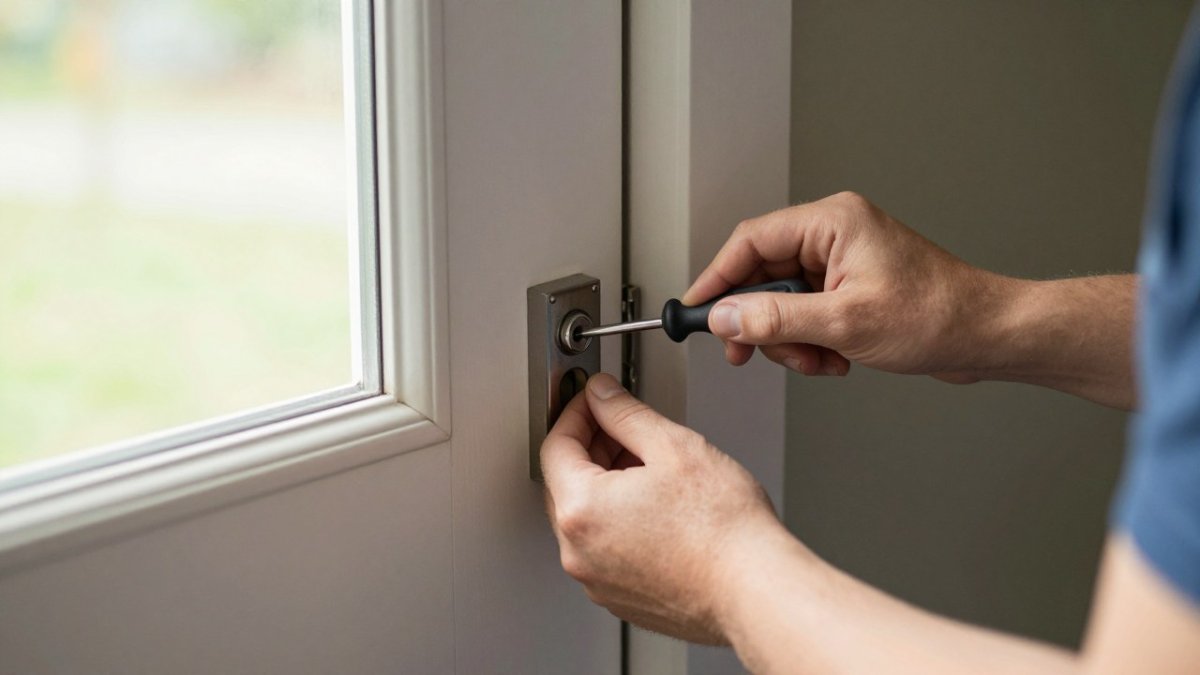
- Clean the keyway. Blow out loose debris with compressed air, then apply a small amount of graphite powder.
- Tighten the hardware. Check the handle, deadbolt, and strike plate screws, and snug them up without overtightening.
- Check the alignment. Close the door slowly and watch where the bolt meets the strike plate. Note any rubbing or catching.
- Test the lock. Lock and unlock the door several times and confirm the bolt moves smoothly.
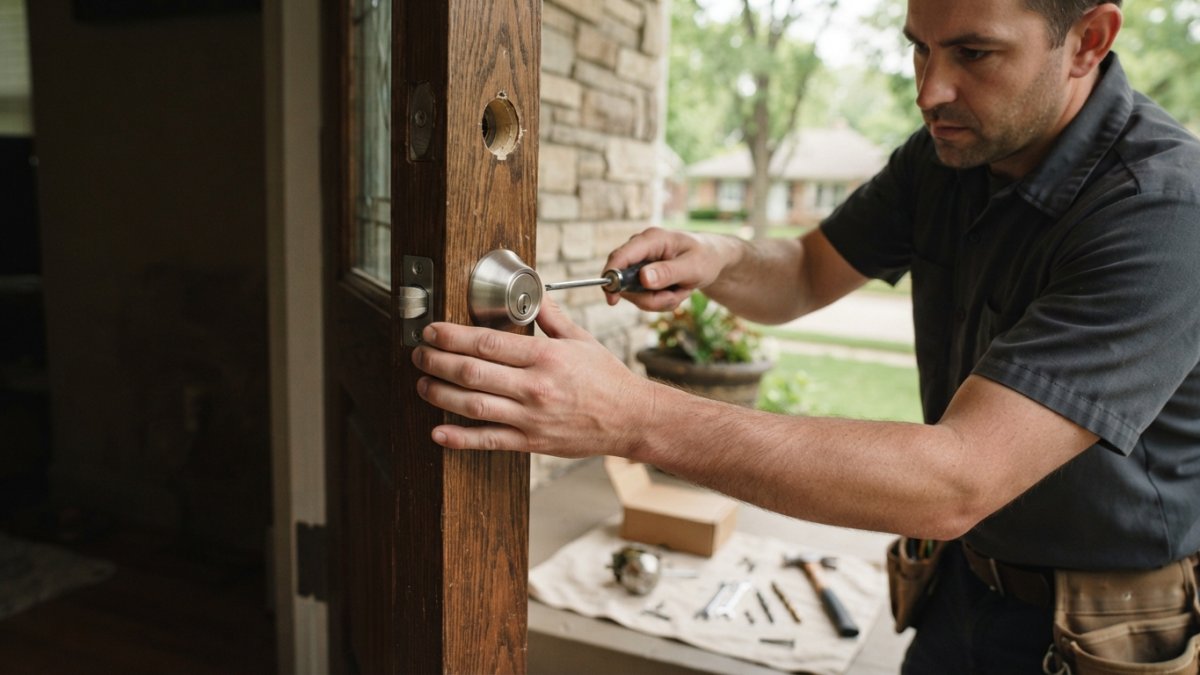
Watch out: never remove the entire lock mechanism while the door is unsecured or the house is empty. If you lose a piece or fail to reinstall it correctly, you may leave the door open to entry.
Stop and call a professional if the key won't turn, the bolt won't extend, or you see cracks or bent parts.
Residential Lock Lifespan and Repair Versus Replacement
Most residential locks last many years with basic care, but the repair-versus-replacement decision is where homeowners most often guess wrong. See what residential lock installation typically costs before you decide. If a full lock change isn't needed, you can compare residential rekeying services in Omaha as a lower-cost option.
Lifespan varies by lock type and exposure. A basic builder-grade knob lock on an exposed exterior door may wear out in a handful of years, while a quality deadbolt on a sheltered entry can last far longer.
Use these criteria to decide:
- Repair or adjust when the problem is limited to one component: a dirty keyway, a loose strike plate, a misaligned door, a worn key, or a single stripped screw. These are maintenance issues, not hardware failures.
- Rekey when the lock body and cylinder are sound but you need old keys to stop working, such as after a move-in, a lost key, or a tenant change. Rekeying changes the internal pins and costs less than replacement when the hardware is still good.
- Replace the cylinder when the key turns hard, the key feels loose, or one key works and another does not. A worn cylinder is a single-part failure, and swapping the cylinder restores function without replacing the whole lockset.
- Replace the lockset when the handle spins without retracting the latch, the internal retractor is worn, the lock is more than a decade old and failing repeatedly, or the hardware is visibly damaged or bent.
- Replace for security when the lock is a low-grade builder model on an exterior door, when there are signs of forced entry, or when the deadbolt does not extend at least one inch into the strike plate. Security is a separate question from function.
A common pattern is a lock that has been repaired two or three times in a year. At that point the wear is throughout the mechanism, not in one part, and replacement is usually the better long-term choice than another repair.
Watch out: do not replace a lock to solve a misalignment problem.
Exposure matters in the decision. Locks on doors that take afternoon sun, wind, and freeze-thaw cycles can see their exterior finish and internal lubrication break down faster than on sheltered entries.
When the lock body is sound but the finish is worn, refinishing or replacing just the exterior trim can extend life. When the mechanism itself is worn, no amount of lubrication restores it.
When to Call a Professional for Door Lock Repair Near Me
Some situations call for a professional, not a weekend repair. Before you hire, read these tips for choosing a reliable locksmith. Call for help when:
- The key is broken inside the lock
- You are locked out of your home or car
- The lock was damaged in a break-in or attempted break-in
- The door won't latch or lock at all
- You see signs of forced entry on the frame or strike plate
Blackshirt Lock & Key offers fully mobile locksmith service across Omaha and Council Bluffs, so you don't have to wait for a shop to open or haul a door to a storefront. Find a residential locksmith in Omaha, NE for home rekeys, lock changes, deadbolts, and house lockouts.
Pricing depends on the lock type, the level of repair, and the time of day, so visit our website or call us for a current quote. Council Bluffs homeowners can book a residential locksmith in Council Bluffs, IA for rekeys, lock changes, and lock repair. We provide straightforward pricing with no hidden fees, so you know the cost before the work begins.
Frequently Asked Questions
What could be the reasons why my door lock isn't working?
The most common causes of residential lock failure are a worn or damaged key, internal wear in the cylinder, dirt or debris inside the keyway, and a door or strike plate that has shifted out of alignment. Start by checking whether the key turns smoothly in the lock and whether the latch and deadbolt both move when the door is closed. If only one lock is affected and the key is undamaged, the problem is usually inside the cylinder. If the door itself sticks or rubs at the frame, alignment is the likely cause. Simple checks like these help you decide whether a homeowner fix is reasonable or whether to call a locksmith.
How can I tell if a residential lock is about to fail?
Warning signs of residential lock failure include a key that needs jiggling or extra force, a lock that feels gritty or stiff, a handle or deadbolt that wobbles, and a key that comes out at an odd angle. Rust or visible corrosion around the keyway, and a door that must be pushed to latch, also point to trouble. Catching these symptoms early usually means a cheaper repair, such as lubrication or tightening hardware, instead of a full cylinder replacement. Pricing for any repair depends on the lock type and the work involved, so contact Blackshirt Lock & Key for a quote.
When should I repair or replace a faulty home lock?
Repair is usually the better choice when the failure has a clear, isolated cause, such as a loose strike plate, a dirty cylinder, or a bent latch. Replacement makes more sense when the cylinder is badly worn, the lock is broken into or damaged, the lock is decades old, or you need a higher security grade. If a repair fails within a short time, the cylinder is likely near the end of its life. A locksmith can inspect the lock and explain which option fits your door and your security needs.
Can a misaligned door cause a lock to stop working?
Yes. When a door sags, shifts, or settles, the latch bolt and deadbolt no longer line up with the strike plate, so the bolt binds and the key may turn stiffly or not at all. Misalignment is especially common after seasonal shifts in Council Bluffs, when freezing and thawing move door frames. You can check by closing the door slowly and watching where it catches. Adjusting the strike plate is often a simple fix, but if the door itself has dropped, the hinges and frame may need professional attention.