 how-to
Avoid Locksmith Hidden Fee Scams: 2026 Guide
Table of Contents
- How Locksmith Hidden Fee Scams Work
- Signs of a Bait and Switch Locksmith
- How to Verify a Local Locksmith Before They Arrive
- Average Locksmith Service Call Cost: What to Expect
- Questions to Ask Before You Agree to Anything
- Emergency vs. Non-Emergency: Why the Protocol Differs
- What to Do After a Locksmith Hidden Fee Scam
- Frequently Asked Questions
Last Updated: August 26, 2026
Locksmith scams are one of the most reported consumer fraud schemes in the country, targeting people when they're most vulnerable, locked out, stressed, and in a hurry. This guide from Blackshirt Lock & Key breaks down exactly how these scams operate, what warning signs to watch for, and how to protect yourself before a technician arrives. The goal is to give you the specific tools to tell the difference between a legitimate professional and someone about to drain your wallet.
How Locksmith Hidden Fee Scams Work
Locksmith hidden fee scams follow an identical structure across the country. A low advertised price gets you to call. A dispatcher sends someone who isn't actually a local locksmith. That person arrives, assesses the job, and presents a bill that bears no resemblance to your quote.
The Bait-and-Switch Playbook
Bait-and-switch pricing is the core mechanism behind most locksmith fraud. A company advertises an unusually low service call fee to get you to commit. Once the technician is on-site, the price escalates dramatically with claims that the lock is "high security," the job requires "special drilling," or parts are needed that weren't mentioned upfront.
The invoice you receive looks nothing like the quote you accepted on the phone. Because you're already locked out, the technician knows you're trapped. According to the Federal Trade Commission consumer advice on service scams, consumers should always get a written estimate before any work begins and should be suspicious of quotes that change dramatically once a contractor arrives on-site.
Toll-Free Numbers and Call Center Dispatchers
Many fraudulent locksmith operations don't employ actual locksmiths. They run national call centers that answer under dozens of local-sounding business names and dispatch independent contractors with no formal training, no local presence, and no accountability to professional standards.
A toll-free number (800, 888, 877, 866) for a "local" locksmith is a major red flag. Real local locksmiths have local numbers. The Better Business Bureau's scam tracker data on locksmith fraud has documented thousands of complaints tied to this dispatch model, with unauthorized charges and price gouging as the most common outcomes.
Signs of a Bait and Switch Locksmith
The warning signs of a bait-and-switch locksmith are recognizable if you know what to look for.
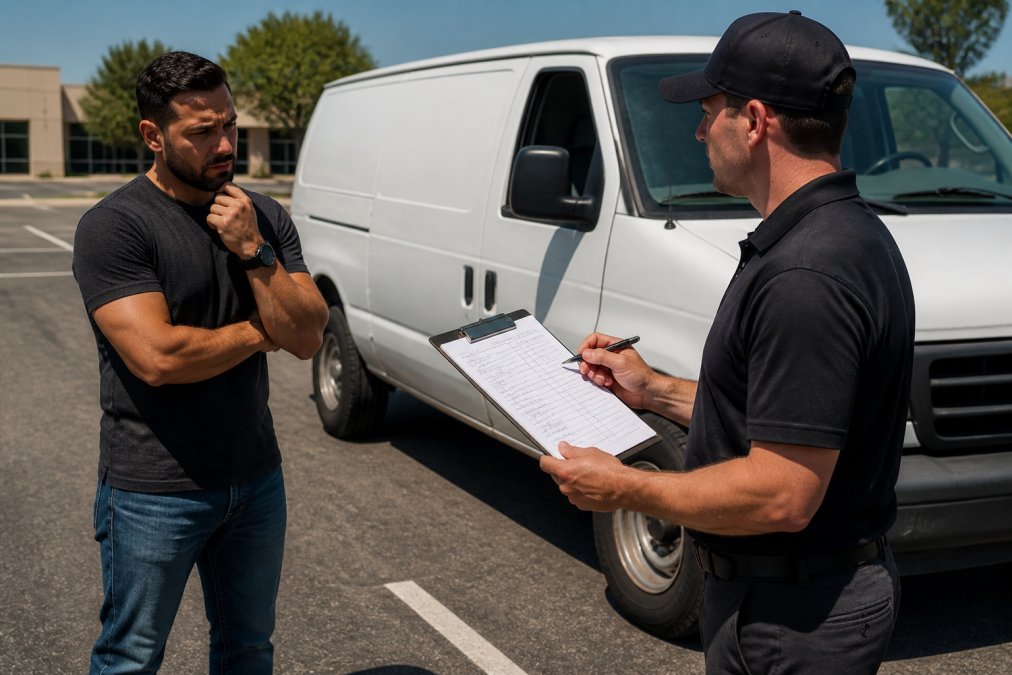
Here's what should put you on alert:
- An unmarked vehicle. Legitimate locksmith companies brand their vehicles. A technician showing up in a personal or unmarked van with no company name, phone number, or logo is a serious warning sign.
- No identification offered. A professional locksmith should present identification and business credentials before touching your lock. If they don't offer it, ask. If they can't produce it, send them away.
- The quote changes on arrival. If the price you were given on the phone suddenly doubles or triples once the technician "assesses" the job, that's the bait-and-switch in motion.
- They insist on drilling immediately. Experienced locksmiths can open most standard residential locks without drilling. A technician who jumps straight to drilling and then charges for lock replacement is padding the bill.
- Cash only, no receipt. Legitimate businesses accept multiple payment methods and provide itemized invoices. Pressure to pay cash with no documentation is a major red flag.
- No physical business address. Ask where their shop is located. A legitimate local locksmith has a verifiable address. Evasive answers or a PO box should end the conversation.
How to Verify a Local Locksmith Before They Arrive
Verification takes about five minutes and can save you hundreds of dollars.
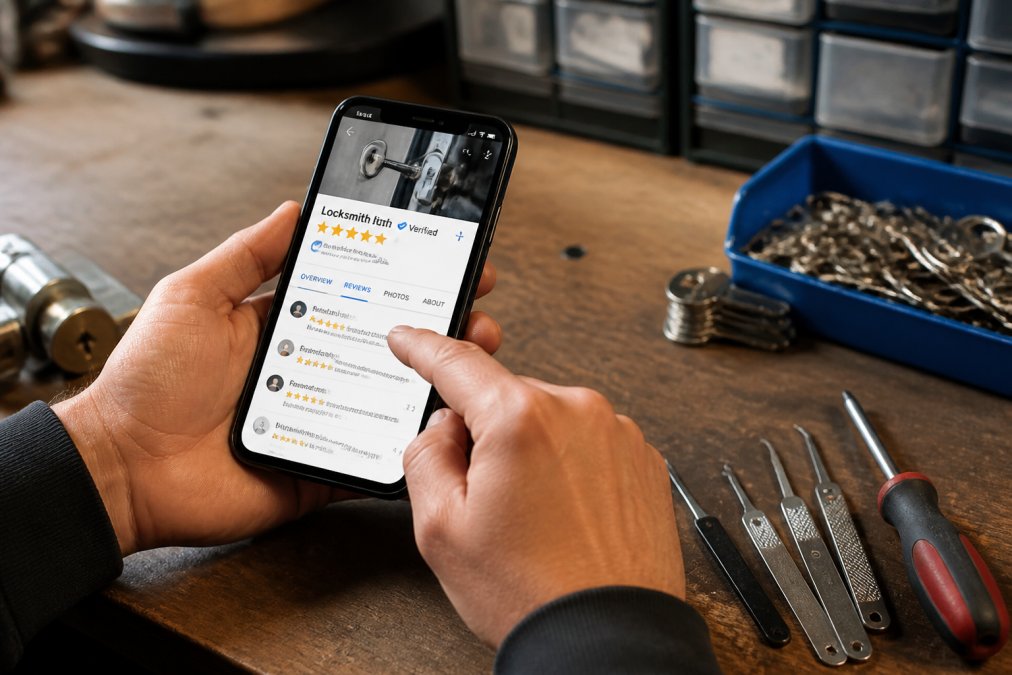
Digital Verification Tools You Can Use Right Now
Start with a Google search of the business name plus your city. Check whether the Google Business Profile has a physical address, a local phone number, and a consistent review history over time. Review patterns matter: a business with 200 five-star reviews posted in a single month is suspicious.
Next steps for verification:
- Check your state licensing database. Many states require locksmiths to hold a state-issued license. Search your state's consumer protection or contractor licensing board to confirm the company and technician are registered. The National Locksmith Association's licensing resource guide maintains a directory of state licensing requirements.
- Search the BBB. Enter the business name at bbb.org and look at complaint history. A pattern of pricing complaints is more informative than an overall score.
- Verify insurance. A legitimate, fully insured locksmith can provide proof of general liability insurance on request.
- Look up the physical address. Paste the address into Google Maps. If it resolves to a residential home, vacant lot, or different type of business, that's a problem.
- Call the number back. After hanging up, redial independently. If it rings to a national call center with a generic greeting rather than the local business name, you're dealing with a dispatch service.
Average Locksmith Service Call Cost: What to Expect
Understanding what a legitimate locksmith service actually costs is one of the best defenses against price gouging. When you have a realistic baseline, a wildly inflated invoice is immediately obvious.
| Service Type | What Affects the Price | Red Flag Threshold |
|---|---|---|
| Residential lockout | Time of day, lock complexity | Quote that triples on arrival |
| Car lockout | Vehicle make, key type | Demand for drilling on a standard car |
| Re-keying (per lock) | Number of locks, hardware brand | Charges for "special tools" on standard locks |
| Lock replacement | Hardware cost, labor | Replacement pushed before non-destructive entry is attempted |
| Commercial lock install | Lock grade, door prep | No written scope of work provided |
Pricing varies by region, time of day, and job complexity. Emergency calls after hours will legitimately cost more than scheduled appointments. What isn't normal is a service call fee quoted low and then supplemented with unexplained labor costs, "special equipment" charges, or mandatory lock replacements not discussed beforehand.
For current pricing on specific services, check Blackshirt Lock & Key's pricing page directly. Transparent, itemized pricing published before the job starts is the baseline expectation for any legitimate locksmith.
Questions to Ask Before You Agree to Anything
Most locksmith scams could be stopped if the customer asked three direct questions before the technician started work.
Before booking:
- "What is your exact service call fee, and what does it include?"
- "Is the technician you're sending licensed and insured?"
- "What is the name and physical address of your business?"
- "Can you give me a written estimate before work begins?"
When the technician arrives:
- "Can I see your identification and proof of insurance?"
- "What's your diagnosis, and what will you attempt before drilling?"
- "Can you give me the final price in writing before you start?"
If any of these questions are met with evasion, pressure tactics, or hostility, that's your answer. A professional locksmith with nothing to hide will answer all of them without hesitation.
Emergency vs. Non-Emergency: Why the Protocol Differs
The protocol for hiring a locksmith should change depending on whether you're in a genuine emergency or scheduling routine service.
In a non-emergency situation, you have time. Get at least two quotes. Verify credentials thoroughly. Request a written scope of work before anyone shows up. Check whether the company is a member of a recognized locksmith association, which typically requires background checks and adherence to professional standards.
In an emergency lockout, the pressure is real but you still have more time than you think. Even if locked out at midnight, taking five minutes to run a basic verification check is worth it. Prioritize: Is this a local number or toll-free? Can the dispatcher give you the technician's name and a firm price estimate? Does the business have a verifiable address?
One thing that doesn't change: you should never agree to work without a written estimate, even in an emergency. A legitimate locksmith can provide one before starting. If they claim they can't, treat that as a red flag.
What to Do After a Locksmith Hidden Fee Scam
If you've already been hit with a locksmith hidden fee scam, there are concrete steps you can take.
Immediate steps:
- Document everything. Photograph the invoice, any signage on the vehicle, the technician's appearance, and any damage to your lock or door.
- Dispute the charge with your bank or card issuer. If you paid by credit or debit card, contact your issuer immediately and initiate a chargeback. Explain that the final charge was materially different from the quoted price.
- File a complaint with your state attorney general. State attorneys general handle consumer protection enforcement, including price gouging and fraudulent contracting.
- Report to the FTC. The FTC's report fraud portal at ReportFraud.ftc.gov collects complaints that inform federal enforcement actions.
- File with the BBB. A documented complaint creates a public record that warns other consumers.
- Leave a detailed review. A specific, factual review describing what happened is one of the most effective consumer protection tools available.
If the overcharge was substantial, small claims court is a realistic option in most states for amounts up to several thousand dollars. A documented written estimate that differs significantly from the final invoice is strong evidence.
Locksmith scams work because they target people at their most vulnerable. The best defense is preparation: know what a legitimate service looks like, verify before anyone arrives, and never let urgency override the basic step of getting a written estimate. Blackshirt Lock & Key operates as a fully insured, fully mobile locksmith service with straightforward, honest pricing and no hidden fees, the kind of transparency that makes the scam playbook irrelevant from the first call. Call now to get a clear, upfront quote before any work begins.
Frequently Asked Questions
What are the most common signs of a locksmith scam?
The clearest red flags are an unusually low advertised price (often $15-$49) that jumps dramatically once the technician arrives, no written estimate before work begins, an unmarked vehicle, and a technician who refuses to show identification or proof of insurance. Scammers also frequently operate through toll-free numbers routed to call centers rather than a local business with a verified physical address. Any of these alone warrants caution; multiple signs together mean you should call a different provider.
How can I verify if a locksmith is legitimate before they arrive?
Search the company name on your state's business registry and confirm it has a physical address, not just a P.O. box. Check the Better Business Bureau and Google reviews for consistent ratings under the same business name. Ask whether the technician is an employee or a third-party contractor dispatched through a call center. Legitimate locksmiths will also provide proof of insurance and a valid ID on arrival. Spending two minutes on these checks before you call can prevent hundreds of dollars in unauthorized charges.
Why do some locksmiths advertise a $15-$49 service fee?
That figure typically covers only the service call fee to dispatch a technician, not the actual labor costs or parts. Once on site, fraudulent operators inflate the invoice with vague line items like 'special drilling required' or 'high-security lock surcharge,' none of which were disclosed upfront. A legitimate locksmith will quote a total price, or at minimum a clear hourly rate plus parts, before any work begins. If a provider refuses to give a written estimate over the phone, treat that as a firm warning sign.
Are there licensing requirements for locksmiths?
Licensing requirements vary by state. Some states require locksmiths to hold a state-issued license, pass a background check, and carry liability insurance, while others have no statewide mandate and rely on local ordinances. Regardless of your state's rules, always ask for proof of insurance and a business license number before work starts. A professional locksmith will have no hesitation providing that information. You can cross-reference license numbers with your state's consumer protection or contractor licensing board.