 how-to
How to Fix a Stuck Car Ignition Key: Step-by-Step
Table of Contents
- Why Your Car Key Won't Turn in Ignition
- What You'll Need Before You Start
- Step 1: Check if the Vehicle is in Park
- Step 2: Wiggle the Steering Wheel and Try the Key Again
- Step 3: Look for an Ignition Release Button
- Step 4: Lubricate the Ignition Cylinder Safely
- When Your Car Key Won't Turn in Ignition: Call a Professional
- Mobile Automotive Locksmith Services for Ignition Problems
- Frequently Asked Questions
Last Updated: September 2, 2026
Why Your Car Key Won't Turn in Ignition
A stuck car ignition key is one of the most frustrating automotive problems you can encounter. You turn the key, nothing happens, and suddenly you're stranded. The issue stems from several mechanical and electrical culprits, each requiring a different approach to fix safely.
The most common reason a car key won't turn in the ignition is that the steering column lock has engaged. This safety feature prevents the steering wheel from turning when the vehicle is parked, and it can trap your key if the transmission isn't in the correct position (nhtsa.gov). Other causes include worn key blades, debris inside the ignition cylinder, a dead key fob battery preventing the immobilizer from disengaging, or actual mechanical failure of the ignition switch itself.
At Blackshirt Lock & Key, we've helped vehicle owners diagnose and resolve stuck ignition key problems. Some fixes you can attempt yourself with basic tools and patience. Others require professional intervention to avoid damaging the ignition lock assembly or the key extraction process. Understanding which category your problem falls into is the first step toward getting back on the road.
What You'll Need Before You Start
Attempting to free a stuck car ignition key requires the right materials and mindset. Rushing the process or using inappropriate tools can cause permanent damage to the ignition cylinder, turning a temporary inconvenience into an expensive repair.
Gather these items before starting:
- A flashlight or headlamp for visibility inside the ignition housing
- Graphite powder or silicone-based lubricant spray (never use WD-40 or oil-based products, which attract dirt)
- A soft brush or compressed air to clear debris from the ignition cylinder
- Needle-nose pliers or tweezers if you need to extract debris
- A spare key to test if the problem is specific to one key blade
- Gloves to protect your hands from metal edges and lubricant
Do not use metal tools to force the key, screwdrivers to pry the ignition cylinder, or harsh chemicals that could damage internal tumblers. The ignition lock assembly contains precision-engineered components. Aggressive techniques almost always cause more damage than the original problem.
If you're uncomfortable working inside your vehicle's ignition system, or if you lack the proper tools, professional help is the safer choice. A mobile automotive locksmith can diagnose the issue in minutes and resolve it without risk to your vehicle's electrical or mechanical systems.
Step 1: Check if the Vehicle is in Park
Before troubleshooting anything else, verify that your transmission is in the Park position. Many vehicles have a neutral safety switch that prevents the key from turning if the gear selector is in any position other than Park or Neutral (nhtsa.gov). This is a safety feature designed to prevent accidental engine starting.
Turn off the engine if it's still running. Locate your gear shift lever or dial, depending on your vehicle's transmission type. Confirm it's firmly in the Park position. Some automatic transmissions require you to press the brake pedal while shifting into Park. Others have electronic shift buttons that need a slight delay between presses.
Try turning your key again. If it now turns freely, the issue was simply the transmission position. This resolves the problem immediately, and you're ready to drive. If the key still won't turn, proceed to the next troubleshooting step.
Step 2: Wiggle the Steering Wheel and Try the Key Again
The steering column lock is a common culprit when a stuck car ignition key prevents you from starting your vehicle. This mechanical lock engages when the car is parked, securing the steering wheel and preventing theft. If the steering wheel is turned too far in one direction when you park, the lock can bind and trap your key.
To release this lock, grip the steering wheel firmly with both hands. Apply gentle pressure in both directions, turn it slightly left, then slightly right. You're not trying to move the wheel far, just enough to relieve tension on the steering column lock mechanism. While jiggling the steering wheel, try turning the key simultaneously. Many drivers find success with this combination.
The steering wheel tension should ease within a few gentle wiggles. Once you feel the lock release, the key should turn smoothly. Start the engine to confirm the ignition switch is responding normally. This technique resolves the majority of stuck ignition key problems and requires no tools or special knowledge.

If wiggling the steering wheel doesn't free your key, the issue lies deeper inside the ignition cylinder itself. Move on to checking for a mechanical release button.
Step 3: Look for an Ignition Release Button
Some vehicles include a small mechanical release button near the ignition cylinder. This button is designed as a safety feature to allow key removal when the steering column lock is engaged. The button's location varies by manufacturer, check your owner's manual for the exact position on your vehicle model.
Look directly below, beside, or behind the ignition cylinder. The button is typically small, recessed, and may require a firm press with a thin object like a pen or small screwdriver. Press the button while gently attempting to turn and remove your key. Some vehicles require you to press the button while turning the key slightly in the opposite direction.
If your vehicle has this release button and it works, your key should come free. Once extracted, test the ignition with your spare key to determine whether the problem is specific to the key blade or the ignition cylinder itself. A worn key blade may not properly align with the internal tumblers, preventing the key from turning.
Check your owner's manual if you cannot locate the release button. Different manufacturers place this feature in different locations, and some older or less expensive vehicle models don't include it at all. If your vehicle lacks this button or pressing it doesn't help, you'll need to address the ignition cylinder directly.
Step 4: Lubricate the Ignition Cylinder Safely
Debris and corrosion inside the ignition cylinder are common causes of a stuck car ignition key. Years of dust, moisture, and metal particles accumulate inside the lock assembly, creating friction that prevents the key from turning. Applying the correct lubricant can restore smooth operation without damaging internal components.
Use only graphite powder or silicone-based lubricant spray designed for locks. Never use WD-40, oil-based lubricants, or general-purpose grease. These products attract dirt and debris, making the problem worse over time. Graphite powder is the safest choice because it doesn't harden or gum up inside the cylinder.
Apply graphite powder by inserting the applicator tube into the ignition cylinder opening and squeezing gently. Alternatively, spray silicone lubricant in short bursts directly into the keyhole. Insert your key and turn it back and forth slowly to distribute the lubricant throughout the internal tumblers and pin alignment mechanisms. Repeat this process several times over the next few minutes, allowing the lubricant to work deeper into the lock assembly.
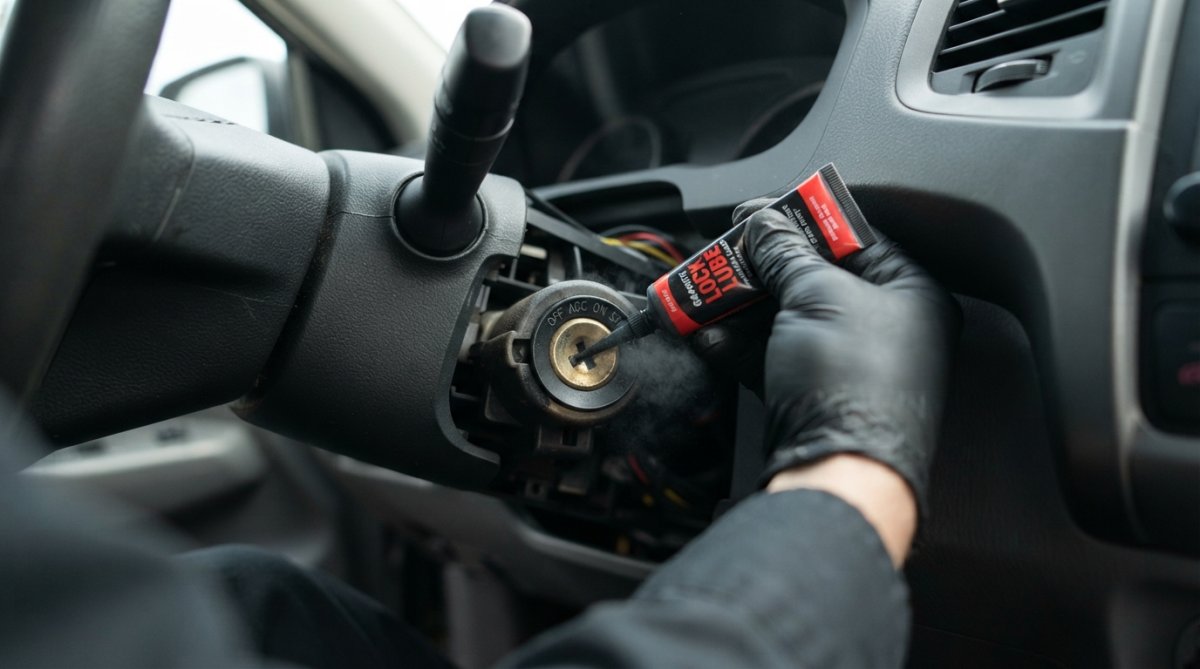
After lubrication, test the key turning action. It should feel progressively smoother. If the key now turns freely, you've resolved the mechanical friction issue. Start the engine and verify normal operation. If the key still won't turn despite lubrication, the problem is internal damage or mechanical failure requiring professional intervention.
When Your Car Key Won't Turn in Ignition: Call a Professional
If you've worked through the previous steps and your stuck car ignition key still won't budge, professional help is necessary. Continuing to force the key risks breaking it inside the ignition cylinder, which creates a much more expensive and complicated extraction problem. A mobile automotive locksmith has the specialized tools and expertise to diagnose the exact cause and resolve it safely (aloa.org).
Professional locksmiths can identify whether your problem stems from a worn key blade that no longer aligns with the internal tumblers, a damaged ignition switch that's preventing electrical engagement, debris deep inside the ignition cylinder that DIY lubrication can't reach, or actual mechanical failure of the steering column lock or neutral safety switch. Each diagnosis requires different solutions, and misidentifying the problem wastes time and risks further damage.
Common situations that require professional help include:
- The key turns partway but won't complete the full rotation to the "start" position
- The key turns but the engine won't crank or the electrical systems won't activate
- The key feels stuck despite lubrication and steering wheel jiggling
- You suspect the key blade is broken or the transponder key's internal chip is damaged
- The ignition cylinder housing shows visible damage or corrosion
Attempting key extraction yourself with pliers, screwdrivers, or force can snap the key blade, scatter fragments inside the ignition housing, or damage the tumblers beyond repair. A professional locksmith uses precision tools designed specifically for key extraction, minimizing damage to the surrounding ignition lock assembly.
Mobile Automotive Locksmith Services for Ignition Problems
When you need immediate help with a stuck car ignition key, a mobile automotive locksmith arrives at your location with the proper diagnostic equipment and specialized tools. You don't wait at a shop, the professional comes directly to you, whether you're at home, at work, or stranded on the roadside.
Blackshirt Lock & Key provides fully mobile locksmith services for automotive ignition problems across the Omaha and Council Bluffs area. Our team diagnoses stuck keys, extracts broken key fragments, replaces damaged ignition cylinders, and programs replacement keys or key fobs on-site. We carry the specialized tools needed for safe key extraction and ignition repair, plus replacement parts for common ignition switch failures.
Our service includes transparent, straightforward pricing with no hidden fees. You know the cost upfront before work begins. We're fully insured, protecting your vehicle during service and giving you confidence in the quality of our work. Emergency lockout calls receive priority response, and we handle both standard keys and transponder key programming for modern vehicles.
Common ignition-related services we provide include:
- Stuck key diagnosis and safe extraction
- Broken key fragment removal from ignition cylinders
- Ignition cylinder replacement and rekeying
- Transponder key programming for vehicles with immobilizer systems
- Steering column lock repair and replacement
- Ignition switch electrical diagnostics and repair
Rather than risk damaging your vehicle's ignition system or wasting hours on unsuccessful DIY attempts, professional mobile locksmith service resolves the problem quickly and correctly. Call now for fast, reliable help with your stuck car ignition key.
A stuck car ignition key transforms a routine day into a stressful situation. While some causes, like an engaged steering column lock or transmission not in Park, respond to simple fixes you can handle yourself, others require professional expertise to avoid expensive damage. Blackshirt Lock & Key specializes in automotive ignition problems, offering mobile locksmith services with fast response times, transparent pricing, and fully insured technicians. When your key won't turn, we come directly to your location with the diagnostic tools and specialized equipment needed to extract your key safely and restore your ignition to working order. Don't force a stuck key, get professional help that protects your vehicle and gets you back on the road quickly.
Frequently Asked Questions
Q: What would cause a key to get stuck in the ignition?
A: A stuck ignition key usually results from a worn key blade, debris inside the ignition cylinder, a broken steering column lock, or an electrical fault preventing the shift interlock from releasing. The ignition lock assembly may also have internal tumblers that are misaligned. Less commonly, the key fob battery is dead, which prevents the immobilizer from disengaging. Identify the root cause before forcing the key, as this can cause permanent damage to the ignition housing.
Q: Can you put WD-40 in a car ignition?
A: WD-40 and similar penetrating oils can help free a stuck key, but use them sparingly and carefully. Spray a small amount directly into the ignition cylinder, then gently wiggle the key back and forth without forcing it. Excess lubricant can attract dirt and debris, making the problem worse over time. For regular maintenance, a silicone-based or graphite lubricant designed for locks is safer than general-purpose oils. If the key remains stuck after lubrication, stop and contact a professional locksmith to avoid damaging the ignition lock assembly.
Q: When should you call a professional locksmith for a stuck key?
A: Call an auto locksmith immediately if the key won't budge after checking the gear shift position, wiggling the steering wheel, and applying light lubrication. Do not force the key, as this damages the ignition cylinder and key blade. A professional locksmith can diagnose whether you need key extraction, ignition switch repair, or full ignition cylinder replacement. Mobile automotive locksmith services can come to you, eliminating the need to tow your vehicle. If your key is a transponder key, a locksmith can also reprogram a replacement.
Q: Is it safe to force a stuck ignition key out?
A: No. Forcing a stuck ignition key will break the key blade, damage the tumblers inside the ignition cylinder, and crack the ignition housing. Once you force the key, extraction becomes much more difficult and costly. Instead, apply gentle pressure while wiggling the key, check that the transmission is in park position, and ensure the steering wheel tension is released by jiggling it. If gentle techniques do not work within a few attempts, stop and call a professional to avoid expensive ignition lock assembly replacement.