 How-to
7 Signs It's Time to Rekey Your Home Locks
Last Updated: November 4, 2026
Quick Summary
There is no official national schedule for rekey home locks. Most homeowners rekey after moving into a home, when a key goes missing, after a roommate or tenant leaves, or after a contractor or house sitter has had access.
- Rekey when you buy or move into a home, since previous owners may still have copies.
- Rekey right away if a key is lost or stolen, even if you think it may turn up.
- Rekey after an ex-partner or former roommate leaves, since they often keep access.
- Scratches around the keyway can signal someone tried to pick the lock.
Table of Contents
- How Often Should You Rekey Home Locks?
- When to Rekey House Locks: 5 Situations That Call for It
- Rekey vs. Replace Locks: Which Makes Sense for Your Home
- How the Rekeying Process Works and How Long It Takes
- Cost to Rekey a House in the Omaha and Council Bluffs Area
- Security Risks of Old Locks and Smart Lock Integration
- Booking Your Rekey With Blackshirt Lock & Key
- Frequently Asked Questions
Most homeowners never think about their locks until something goes wrong. A lost key, a moved-out tenant, or a break-in attempt suddenly makes the question urgent. This guide covers how often you should rekey home locks, the situations that call for it, and what it costs.
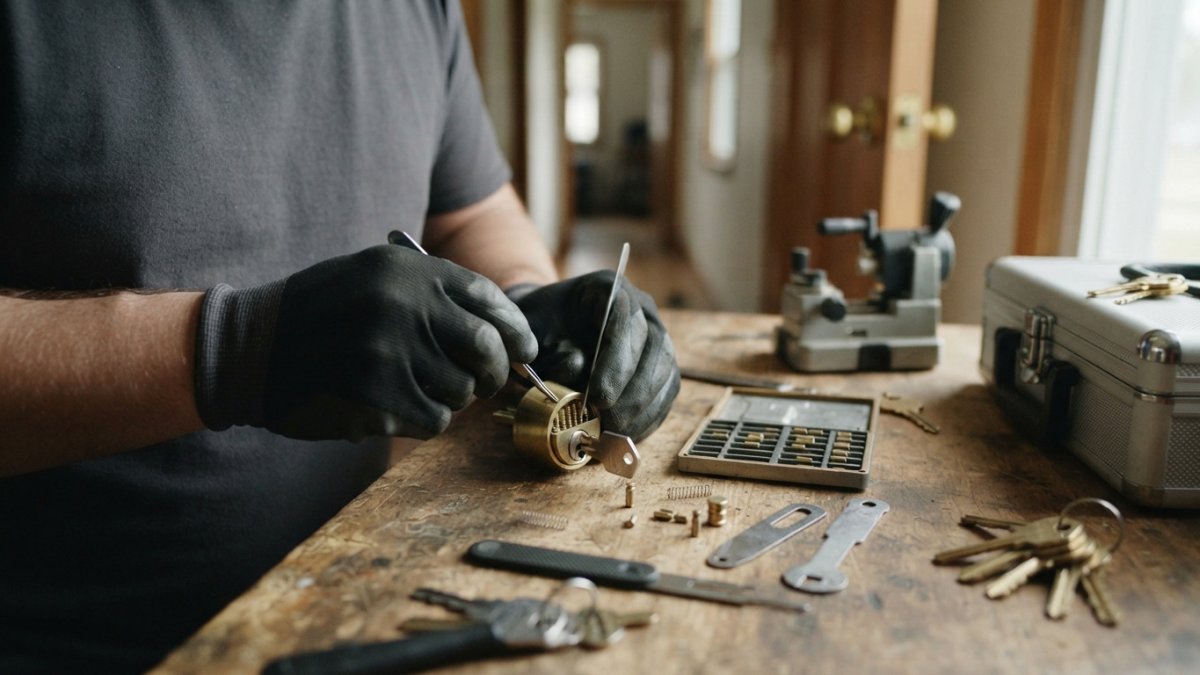
Rekeying changes the internal pins inside a lock cylinder so your existing key no longer works, and a new key is cut to match. The door and hardware stay in place. Many homeowners rekey home locks once every few years, but the right timing depends on your situation rather than a fixed calendar.
How Often Should You Rekey Home Locks?
There is no official national schedule for rekeying a house.
A common approach is to rekey after you move in, after a divorce, or after any time a key may be in the wrong hands.
- Rekey when you buy or move into a home
- Rekey after a roommate or tenant leaves
- Rekey when a key is lost or stolen
- Rekey after a contractor or house sitter has access
When to Rekey House Locks: 5 Situations That Call for It
Some events make rekeying a smart move right away. Waiting can leave your home exposed.
- You just bought or moved into the house. Previous owners, agents, and contractors may still have copies.
- A key went missing. Even a key you think you lost could be found by someone else.
- A relationship or living arrangement ended. Ex-partners and former roommates often keep access.
- You hired a new service provider. Cleaners, dog walkers, and repair crews may need temporary access only.
- Someone tried to get in. Scratches around the keyway can signal a picking attempt.
Rekey vs. Replace Locks: Which Makes Sense for Your Home
Rekeying keeps your current hardware and changes only the internal pins. Replacing swaps out the entire lock. Each option fits a different situation.
| Option | Best For | Keeps Existing Hardware |
|---|---|---|
| Rekey | Lost keys, moves, routine security | Yes |
| Replace | Damaged, outdated, or low-quality locks | No |
Rekeying works well when your locks are in good shape. Replacing makes more sense if a lock is worn, broken, or lacks modern features like a high-security cylinder. You can also pair rekeying with a smart lock upgrade if you want keyless entry later.
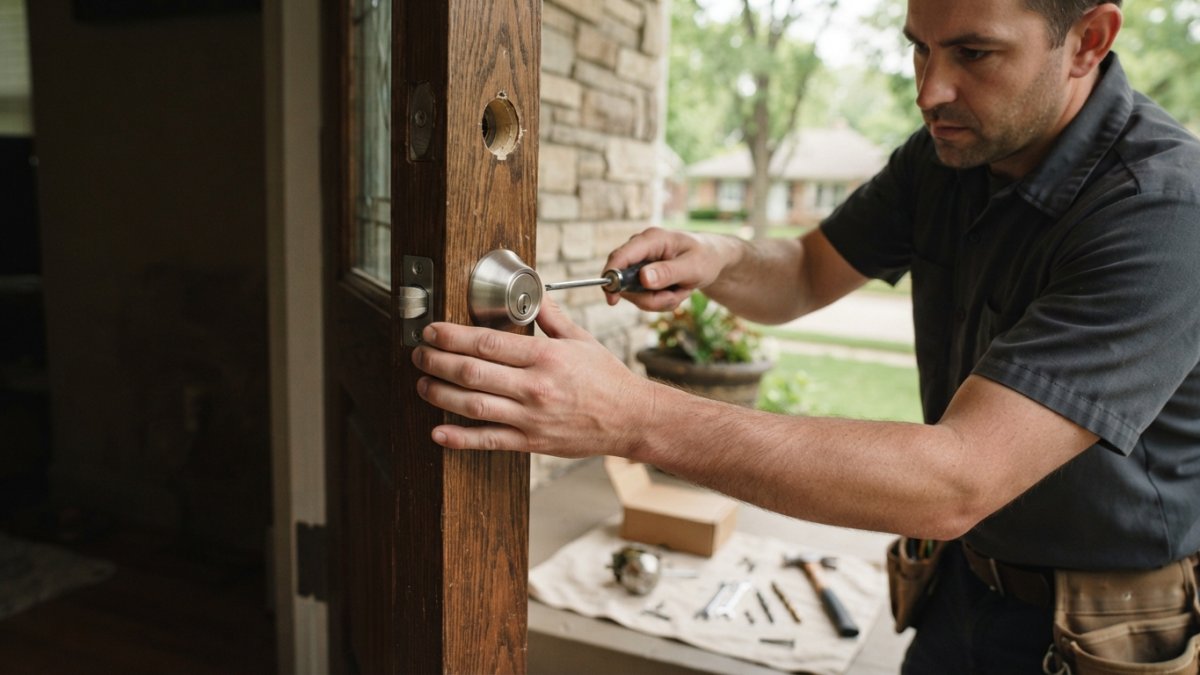
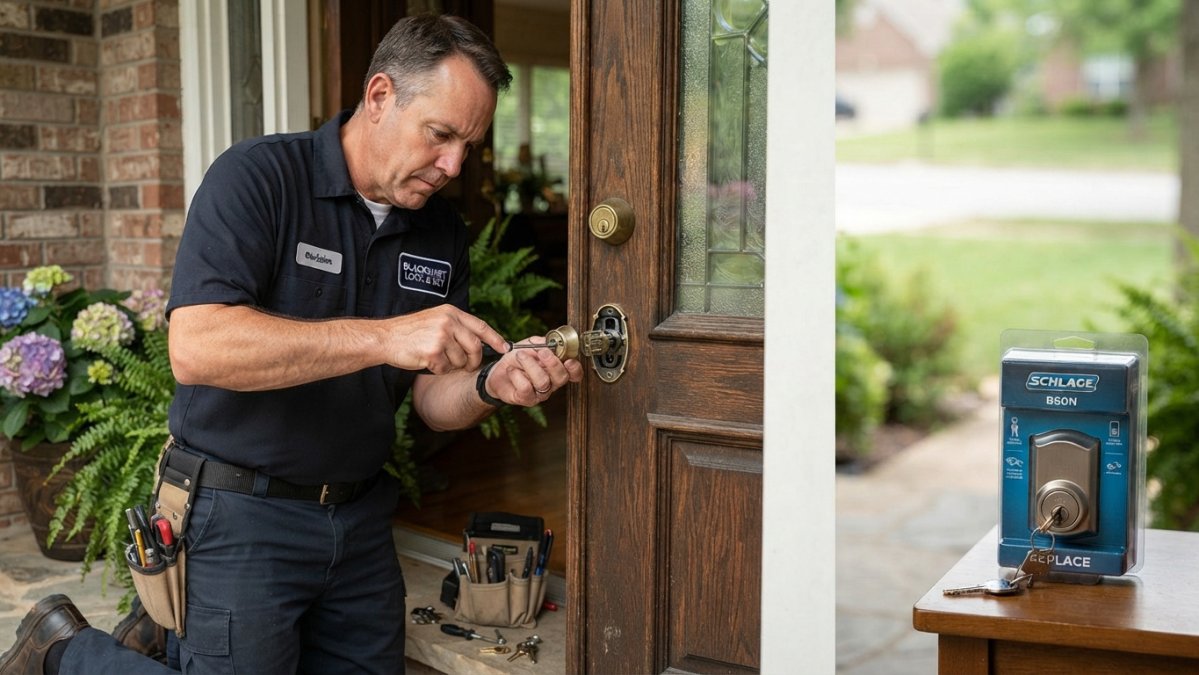
!A locksmith technician in a work uniform removing a deadbolt cylinder from a residential front door in daylight
How the Rekeying Process Works and How Long It Takes
Rekeying is generally a quick service. A locksmith removes each cylinder, replaces the pins to match a new key code, and tests the locks before leaving.
- Step 1: The technician confirms your locks and key control needs.
- Step 2: Each cylinder is removed and rebuilt with new pins.
- Step 3: New keys are cut and every lock is tested.
Cost to Rekey a House in the Omaha and Council Bluffs Area
Rekeying is generally less expensive than replacing locks because the existing hardware is kept. For a broader comparison of what lock installation costs across different projects, see our full residential lock installation pricing guide. The total depends on the number of exterior locks, the type of cylinder, how many keys are cut, and whether travel is involved.
Here are the factors that affect the price:
- Number of locks. A typical Omaha or Council Bluffs house has three to five exterior locks (front door, back door, side door, garage entry). Each cylinder is rebuilt individually, so cost scales roughly with lock count.
- Lock type. Standard residential knob and deadbolt cylinders are the simplest to rekey. High-security cylinders, rim cylinders on older doors, and commercial-grade hardware take more time and sometimes proprietary pins.
- Key count. Most jobs include a set of new keys; extra copies add a small per-key charge. If you want a single key to operate every exterior lock (a master-key or keyed-alike setup), tell the technician before the visit because it changes the pinning work.
- Trip and access. Mobile service means the technician comes to your door. Homes with hard-to-reach locks, storm doors, or multiple entry points can add time.
Pricing depends on the number of locks and their type, so a quote based on your actual setup is the most accurate way to get a figure. Check the Blackshirt Lock & Key website for current pricing or request a quote before booking.
Security Risks of Old Locks and Smart Lock Integration
Old locks fail in ways homeowners rarely see. Pins wear down and no longer align cleanly, which makes keys stick or turn loosely. Strike plates loosen, deadbolts stop throwing fully, and cylinders that have been rekeyed many times can develop sloppy tolerances. The bigger risk is key control: every copy of an old key that was ever cut, for a former roommate, a contractor, or a previous owner, may still open the door. Rekeying resets that exposure by making every prior key useless.
Smart locks still depend on a mechanical cylinder as a backup in many cases. That creates three practical issues:
- The mechanical cylinder is still the weak point. Many smart locks ship with a standard cylinder that any locksmith can rekey. If the cylinder is cheap or worn, the convenience of the keypad does not improve physical security.
- Access codes are the new spare keys. When a roommate, cleaner, or dog walker leaves, deleting their code is the smart-lock equivalent of rekeying, but only if you also rekey or replace the mechanical cylinder, because a physical key may still exist.
- Not every lock can be rekeyed after a smart upgrade. Some smart locks use proprietary or non-standard cylinders. Ask a technician whether your model can be rekeyed before you buy, or whether the cylinder should be replaced instead.
A sensible order of operations is to confirm the mechanical cylinder is sound first, then add smart access on top. Rekeying or upgrading the cylinder keeps the whole system solid, and the smart layer handles day-to-day code management.
Booking Your Rekey With Blackshirt Lock & Key
If you are ready to rekey, Blackshirt Lock & Key provides fully mobile locksmith service directly to your home in Omaha or Council Bluffs. Every job is performed by a fully insured team.
- Omaha residents: Visit our residential locksmith page in Omaha to book a rekey.
- Council Bluffs residents: See our residential locksmith page in Council Bluffs to schedule service locally.
If you are deciding who to trust with your locks, our guide to finding honest locksmiths in Council Bluffs explains what to look for. For a broader look at rekeying providers, read our roundup of the best residential rekeying services in Omaha.
To book a rekey, call Blackshirt Lock & Key today.
Frequently Asked Questions
How much does it typically cost to rekey a house?
Rekeying cost depends on the number of locks, the lock hardware, and whether the job is done on site. Blackshirt Lock & Key does not publish fixed per-lock figures in this article, so pricing is best confirmed by calling or checking the pricing page on the Blackshirt Lock & Key website. Quotes are straightforward, with no hidden fees, and the team is fully insured. Ask for an itemized quote before booking so you know the full cost of rekeying every lock in the house.
Is it cheaper to replace locks or rekey them?
Rekeying is usually the lower-cost option because the existing lock cylinders stay in place and only the internal pins are changed. Replacing locks means buying new hardware and paying for installation. If the locks are in good condition and only the keys are in question, rekeying generally makes more financial sense. If the locks are worn, damaged, or outdated, replacement may be the better long-term choice.
How long does it take a professional to rekey a lock?
Rekeying time depends on the number of locks and their condition. Blackshirt Lock & Key provides mobile service, so the work is performed at your location.
Should you rekey the locks when you buy a house?
Yes, rekeying is one of the most common steps after a home purchase. Previous owners, former tenants, contractors, and anyone else who received a key may still have access. Rekeying every exterior lock when you take possession of the home removes that access. It is a practical security step that costs far less than replacing the hardware.