 Listicle
How to Avoid Coat Hanger Car Lockout Damage
Last Updated: November 7, 2026
Quick Summary
A coat hanger car lockout usually fails on modern vehicles because electronic locks and shielded linkages block the wire, and the attempt risks scratching paint, bending window seals, and damaging hidden wiring or airbag components. The repair bill often exceeds a professional lockout call, so call a locksmith instead.
- Most vehicles built in the last fifteen years use electric actuators instead of a mechanical rod a hanger can hook.
- Tape wrapped on a hanger tip falls off inside the door cavity, leaving adhesive residue and the same scratches.
- A deformed weather stripping seal does not spring back, letting water into the door cavity and wiring.
- Symptoms after an attempt include slow windows, crackling speakers, and an airbag warning light needing a scan tool.
- If a child or pet is locked inside, call 911 immediately and do not attempt entry yourself.
Table of Contents
- Why a Coat Hanger Car Lockout Usually Fails on Modern Vehicles
- DIY Car Lockout Damage: What a Wire Hanger Can Do to Your Car
- Internal Damage: Wiring, Airbag Sensors, and Door Linkages
- What to Do When Keys Are Locked in the Car
- Non-Destructive Car Entry: How Professionals Open Doors Safely
- Finding a Car Lockout Locksmith in Council Bluffs
- Call Blackshirt Lock & Key for Fast, Damage-Free Car Lockout Help
- Frequently Asked Questions
Why a Coat Hanger Car Lockout Usually Fails on Modern Vehicles
A coat hanger car lockout attempt fails on most modern vehicles because the door no longer has a simple vertical lock button to snag.
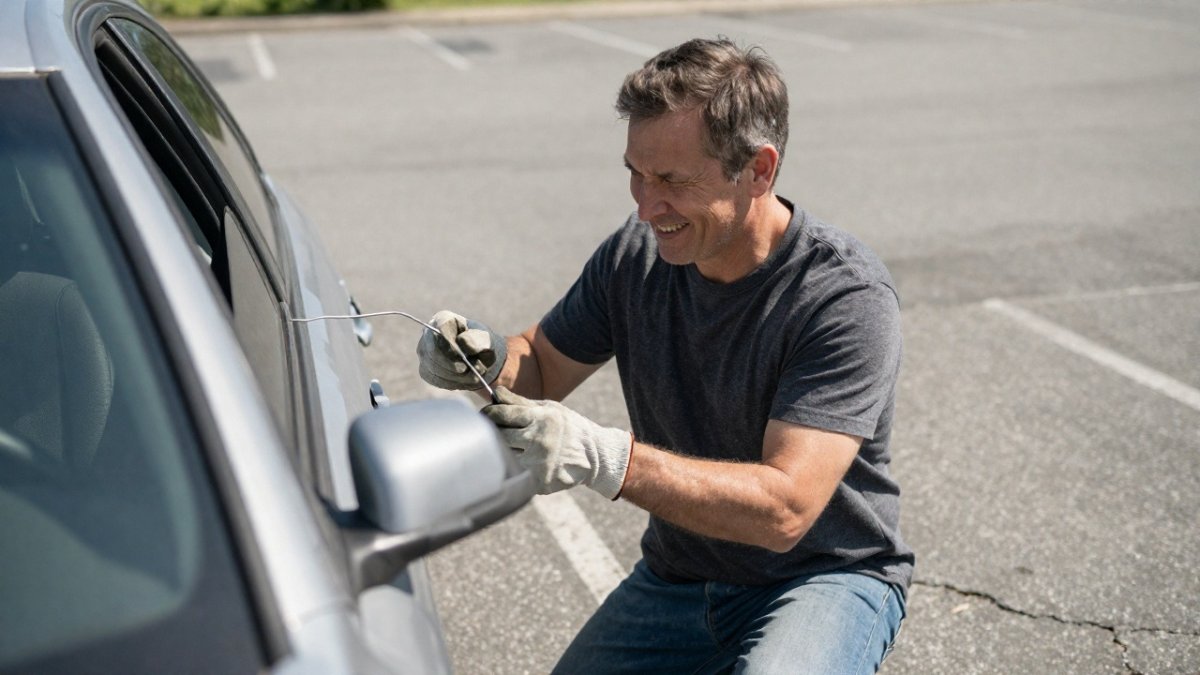
That is the part most drivers learn the hard way, usually at night, in a parking lot, with a wire hanger from a closet. The hanger rarely opens the door. It does, however, leave marks.
Here is why the old trick stopped working:
- Electronic locks: Most vehicles built in the last fifteen years use electric actuators, not a mechanical rod you can hook and pull.
- Shielded linkages: Manufacturers added plastic shields and baffles inside the door cavity specifically to block slim-jim and hanger entry.
- Tighter tolerances: Window glass sits closer to the weather stripping, leaving almost no gap for wire to slide through.
- Side airbags: Door-mounted airbag components sit right where a hanger needs to travel.
The result is a tool that is too soft, too thick, and too blind for the job. A wire hanger bends under pressure and gives you no feedback about what it is touching inside the door.
DIY Car Lockout Damage: What a Wire Hanger Can Do to Your Car
DIY car lockout damage is rarely dramatic. It is a slow accumulation of small failures: a scratch here, a bent seal there, a wire tugged loose somewhere you cannot see. The repair bill, though, is often far higher than a professional lockout call would have been.
Paint, Glass, and Trim Damage
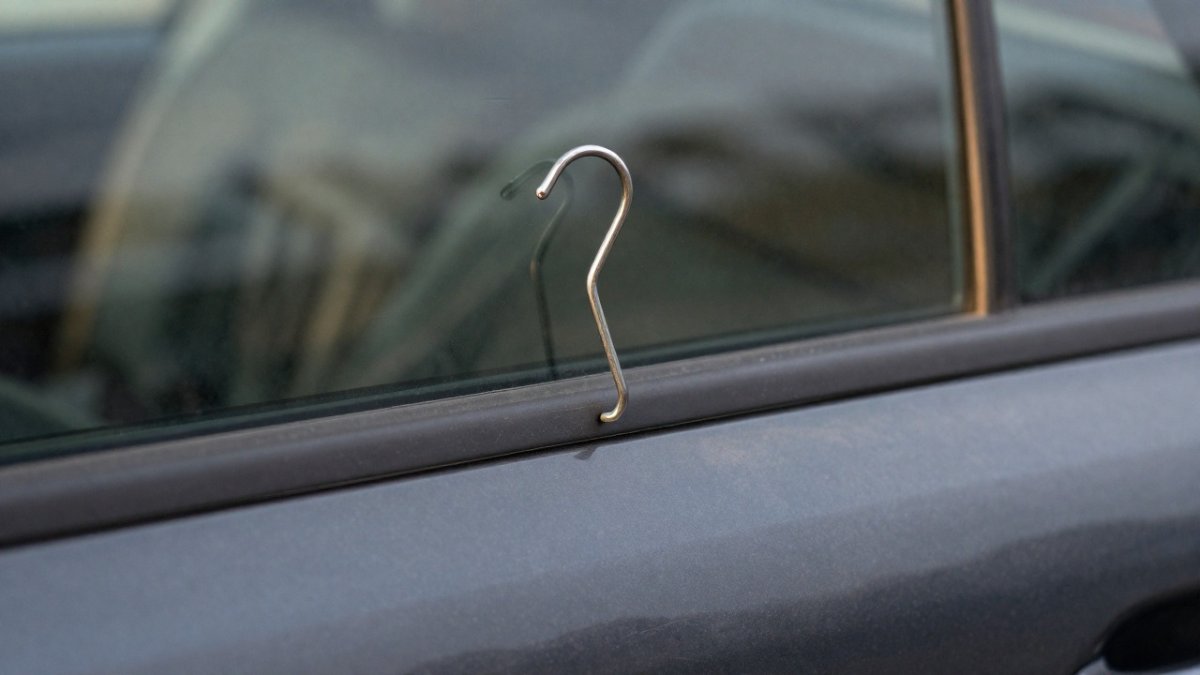
The moment a wire hanger touches your car, it becomes a scraping tool. Steel wire against clear coat leaves scratches, and those scratches sit right at eye level on the door and around the window frame.
- Paint: The hooked end drags along the door skin and window frame, cutting through clear coat and sometimes base coat.
- Glass: The wire can chip or scratch the edge of the window, especially tempered side glass.
- Trim: Chrome, black plastic, and belt molding scratch easily and are expensive to replace.
A common mistake is wrapping the hanger tip in tape to "protect" the paint. Tape falls off inside the door cavity, and now you have adhesive residue on your trim plus the same scratches.
Weather Stripping, Rubber Seals, and Water Leaks
Rubber seals are the quiet casualty. A hanger forced through the window channel deforms the weather stripping, and a deformed seal does not spring back.
Once that seal is compromised, water gets in. Water gets into the door cavity, past the moisture barrier, and onto the wiring and speaker. In cold, salted winter conditions, a leaking door seal can lead to rust and fogged windows. A bent window seal can go unnoticed until the first hard rain.
A hanger attempt rarely causes one big break, but the small failures it leaves behind add up fast.
| Problem | Cause | Fix |
|---|---|---|
| Scratched paint | Hooked end drags on door skin and window frame | Professional repair of clear coat and base coat |
| Chipped or scratched glass | Wire contacts edge of tempered side glass | Glass repair or replacement |
| Scratched trim | Chrome, black plastic, and belt molding scratch easily | Expensive trim replacement |
| Deformed weather stripping | Hanger forced through window channel | Seal does not spring back; water leaks in |
| Water leaks and rust | Compromised seal lets water into door cavity | Rust and fogged windows in salted winter conditions |
Internal Damage: Wiring, Airbag Sensors, and Door Linkages
Internal damage is the expensive category, and it is the one a coat hanger is most likely to cause without the driver ever seeing it happen.
Here is what sits inside a typical modern car door, and how a hanger reaches it:
- Wiring harnesses running to the window motor, speaker, mirror, and lock actuator. The harness is usually taped or clipped to the inner door shell, but the clips are plastic and the wires are thin. A hooked hanger that catches a loop of wire and pulls can unseat a connector or strip a wire at the terminal.
- Side airbag sensors and the airbag module on many vehicles. The side-impact sensor and its yellow connector are typically mounted low and forward in the door, near the hinge edge. A hanger fishing for a lock rod often travels through exactly that zone.
- Door linkage rods connecting the interior and exterior handles to the latch. These rods are thin steel with plastic clips at each end. Bending one out of alignment is easy; getting it back into adjustment is not.
- The lock actuator itself, which is plastic-geared and easy to damage. Forcing a hanger against the actuator arm can strip the gear teeth or crack the housing, and the door then neither locks nor unlocks reliably.
How the damage actually happens. A coat hanger is too soft to steer and too thick to feel.
Why vehicle age changes the risk. On a 1990s vehicle with a visible vertical lock button and a simple rod linkage, a hanger had a clear path and few things to hit.
Avoid forcing anything near the door's front edge, where airbag wiring and the main harness typically run. A disturbed airbag connector can trigger a warning light that requires a scan tool to clear.
What to Do When Keys Are Locked in the Car
When keys are locked in the car, stop and assess before you touch anything.
If a child, a vulnerable adult, or a pet is locked inside, call 911 immediately. Do not attempt entry yourself. A closed vehicle can reach dangerous interior temperatures quickly even on a mild day, and a pet or a young child cannot regulate heat the way an adult can (Children, Pets and Vehicles).
If no one is inside, work through this sequence:
- Check every door and the trunk. One door is sometimes unlocked without you realizing it, and a rear hatch or trunk may have a separate release.
- Look for a spare key. A second fob at home or with a family member solves the problem with zero damage.
- Call your roadside assistance provider. Many policies include lockout service, and some credit cards and vehicle manufacturers include it as a benefit. Confirm what your plan covers before you pay out of pocket.
- Call a mobile automotive locksmith. A professional can open the door without damaging it, and a mobile locksmith comes to your location rather than requiring a tow.
- Stay with the vehicle if you are in an unsafe location, and keep your phone charged.
Check your coverage before you assume it is not covered. Many comprehensive auto policies cover lockout service or reimburse a locksmith call, and roadside-assistance plans often include it.
Why the vehicle matters. A traditional key-in-ignition vehicle, a fob with a hidden mechanical key, a push-to-start vehicle, and a vehicle with a keypad entry all have different safe options.
For a full walkthrough of the emergency steps, see our guide on emergency car lockout service and what to do in the first ten minutes.
Non-Destructive Car Entry: How Professionals Open Doors Safely
Non-destructive car entry means opening the vehicle without bending, scratching, or breaking anything. Professional locksmiths use purpose-built tools, and the technique depends on the vehicle's age and entry system.
The main methods:
- Air wedge and long-reach tools: A inflatable wedge creates a small gap at the door, and a specialized rod reaches the interior handle or unlock switch.
- Lockout kits by make and model: Automotive locksmiths carry vehicle-specific tools and reference guides.
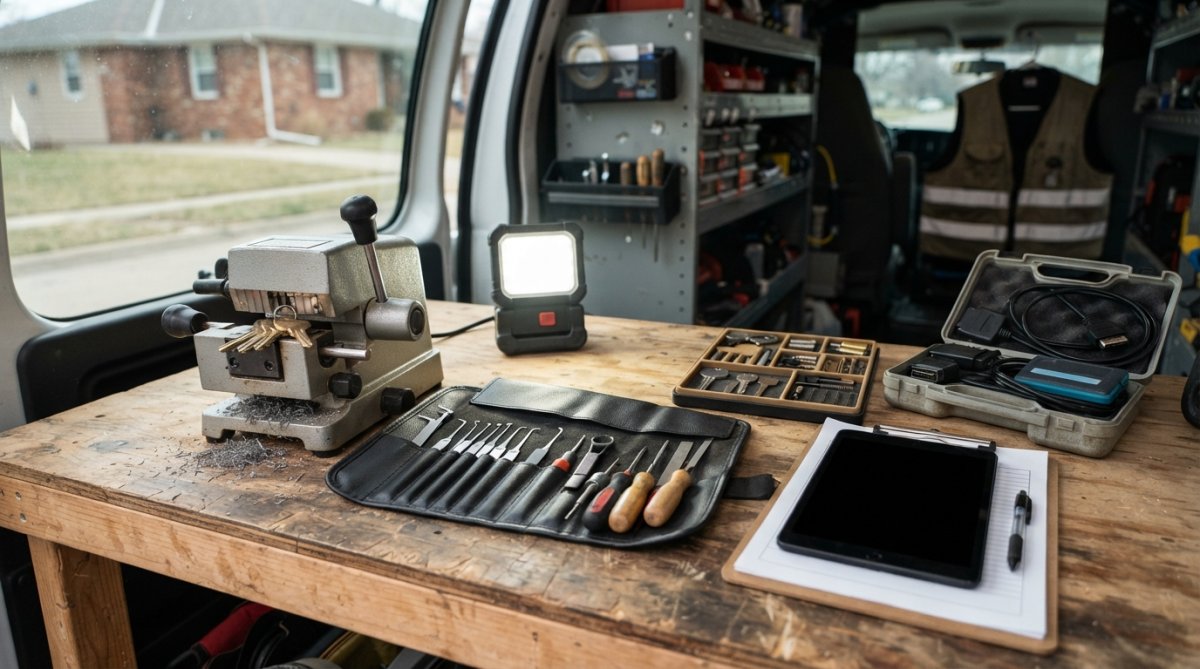
- Key extraction and replacement: If the key is broken in the lock or lost entirely, on-site cutting and programming solves it directly.
The difference between a hanger and a professional tool is control. A proper lockout tool is rigid enough to steer, soft enough not to scratch, and shaped to reach a specific target.
Wondering whether it is worth paying for? Our breakdown of whether professional car lockout service is worth it covers the real trade-offs between a service call and a DIY attempt.
Finding a Car Lockout Locksmith in Council Bluffs
Finding a car lockout locksmith in Council Bluffs comes down to verification, not price shopping. Lockout scams are common, and the warning signs appear before anyone arrives.
Use this checklist before you book:
- Confirm the business has a local address and a real phone number
- Ask for the total price before dispatch, including any after-hours fee
- Confirm the technician is insured
- Ask whether the quote is final or "starting at"
- Check reviews for complaints about surprise charges
- Confirm they handle your vehicle's make and entry system
A legitimate automotive locksmith will quote clearly and aim to open the door without damage. If a quote sounds unusually low and the dispatcher dodges questions about the final total, walk away.
For more on vetting providers, read our guide to finding honest locksmiths in Council Bluffs, and review the common locksmith hidden fee scams before you call anyone. When you are ready for mobile service in the area, our car key replacement and programming service in Council Bluffs covers lost keys, spares, transponder keys, fobs, and push-to-start vehicles.
Call Blackshirt Lock & Key for Fast, Damage-Free Car Lockout Help
A wire hanger is the most expensive free tool you can use on a modern car. The scratches, bent seals, and damaged wiring it leaves behind can cost more to repair than a professional lockout.
Blackshirt Lock & Key is fully mobile, so we come to your location in Omaha or Council Bluffs with no shop wait. We are fully insured, offer straightforward pricing with no hidden fees, and handle on-site key cutting and programming. If you are locked out, call us for help.
Get started with Blackshirt Lock & Key and get your door open the safe way.
Frequently Asked Questions
How do I unlock my car with keys inside for free?
If you have a spare key fob, use it. Otherwise, call a roadside assistance provider if you have coverage, or ask a friend or family member to bring your spare. Some insurance policies include free lockout service. Avoid coat hanger car lockout attempts, which often fail on modern vehicles and can cause costly damage to paint, seals, and wiring. A professional locksmith is the safest option.
What can a coat hanger damage when used to unlock a car?
A coat hanger can scratch paint, tear rubber weather stripping, bend the door frame, and damage internal wiring or airbag sensors. The wire can also slip and recoil into your face or eyes. Modern cars with electronic locks and side-impact airbags are especially vulnerable. Repair costs from DIY car lockout damage often exceed the price of a professional car lockout locksmith in Council Bluffs.
Can a locksmith unlock a car without damaging it?
Yes. Professional automotive locksmiths use non-destructive car entry tools like air wedges, long-reach tools, and lockout kits designed for specific vehicle makes and models. They understand door mechanisms and airbag placement. A legitimate locksmith will verify your ownership before opening the door and should provide proof of insurance. Ask about pricing upfront to avoid surprises.
What should I do if a DIY attempt damages my car door?
Stop immediately and do not force the door. Take photos of the damage, then call a professional locksmith to open the car safely. If the damage involves wiring or airbag sensors, have a dealership or certified mechanic inspect the vehicle before driving. Keep receipts for any repairs; your insurance may cover lockout damage if you have comprehensive coverage. Document everything for your claim.