 blog
How to Rekey Residential Door Locks: Tools You Need
Quick Summary
To rekey residential door locks, you need a rekeying kit with pins, springs, and a plug follower, plus pinning tweezers, a screwdriver or multi-tool, a plug depressor, a tray, a clean cloth, and good light. Most kits cover standard five or six pin cylinders, so check compatibility before buying.
- Most residential rekeying kits include pins, springs, a plug follower, and a plug depressor.
- Pinning tweezers prevent dropped springs, which are a common reason DIY rekeys stall.
- A 2 Phillips and small flathead screwdriver cover most residential lock hardware.
- Check the kit's compatibility list against your lock's brand before ordering.
- Plan roughly 20 to 45 minutes for a single standard deadbolt or entry knob once practiced.
Table of Contents
- Tools Needed to Rekey Residential Door Locks: A Quick Overview
- Essential Tools Checklist and What Each One Does
- Choosing a Rekey Kit: Compatibility by Lock and Cylinder Type
- Step-by-Step: Removing the Cylinder and Replacing Pins
- How to Rekey a Door Lock Without a Key
- Cost to Rekey House Locks: DIY Versus a Local Locksmith
- Booking Your Rekey Service in Council Bluffs
- Frequently Asked Questions
How to Rekey Residential Door Locks: Tools You Need
Last Updated: November 22, 2026
Tools Needed to Rekey Residential Door Locks: A Quick Overview
Rekeying a residential door lock is one of the most useful skills a homeowner can learn. Many homeowners would rather change the key than replace the whole lock.
A rekey changes the internal pins inside the lock cylinder so that a new key works and the old key no longer does.
Here is the short version of what you need:
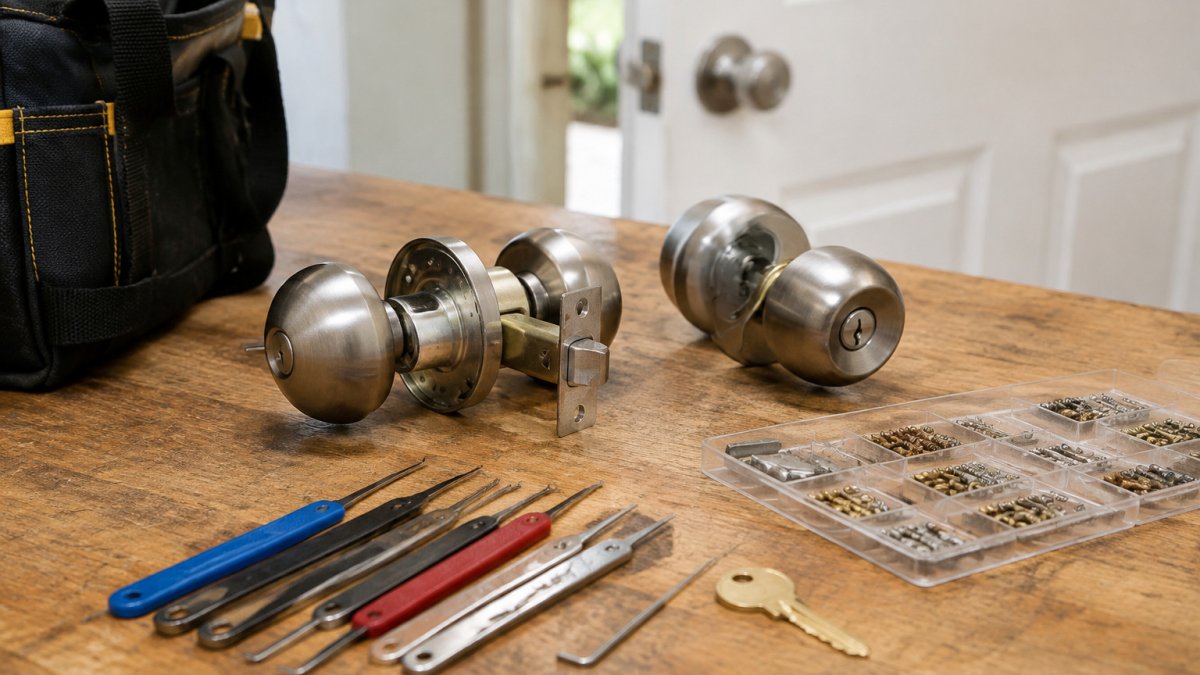
- A rekeying kit with pins, springs, and a plug follower
- Pinning tweezers for handling small parts
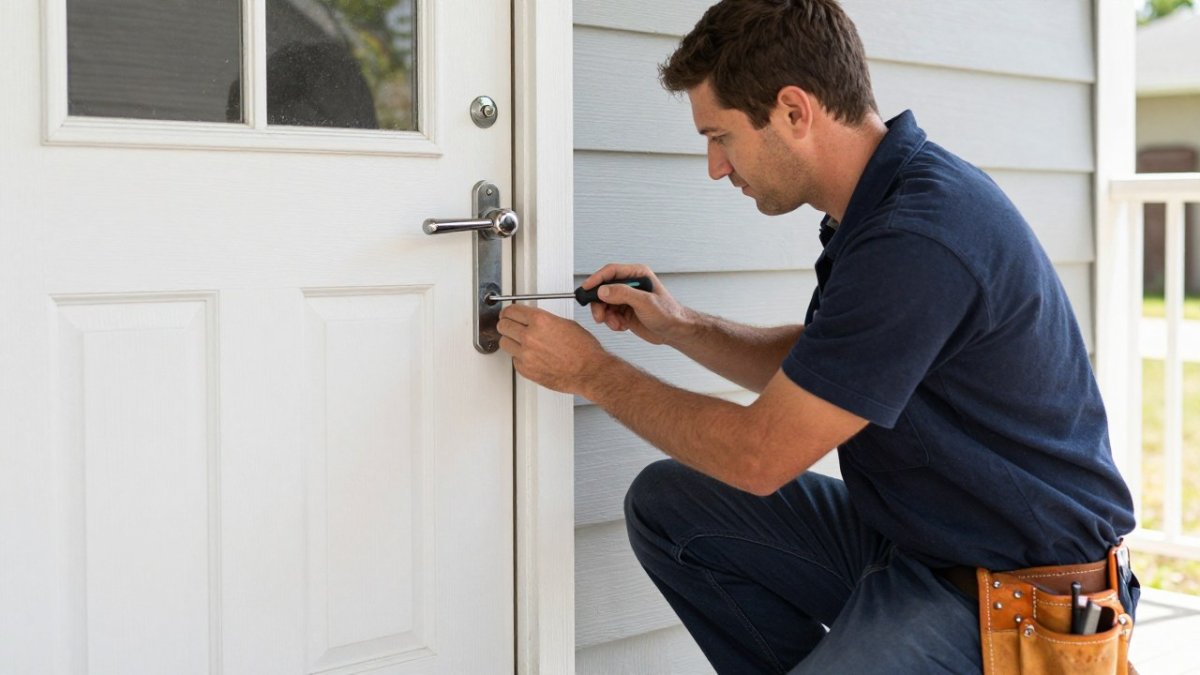
- A screwdriver or multi-tool to remove the cylinder
- A flat work surface and a good light source
The rest of this article walks through each tool, how to choose a kit that fits your lock, and where the job starts to exceed a typical DIY project.
Essential Tools Checklist and What Each One Does
Before you open a lock, gather your tools. Missing one part halfway through the job is a common reason people give up and call a professional. The checklist below is organized by what each tool actually does, so you can see which items are essential, which are optional, and which are usually already in a kit.
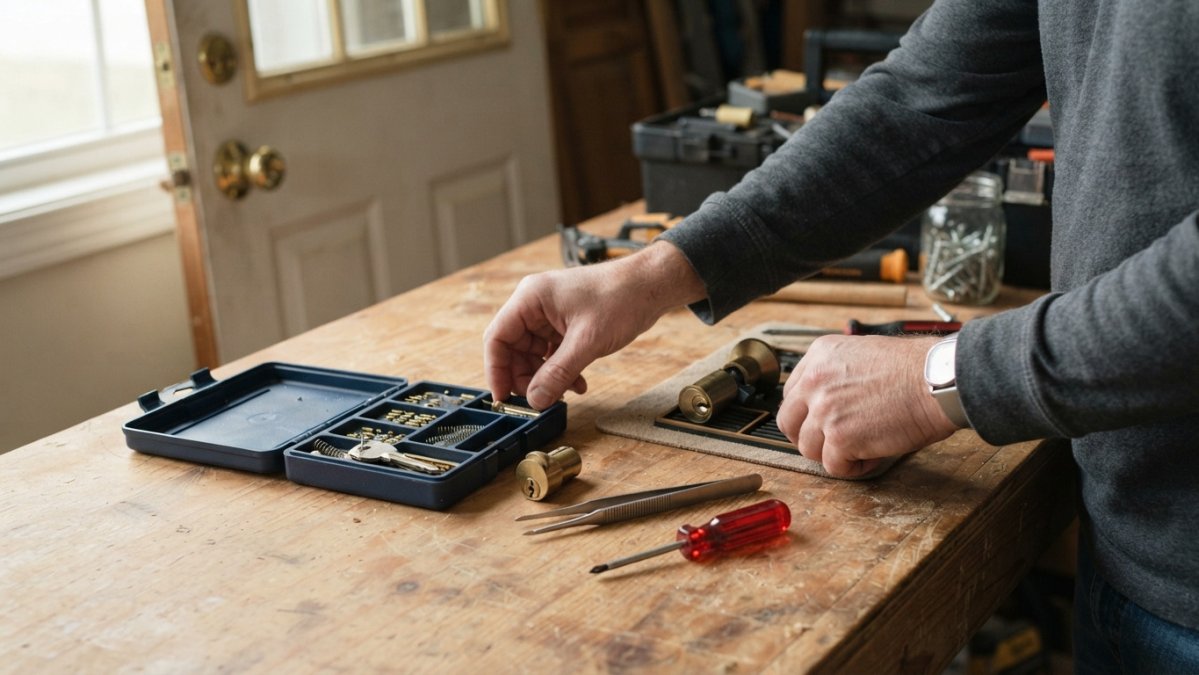
Essential tools and their purposes
- Rekeying kit (pins, springs, and a plug follower): The core of the job. The kit supplies replacement pin stacks in multiple heights so you can build a new combination, plus the follower that holds the plug in place during disassembly. Most residential kits cover standard pin tumbler cylinders with five or six pins.
- Pinning tweezers: Spring-loaded tweezers with fine tips let you pick up pins and springs without crushing or dropping them. A dropped spring is the single most common reason a DIY rekey stalls, because it can vanish into carpet or a floor gap.
- Screwdriver or multi-tool: Removes the retaining screw on the interior side of the lock, or the C-clip on some cylinder designs. A #2 Phillips and a small flathead cover most residential hardware.
- Plug follower: A cylindrical tool that slides into the cylinder bore behind the plug as you push the plug out, keeping the pin chambers from dumping their springs. Some kits include a follower; if yours does not, a compatible follower is sold separately.
- Plug depressor or tension tool: Holds the plug at the correct rotation so the pin chambers line up with the follower and the pins do not shift while you work.
- Small tray or magnetic parts dish: Keeps pins, springs, and the retaining screw organized in removal order. A muffin tin or ice cube tray works as a substitute.
- Clean cloth and good light: A lint-free cloth wipes graphite or old lubricant off the plug, and a bright task light makes tiny pin heights easier to read.
Optional and lock-specific tools
- Lock shim or small pick: Useful for seating a stubborn pin or checking alignment during reassembly. Not required for a standard rekey.
- Key gauge or caliper: Helps confirm pin heights when you are matching a new key's bitting. A cheap digital caliper is a common substitute for a dedicated key gauge.
- Cylinder removal tool: Some brands, particularly certain European-style and high-security cylinders, need a dedicated removal tool or a specific clip tool. Check your lock's documentation before buying.
- Graphite or dry lubricant: A light application after reassembly helps a stiff plug, but avoid wet oils that attract dust.
What is usually already in a kit
Most residential rekeying kits include the pin assortment, springs, a plug follower, and a plug depressor. Pinning tweezers, screwdrivers, and trays are often sold separately, so read the kit contents list before you assume you are ready to start. A kit that includes tweezers and a follower is usually the better value for a first-time DIYer.
Safe substitutions and what to avoid
A small flathead screwdriver can substitute for a plug depressor in a pinch, and a stiff wire or paper clip can help seat a pin, but neither replaces a proper follower.
Watch out: Lay out the pins in the order you remove them and keep each pin stack with its chamber, so the cylinder can be rebuilt correctly.
The table below sums up the core tools for a DIY rekey and what each one does.
| Tool | Purpose | Note |
|---|---|---|
| Rekeying kit | Supplies pins, springs and plug follower | Covers standard five or six pin cylinders |
| Pinning tweezers | Handles pins and springs without dropping them | A dropped spring is a common reason DIY stalls |
| Screwdriver or multi-tool | Removes retaining screw or C-clip | A #2 Phillips and small flathead cover most hardware |
| Plug follower | Holds pin chambers while the plug is pushed out | Sold separately if the kit lacks one |
| Plug depressor | Keeps plug at correct rotation | A small flathead can substitute in a pinch |
| Tray or magnetic dish | Keeps pins in removal order | A muffin tin or ice cube tray works |
| Clean cloth and light | Wipes plug and shows pin heights | Lint-free cloth and bright task light |
Choosing a Rekey Kit: Compatibility by Lock and Cylinder Type
Not every kit works with every lock. Most residential doors use a pin tumbler cylinder, which is the type covered in most rekeying kits. Before you buy, check the brand and model stamped on the lock.
Pin tumbler cylinders and kit compatibility
Most standard deadbolts and entry knobs are pin tumbler cylinders. A general-purpose kit covers many of these, but some brands use proprietary pin sizes or cylinder designs. Check the kit's compatibility list against your lock's brand before you order.
If you are not sure what you have, you can:
- Look up the brand name stamped on the face of the cylinder
- Count the pins and note the keyway shape
- Take a clear photo of the lock and compare it with the kit listing
Where to source a rekey kit
Hardware stores and online retailers both sell rekeying kits. Hardware stores and online sellers are common places to find a kit. Read reviews and confirm the lock brand is listed before you buy.
Other providers offer different kit configurations, so compare what each one includes rather than only the price.
Step-by-Step: Removing the Cylinder and Replacing Pins
Work slowly, and keep your parts in order.
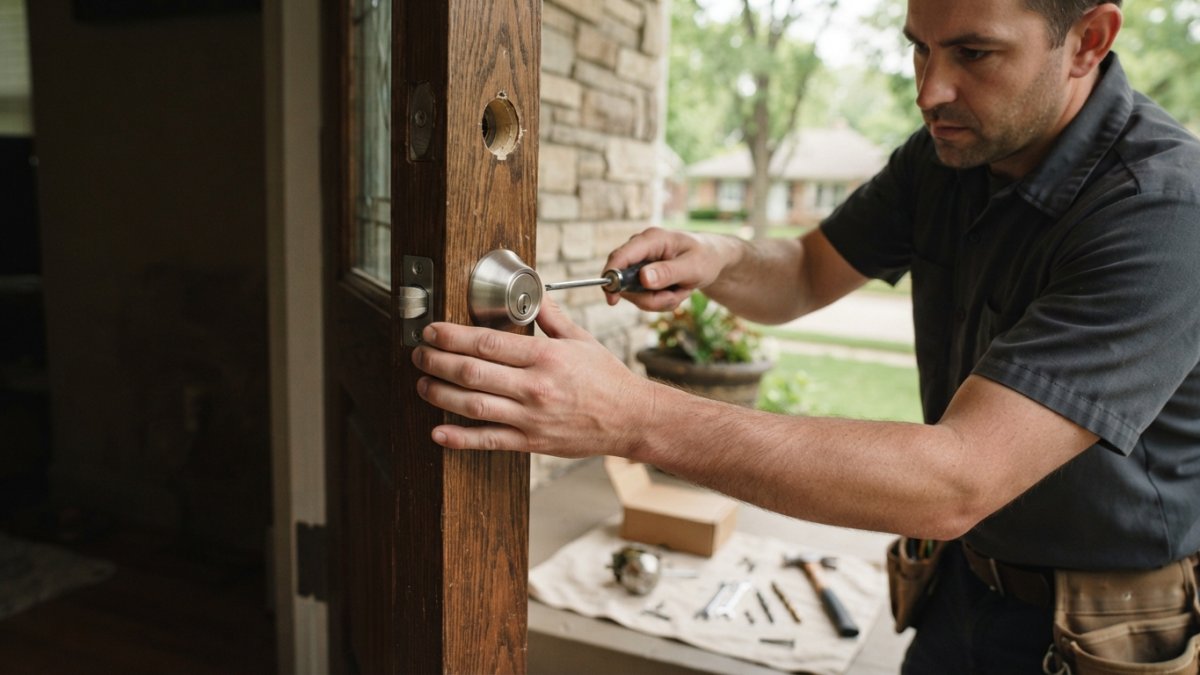
- Remove the retaining screw or clip. Use your screwdriver to free the cylinder from the door.
- Pull the cylinder out. Insert the key partway and turn it to the unlock position so the cylinder slides out cleanly.
- Hold the plug with the follower. Insert the plug follower into the back of the cylinder and keep steady pressure so the plug does not come loose.
- Remove the pins. Use pinning tweezers to lift out the springs and pins, placing each set in your tray in order.
- Set the new pins. Choose new pin heights from your kit to match the bitting of your new key, then reinsert them in the same order.
- Test the plug. Insert your new key and turn it. It should turn smoothly without binding.
- Reassemble and reinstall. Put the cylinder back in the door, tighten the retaining screw, and test the new key again.
Watch out: If the new key feels stiff or the plug does not turn, check that each pin is seated fully and that no spring is caught.
How to Rekey a Door Lock Without a Key
Sometimes you have no working key at all. Rekeying still works in this case because you remove and rebuild the cylinder rather than using the old key to guide the process.
If you are locked out and need immediate access, a locksmith can usually open the door without damaging the lock, then rekey or replace the cylinder afterward. That is often the faster route for an emergency.
Cost to Rekey House Locks: DIY Versus a Local Locksmith
Cost is usually the deciding factor between a DIY rekey and hiring a locksmith, but the comparison is more than the price of a kit. The table below frames the trade-offs in qualified terms; actual prices vary by brand, lock count, and local labor rates, so confirm current listings and quotes before you commit.
DIY cost and time
A DIY rekey costs the price of a rekeying kit plus any tools you do not already own. Kit prices vary by brand and contents, so check current listings before you buy. Plan on roughly 20 to 45 minutes for a single standard deadbolt or entry knob once you have practiced the sequence, and longer for a first attempt or for multiple locks.
Professional cost and time
A locksmith charges for labor and service, and the total depends on the number of locks, the lock type, and whether the work is done on site. Mobile service may include a trip charge. A professional rekey is typically completed on site, and pricing depends on the number of locks and the lock type. Ask for a quote that separates labor, trip charge, and parts so you can compare it with the DIY total.
Decision framework
- Choose DIY for a single standard pin tumbler cylinder, when you have time to work slowly, and when you are comfortable handling small parts. The savings are largest when you already own the basic tools.
- Choose a professional when you have several locks, a high-security or proprietary cylinder, a damaged lock, or no time to troubleshoot. A failed DIY attempt that damages a cylinder can cost more than the original service call.
- Consider a hybrid if you want to learn: have a locksmith rekey one lock while you watch, then handle the rest yourself with the same kit.
Pricing depends on the number of locks, the lock type, and whether the job is done on site. For current pricing or a quote, please contact Blackshirt Lock & Key directly.
Booking Your Rekey Service in Council Bluffs
If the job feels like more than you want to take on, our team at Blackshirt Lock & Key can handle it.
Blackshirt Lock & Key offers key cutting, programming, and installation along with re-keying and emergency lockout services. Call us to schedule a visit.
Blackshirt Lock & Key is ready when you need a rekey done right the first time.
Frequently Asked Questions
What tools do you need to rekey a lock?
At minimum you need a rekeying kit with pin sets and a plug follower, a plug depressor or lock shim, pinning tweezers, a small screwdriver or multi-tool to remove the retaining clip, and the new key that matches your chosen bitting. A clean workspace and a small tray for pins help you keep track of small parts. Confirm your lock brand and cylinder type before buying, since kits are not universal and some cylinders need specific followers.
Can I rekey a door lock myself?
Yes, many homeowners rekey a standard pin tumbler lock themselves with a kit and patience. The job is manageable on residential cylinders but gets harder with high-security or restricted keyways, and mistakes can leave the lock stuck or misaligned. If the cylinder is damaged, the lock is part of a security system you rely on, or you are not comfortable handling small springs and pins, call a licensed locksmith instead.
Can you rekey a door lock without the original key?
Yes. Rekeying works by changing the internal pins, so you do not need the original key. You do need to remove the cylinder and reset the pins to match a new key of your choice. Getting into the house in the first place is a separate lockout problem, and a local locksmith can handle that before or during the rekey.
Do all door locks use the same rekeying tools?
No. Kits are designed for specific cylinder types and keyways, so a kit that works on one brand may not fit another. Check your lock brand, the number of pins, and whether the cylinder is a standard pin tumbler, a high-security design, or a deadbolt with a different plug shape. Verify compatibility on the kit listing before you order.