 How-to
How to Remove a Broken Key from Ignition Safely
Last Updated: November 13, 2026
Quick Summary
To remove a broken key from ignition, match your tool to how much of the key is exposed: grip a protruding fragment with needle-nose pliers and pull straight out, or use a broken-key extractor for a flush fragment. Never push the piece deeper or use glue, and call a locksmith if it is recessed.
- Turn the car off, set the parking brake, and disconnect the battery before using metal tools.
- A protruding piece is the easiest case, while a recessed piece is the hardest.
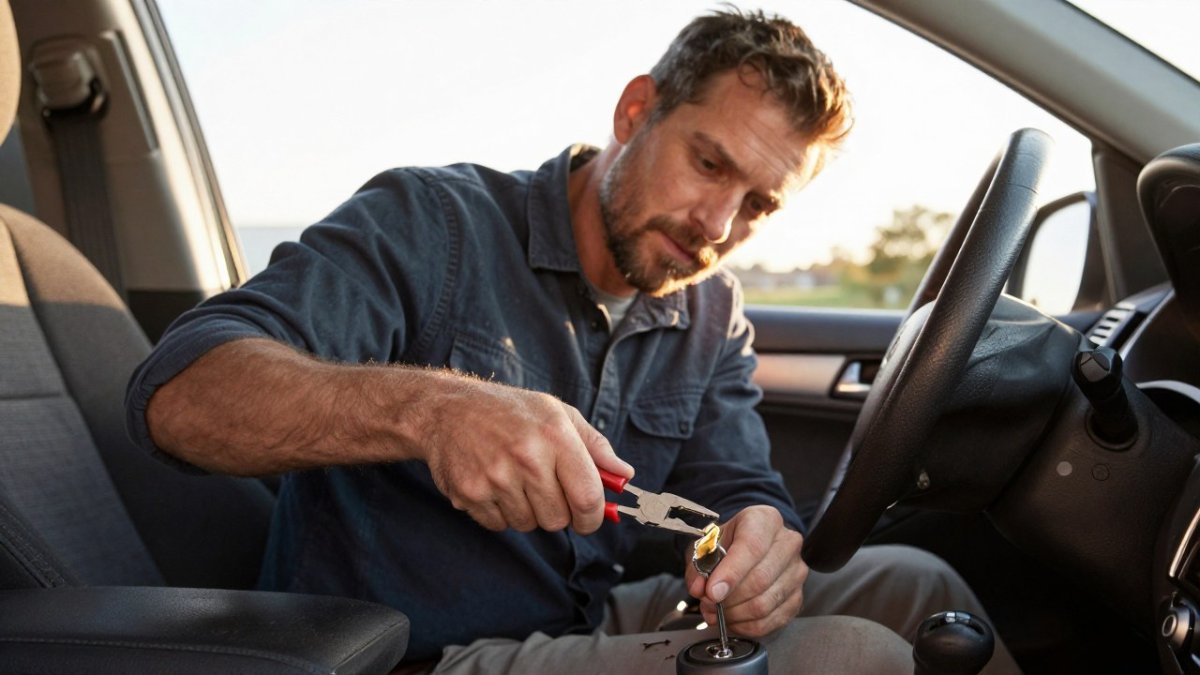
- Grip a protruding fragment with needle-nose pliers and pull straight out without twisting.
- Stop after two or three gentle tries and call a pro if the tool cannot grip.
- Never use glue, superglue, magnets, or a screwdriver on a key fragment.
Table of Contents
- Safety First: Before You Touch the Ignition
- Check How Much of the Broken Key Is Exposed
- The Right Tool to Remove a Broken Key from Ignition
- How to Remove a Broken Key in Ignition Lock Without Tools
- How to Start a Car with Broken Key in Ignition
- How to Remove Lock Cylinder with Broken Key Inside
- Methods to Avoid and Why They Fail
- When to Call a Mobile Locksmith in Council Bluffs
- Frequently Asked Questions
Safety First: Before You Touch the Ignition
A broken key in the ignition is a stressful problem, but the fix starts with restraint, not force. Before you try to remove a broken key from ignition, take a breath and follow a few safety rules.
Here is what to do first:
- Turn the car off and set the parking brake.
- Put the transmission in Park (or first gear on a manual).
- Disconnect the battery if you plan to use metal tools near the column.
- Do not push the fragment deeper while fishing for it.
- Work in good light with a flashlight or phone lamp.
Watch out: poking a screwdriver into the slot can crack the ignition cylinder housing.
Check How Much of the Broken Key Is Exposed
The first real decision is simple: how much of the snapped key is showing? That answer tells you which method to use.
Look straight into the slot with a flashlight. Compare the broken key tip to the face of the ignition cylinder.
- Protruding fragment: a clear ridge sticks out past the cylinder face.
- Flush fragment: the break sits level with the opening.
- Recessed fragment: the piece sits below the surface, inside the lock cylinder.
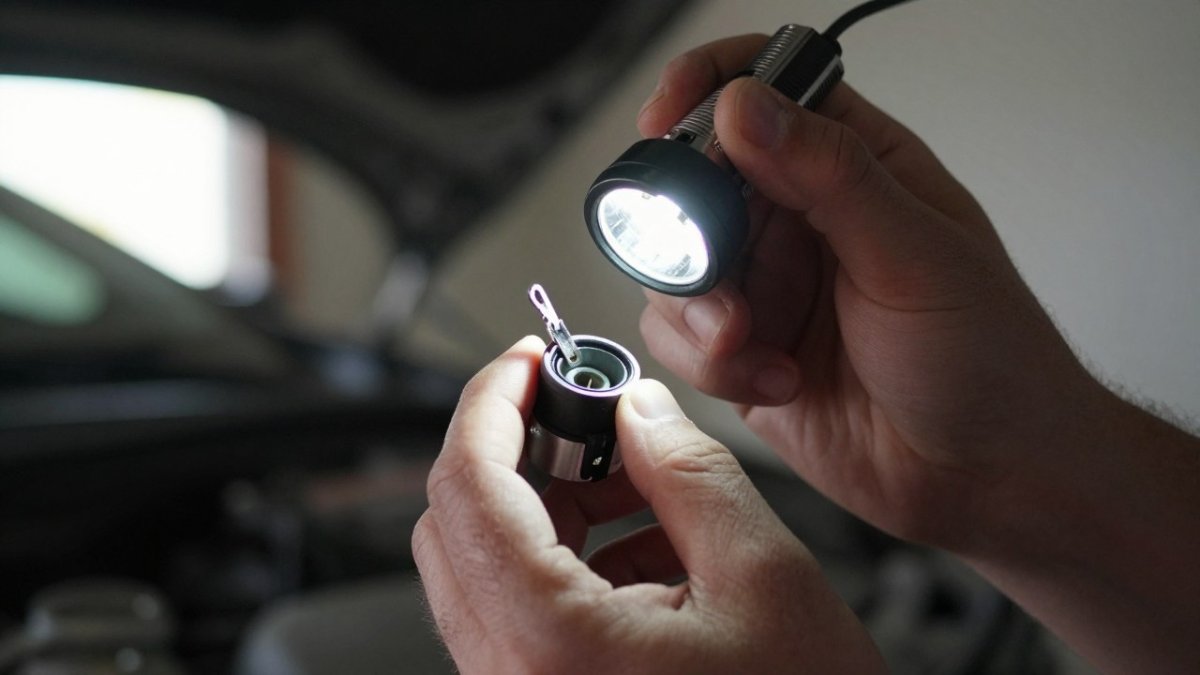
A protruding piece is the easiest case. A recessed piece is the hardest and the one most likely to need a pro. If you cannot see the fragment at all, stop and read our guide on how to fix a stuck car ignition key before you dig further.
The Right Tool to Remove a Broken Key from Ignition
Match the tool to how much of the key is exposed, and stop if the tool starts to slip rather than forcing a second attempt.
Here is a practical tool-to-situation chart:
| Situation | Best Tool | Why It Works | Main Failure Mode |
|---|---|---|---|
| Key sticks out 1/8 inch or more | Needle-nose pliers with a fine, serrated tip | Grips the exposed edge and pulls straight | Jaws slip and round off the key edge |
| Key sits flush | Broken-key extractor (the spiral or hooked type sold for this job) | Bites into the soft brass of the key | Over-tightening cracks the cylinder face |
| Key sits flush, grooved side visible | T-pin, stiff paper clip, or a thin pick | Slides along the keyway groove and hooks the back edge | Bends before it reaches the fragment |
| Deep recessed piece | Automotive locksmith with a cylinder removal kit | Avoids prying on the cylinder housing | DIY prying cracks the housing |
For a protruding fragment, grip the exposed key with the pliers and pull straight out toward you. Do not twist. If the pliers slip, reset your grip before trying again, and clean the jaws with a rag so they are not slick with oil.
For a flush fragment, a broken-key extractor works by threading a small spiral or hook into the soft brass of the key and pulling it free. A light, steady pull is generally gentler on the lock than a hard yank, which can snap the extractor tip inside the lock.
Watch out: a screwdriver, knife blade, or any flat tool wider than the keyway can crack the ignition cylinder housing or bend the wafers inside. Keep metal tools away from the airbag wiring and clock spring under the dash, and disconnect the battery if you plan to work near the column.
If the tool cannot get a grip after two or three gentle tries, stop. A recessed fragment is the case most likely to need a pro, and continuing to fish with improvised tools is how a quick extraction turns into a cylinder replacement.
How to Remove a Broken Key in Ignition Lock Without Tools
You can sometimes remove a broken key in ignition lock without tools, but only when a small edge is showing and the fragment is not jammed past the pins. The trick is friction and a straight pull, not force. If the fragment is flush or below the surface, skip this section and go to the extractor or locksmith step.
Try these steps:
- Bend a paper clip into a small hook with a pair of household pliers.
- Slide the hook along the grooved side of the fragment, not the flat side.
- Hook the back edge and pull straight out toward you.
- Wiggle gently if it sticks, then pull again.
A piece of picture wire works the same way. So does a stiff plastic zip tie for a shallow break, because the plastic will not scratch the cylinder walls. A thin feeler gauge or a stiff guitar string can also hook a shallow fragment if you have one on hand.
Watch out: never use glue, superglue, magnets, or a screwdriver on a key fragment. Glue can bond the piece to the cylinder and turn a quick job into a full replacement, and a magnet will not hold a brass key. A screwdriver or knife blade scratches the cylinder and pushes the piece deeper. These are the methods to avoid, and they fail because they either add material to the lock or damage the very surfaces the fragment needs to slide past.
If the fragment will not budge after a few gentle tries, stop. For readers facing a full key replacement, our page on car key replacement, spare keys and key fob programming explains the options.
How to Start a Car with Broken Key in Ignition
If the broken key still turns the ignition, you may be able to start the car and drive to help. This only works when the fragment is seated and the ignition turns freely.
Follow these steps:
- Insert the broken key tip fully into the slot.
- Turn it gently, the same way a full key would turn.
- If it catches, hold it steady and start the car.
- Drive straight to a locksmith or dealer.
Do not force a stiff key. A half-turn that jams can leave you stranded. Many newer cars use a transponder chip, so a broken key may not start the engine even if it turns. In that case, a programmed replacement is the only fix.
How to Remove Lock Cylinder with Broken Key Inside
When the fragment is deep and will not come out, removing the lock cylinder is the next step. This is a job for someone with the right tools, and we usually recommend a pro here.
The general process looks like this:
- Remove the plastic steering column cover.
- Find the cylinder release pin or screw.
- Press the pin and slide the cylinder out.
- Push the fragment out from the back.
On many vehicles this needs a specific release tool and a delicate touch around the airbag clock spring. Get it wrong and you can damage the column or the wiring. If you are not confident, hand it to an automotive locksmith. A mobile locksmith can handle this on site, and you can see the range of car key replacement and programming services available.
Methods to Avoid and Why They Fail
Some popular "fixes" cause more harm than good.
Here is what to skip:
- Screwdrivers and knives: they scratch the cylinder and push the piece deeper.
- Excessive force: it cracks the ignition lock and can break the steering lock.
- Glue or adhesive: it bonds the fragment to the lock.
- Drilling: it destroys the cylinder and often the ignition switch.
- Pushing the key inward: it jams the piece past the pins.
The common thread is force. A broken key needs a steady pull, not a shove. If a method feels like it is fighting the lock, it probably is. Stop and switch approaches.
When to Call a Mobile Locksmith in Council Bluffs
Call a mobile locksmith when the fragment is recessed, the ignition will not turn, or your own gentle tries have failed. A pro has extractors, picks, and the tools to pull a cylinder without damage.
For drivers in Council Bluffs, IA, help can come to your driveway or parking lot. A mobile service brings the tools to your car, so there is no shop-based wait. Pricing and a quote are available on the Blackshirt Lock & Key pricing page.
Here is when to make the call:
- The key is flush or below the surface.
- You see damage to the cylinder.
- The car will not start after the break.
- You need a new key cut and programmed on site.
If you are searching for a locksmith near me in Council Bluffs, our mobile car key service in Council Bluffs is one option to consider. Just across the river, drivers can reach our Omaha car key replacement team. Before you dial anyone, read our guide to finding honest locksmiths in Council Bluffs so you know what fair service looks like.
A broken key does not have to ruin your day. The right tool, a steady hand, and a clear decision about when to stop will save your ignition. When the fragment is deep or the job feels risky, our fully mobile, fully insured team comes to you with on-site key cutting, programming, and extraction. Get started with Blackshirt Lock & Key and get your car back on the road without the guesswork.
Frequently Asked Questions
How do you get a broken key out of your ignition?
First check how much of the key fragment is exposed. If a quarter inch or more sticks out, grip it with needle-nose pliers and pull straight out. If it sits flush or below the cylinder opening, use a T-pin, paper clip, or a broken-key extractor with a hooked tip to catch the grooved side and slide it free. Work gently and never twist, because twisting pushes the fragment deeper and can damage the lock cylinder.
Can a magnet remove a broken key?
Rarely. Most car keys are brass or steel alloys, and brass is not magnetic at all. Even on steel keys, a magnet only works if the fragment sits close to the surface and has enough exposed metal to grab. A magnet is not a reliable broken key removal method and can pull the fragment sideways into the cylinder walls, making extraction harder. Use pliers or a hooked extraction tool instead.
Should you remove the ignition cylinder if a key breaks inside?
Only as a last resort. Removing the ignition cylinder requires trim panel removal, a release pin or retaining screw, and often a steering column shroud disassembly, and on many vehicles the cylinder is coded to the immobilizer. If the fragment is deep, jammed, or the cylinder will not turn, a locksmith can help assess the options.
Can you start a car with a broken key in the ignition?
Sometimes, if the fragment still sits deep enough in the cylinder to engage the wafers and the immobilizer chip is intact. Insert the remaining half of the key behind it and try a gentle turn. If the car has a transponder chip, the chip must be near the reader, so a broken key half may not satisfy the anti-theft system. If the cylinder binds or the security light stays on, stop and call a locksmith rather than forcing it.