 How-to
Is Mobile Key Programming Safe? A 2026 Guide
Table of Contents
- How Mobile Key Programming Works
- The Real Risks of Aftermarket Key Programmers
- Car Key Fob Programming vs Dealership: What Changes
- How to Verify a Mobile Locksmith Before You Book
- Warranty and Insurance: What Coverage Actually Applies
- When Mobile Key Programming Is the Safe Choice
- Frequently Asked Questions
Last Updated: September 14, 2026
How Mobile Key Programming Works
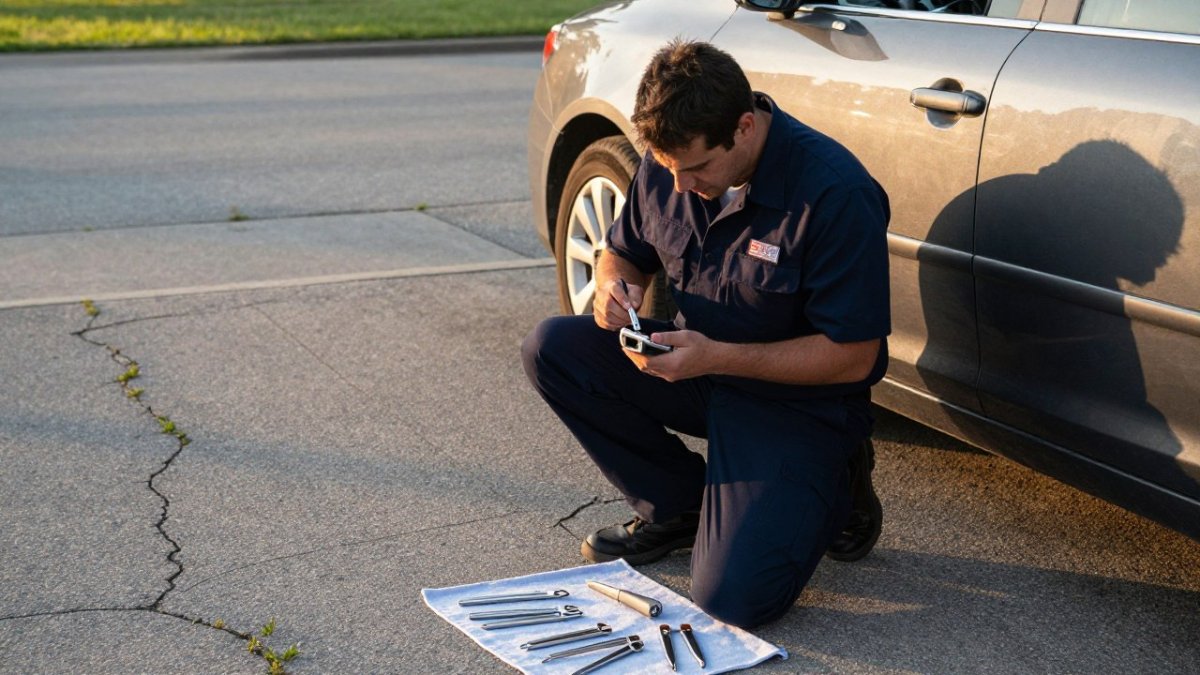
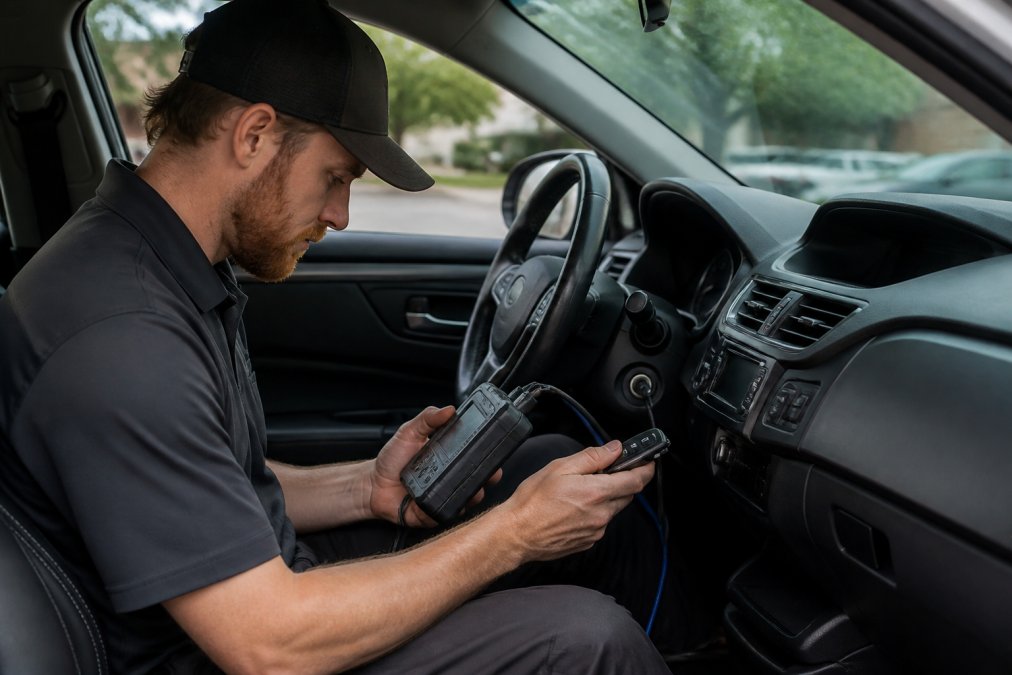
Mobile key programming is a fully on-site service where a trained technician uses diagnostic equipment to pair a new key or fob to your vehicle's immobilizer system without the car ever leaving your driveway. At Blackshirt Lock & Key, we bring that equipment to you, which means no tow bill and no waiting room.
Here's what actually happens: the technician connects a programming tool to your car, usually through the OBD-II port under the dash, and writes new security data to the vehicle's computer. The immobilizer system is the anti-theft layer that only accepts a key carrying the correct transponder chip code (nhtsa.gov).
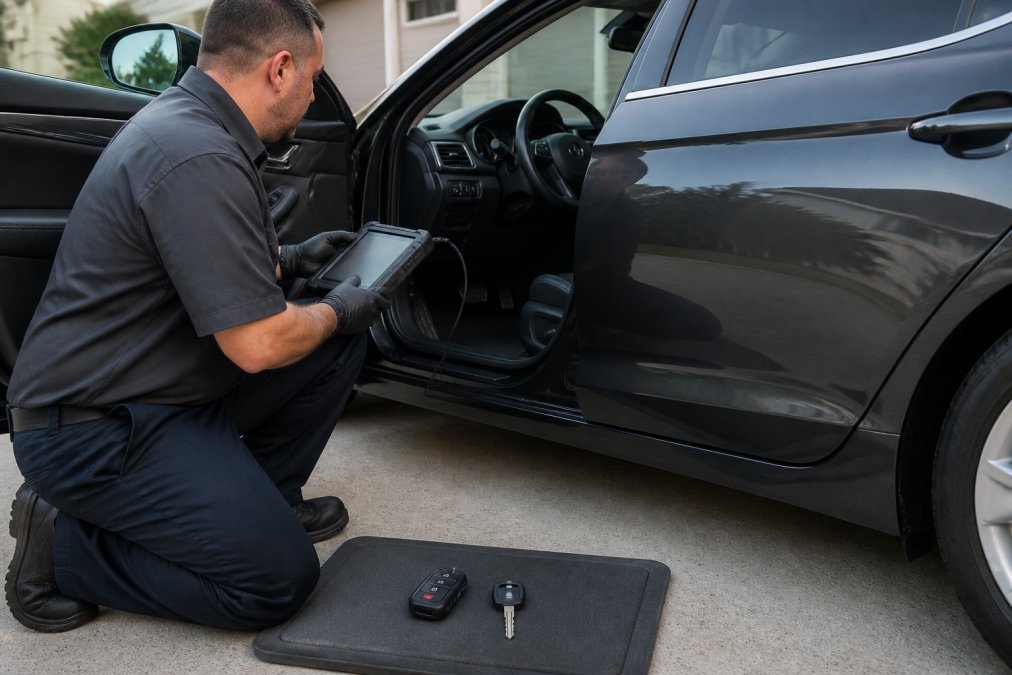
What Happens During a Mobile Programming Visit
The technician verifies your ownership documents first, then reads the vehicle's existing key data. A blank transponder key or fob gets cut and programmed to match. Finally, the system is tested: door locks, ignition, and remote entry all get checked before the technician leaves. If the immobilizer rejects the new key, it gets reprogrammed on the spot.
The Real Risks of Aftermarket Key Programmers
The biggest risk with aftermarket key programmers is not that they fail outright. It is that they succeed partially, writing data the vehicle accepts at first and then rejects later. Cheap, unlicensed tools can write bad data to the ECU, and a corrupted module can leave your car inoperable. A mobile key programming job is only as safe as the equipment and the technician behind it.
Cloned Keys vs. Original Programmed Keys
Most cheap programming tools on the market do one thing: they clone. A cloned key copies the transponder signal from an existing key onto a blank. An original programmed key is written into the vehicle's immobilizer memory as a new, distinct identity.
The difference matters for three reasons:
- Revocability. An original programmed key can be deleted from the immobilizer if it is lost or stolen. A cloned key often cannot, because the vehicle never knew it existed as a separate identity.
- Rolling codes. Many modern fobs use rolling-code encryption, where the fob and vehicle generate a new code each time the button is pressed (NIST Releases First 3 Finalized Post-Quantum Encryption Standards | NIST). A cloned fob can fall out of sync because both copies transmit the same sequence. The vehicle accepts one and rejects the other.
- Immobilizer capacity. Most immobilizers have a fixed slot count for registered keys. Cloning does not consume a slot, which sounds like an advantage until you need to remove a lost key and discover the clone is invisible to the system.
This is why a $40 programming tool from an online marketplace and a dealer-level diagnostic platform are not interchangeable, even when both produce a key that starts the car on day one.
Software Corruption and ECU Sync Failures
ECU synchronization failures happen when the programming tool and the vehicle's computer fall out of step. Symptoms include a key that starts the car once and then never again, or a fob that locks but won't unlock. These failures are rare with professional-grade diagnostic tools but common with cut-rate ones. A bad tool can brick it.
How to Verify the Job Was Done Correctly
You do not need a diagnostic scanner to check most of what matters. Run this checklist before the technician leaves your driveway:
- Start the car twice, with a pause between. Turn it off, wait thirty seconds, start it again. A key that only works on the first start is a sync failure waiting to happen.
- Test every button on the fob. Lock, unlock, trunk, panic. A fob that locks but won't unlock usually means the rolling code is out of sync.
- Test the physical key in the door and ignition. If the key was cut, confirm it turns smoothly in both. A key that only works in the ignition will strand you if the fob battery dies.
- Check the dashboard immobilizer light. It should behave exactly as it did with your original key. A light that stays on or blinks a different pattern is a warning.
- Ask how many keys are now registered to the vehicle. A competent technician can tell you. If the count is higher than the number of keys you physically hold, an old key may still be active.
- Get the work documented. Ask for a receipt that lists the key or fob part number, the programming method, and the date. This is your evidence if a warranty dispute arises later.
If any of these checks fail, do not pay and do not let the technician leave with the vehicle in a partially programmed state. A failed programming attempt can leave the immobilizer in a state that prevents the original key from starting the car.
What to Do Immediately After a Failed Programming Attempt
If a programming attempt fails and the car will not start, the priority is preventing a lockout, not fixing the key.
- Do not repeatedly try to start the car. Each failed start attempt can push the immobilizer further out of sync.
- Do not disconnect the battery. On many vehicles, a battery disconnect during a failed programming state can lock the immobilizer entirely and require a dealer-level reset.
- Leave the key in the ignition in the ON position for ten minutes. Some immobilizers will re-handshake with the key during a timed reset window. This works on some vehicles and not others, but it costs nothing to try.
- Call a second, independent locksmith or a dealer. Be honest that a prior attempt failed. A technician who knows the vehicle is in a partial-programming state will bring different equipment than one expecting a clean job.
- Document everything. Photograph the dashboard, note the time, and keep any receipt from the first attempt. If the module is damaged, this record matters for an insurance or warranty claim.
The safest time to program a spare key is before you need it, not after you have lost your only one. A vehicle with two working keys can usually accept a third without risk to the existing keys. A vehicle with zero working keys is a recovery job, not a programming job, and it carries more risk regardless of who performs it.
Car Key Fob Programming vs Dealership: What Changes
Car key fob programming vs dealership comes down to three things: where the work happens, how long it takes, and who holds the liability. A dealership programs keys in a service bay, often by appointment, and typically charges for the visit plus the key. A mobile automotive locksmith does the same work in your driveway, usually the same day.
| Factor | Mobile Locksmith | Dealership |
|---|---|---|
| Location | Your driveway or lot | Service bay, by appointment |
| Turnaround | Often same day | Often days out |
| Tow required | No | Sometimes |
| Equipment | Dealer-level or OEM-grade tools | OEM equipment |
The catch: not every mobile provider uses dealer-level programming. Ask before you book.
How to Verify a Mobile Locksmith Before You Book
Verification is the step most people skip, and it's the one that protects you. A legitimate mobile locksmith will answer questions about credentials, equipment, and insurance without hesitation. If they dodge, book someone else.
Questions to Ask on the Phone
- What programming equipment do you use, and is it OEM-grade?
- Are you fully insured, and can you show proof?
- Do you provide a written price before starting?
- What happens if the programming fails?
- How long have you handled immobilizer and smart key systems?
Warranty and Insurance: What Coverage Actually Applies
Two separate coverage questions come up after a mobile key programming job: does your vehicle warranty still apply, and does anyone's insurance pay if something goes wrong? Most articles lump these together. They are governed by different rules.
How the Magnuson-Moss Warranty Act Protects You
The Magnuson-Moss Warranty Act is the federal law that governs how manufacturers can condition warranty coverage on the use of specific parts or service providers (the FTC). Under the Act, a manufacturer cannot void your entire warranty simply because an independent locksmith programmed your key. The manufacturer can only deny coverage for a specific repair if it can demonstrate that the aftermarket part or service caused the failure.
In practice, this means a dealer cannot tell you your powertrain warranty is void because a mobile locksmith cut and programmed a spare fob. What a dealer can do is deny a claim for a failed immobilizer module if the programming tool wrote corrupt data that damaged it. The burden is on the manufacturer to show causation, not on you to prove innocence.
A common pattern: the dealer service writer says "aftermarket programming voids the warranty" as a blanket statement. That statement is not accurate under federal law. Ask for the denial in writing with the specific failed component identified.
What Your Auto Insurance Actually Covers
Standard personal auto policies generally do not cover key replacement or programming as a standalone loss. A key is not a covered auto part under most comprehensive or collision coverage. Two exceptions exist:
- Roadside assistance endorsements. Many insurers sell a roadside assistance add-on that includes lockout service and, in some plans, key replacement up to a stated limit. The limit is usually modest and the reimbursement is often capped per occurrence.
- Comprehensive coverage after theft. If your keys were stolen along with the vehicle or in a break-in, comprehensive coverage may reimburse rekeying and reprogramming to prevent the thief from returning. This is a theft-loss claim, not a key-loss claim.
What is almost never covered: a key you simply lost, a fob whose battery died, or a spare you decided to cut. Those are out-of-pocket expenses.
The Locksmith's Liability Insurance Is the Real Backstop
The coverage that matters most for a mobile programming job is the locksmith's own liability policy. A legitimate provider carries general liability and, ideally, garage keepers or errors-and-omissions coverage that specifically extends to programming work. Ask for the certificate of insurance and confirm two things: the policy is current, and the description of operations includes immobilizer or key programming.
When Mobile Key Programming Is the Safe Choice
Mobile key programming is safe when three conditions are met: the technician is certified, the equipment is OEM-grade or dealer-level, and the provider carries insurance. Under those conditions, on-site programming is far more convenient. The risks come from unauthorized tools and uncertified operators, not from the mobile format itself.
For a lost key, a dead fob battery, or a spare you want cut before you need it, mobile service removes the tow and the wait.
Frequently Asked Questions
Can remote car keys be hacked?
Yes, in specific circumstances. Relay attacks let thieves capture and rebroadcast a proximity key's signal from outside a home, and older fixed-code systems are vulnerable to signal capture. Rolling codes and encryption in modern immobilizer systems make this harder, but no system is impossible to defeat. The bigger practical risk is a poorly programmed or cloned key left in the wrong hands, which is why you should confirm the locksmith erases old key data from the vehicle's ECU after programming a replacement.
Can a locksmith program a key fob without the original?
Often, yes. A mobile locksmith with dealer-level diagnostic tools can add a new key by connecting to the OBD-II port and authenticating against the vehicle's immobilizer system, even if every original key is lost. Some vehicles require a working key or a PIN pulled from the manufacturer's database, and a few models need the ECU to be removed. Ask upfront whether your year, make, and model can be programmed on site or needs a dealer visit.
What security risks come with cheap aftermarket key programmers?
Low-cost programmers may lack current software for your vehicle's encryption, which can leave a key partially paired or corrupt the immobilizer data. Some tools also store key codes on the device, creating a security vulnerability if the unit is lost or resold. Ask what diagnostic tools the locksmith uses, whether the software is licensed and updated, and whether old key fobs are deleted from the vehicle after the new key is programmed.
How do I verify a mobile locksmith is legitimate and safe?
Ask for the company name, a local business address, and proof of insurance before booking. Confirm the technician carries a state or local locksmith license if your area requires one, and get a written quote covering the key blank, programming, and any trip fee. A legitimate mobile locksmith will answer questions about diagnostic tools and OEM versus aftermarket key stock without hesitation. If the price seems far below every other quote, treat that as a warning sign rather than a bargain.
Losing a key shouldn't mean losing your car for a day. Blackshirt Lock & Key brings fully mobile key cutting and programming to your location, backed by a fully insured team and straightforward pricing with no hidden fees. We handle transponder keys, fobs, and immobilizer programming on site, so you skip the tow and the wait. Call Blackshirt Lock & Key and get your key programmed where your car is parked.