 How-to
Bulk Rekeying Services for Landlords: A 2026 How-To Guide
Table of Contents
- What You'll Need Before Booking Bulk Rekeying Services for Landlords
- Rekeying vs Replacing Locks for Rentals: Which Saves More Money?
- Step-by-Step: How the Bulk Rekeying Process Works
- The Real Cost to Rekey Apartment Locks: What Drives Your Quote
- Master Key System for Landlords: One Key, Every Door
- Tenant Turnover Security Checklist for Every Unit
- Common Mistakes Landlords Make With Bulk Rekeying Services
- Frequently Asked Questions
Last Updated: September 11, 2026
What You'll Need Before Booking Bulk Rekeying Services for Landlords
Bulk rekeying services for landlords replace the internal pins of every lock cylinder across a rental portfolio, so old tenant keys stop working without swapping out the hardware. This guide from Blackshirt Lock & Key covers what to prepare, what drives the quote, and how to run a turnover without leaving a unit exposed.
Vacant units are the most vulnerable property you own: a unit sitting empty with a former tenant's key still in circulation is an open invitation. Before you book a bulk rekeying visit, gather four things:
- A unit list with door counts. Not every unit has the same number of exterior doors. Walk each property and count cylinders, not units.
- Current key inventory. How many keys exist per unit, and who holds them? Missing keys change the scope of the job.
- Access plan. A written schedule of which units are vacant, which need tenant notice, and who is letting the technician in.
- Hardware condition notes. A worn deadbolt may need replacement instead of a rekey, and a technician should flag that on site rather than mid-job.
Landlords who arrive prepared get a faster, cleaner visit; those who don't usually pay for a second trip.
Rekeying vs Replacing Locks for Rentals: Which Saves More Money?
Rekeying wins on cost for most rental turnovers. A rekey changes the pins inside an existing cylinder; a replacement throws away working hardware and buys new. When the lock body is sound, there's no security benefit to replacing it.
Replacement makes sense in a narrower set of cases:
| Situation | Rekey | Replace |
|---|---|---|
| Tenant moved out, keys returned | Yes | No |
| Keys lost or unaccounted for | Yes | Sometimes |
| Cylinder damaged or seized | No | Yes |
| Upgrading to a keypad or smart lock | No | Yes |
| Hardware is builder-grade and worn | No | Yes |
Rekeying preserves your hardware investment and delivers the same outcome: the old key no longer opens the door. Replacement resets everything, which is useful when the hardware itself is the problem.
One caveat worth stating plainly: if a master key system is already in place, a rekey has to be done by someone who understands how the existing hierarchy is pinned. A generic rekey can silently break a master key setup, and you won't find out until a master key stops working on one door.
Step-by-Step: How the Bulk Rekeying Process Works
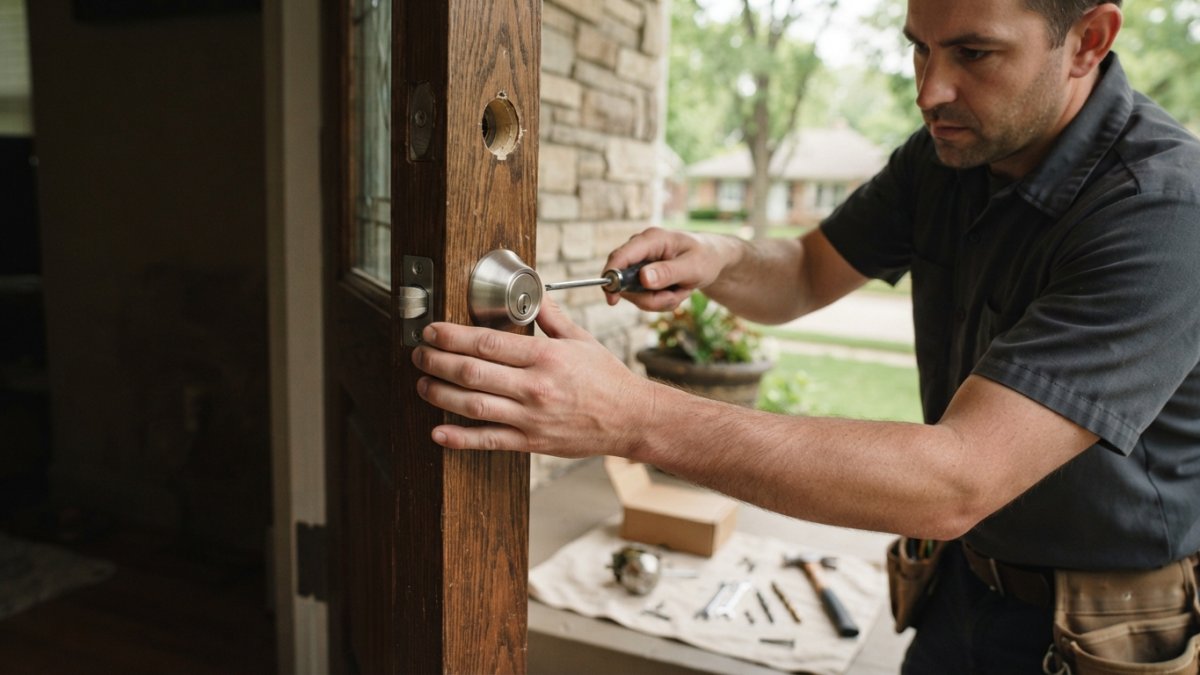
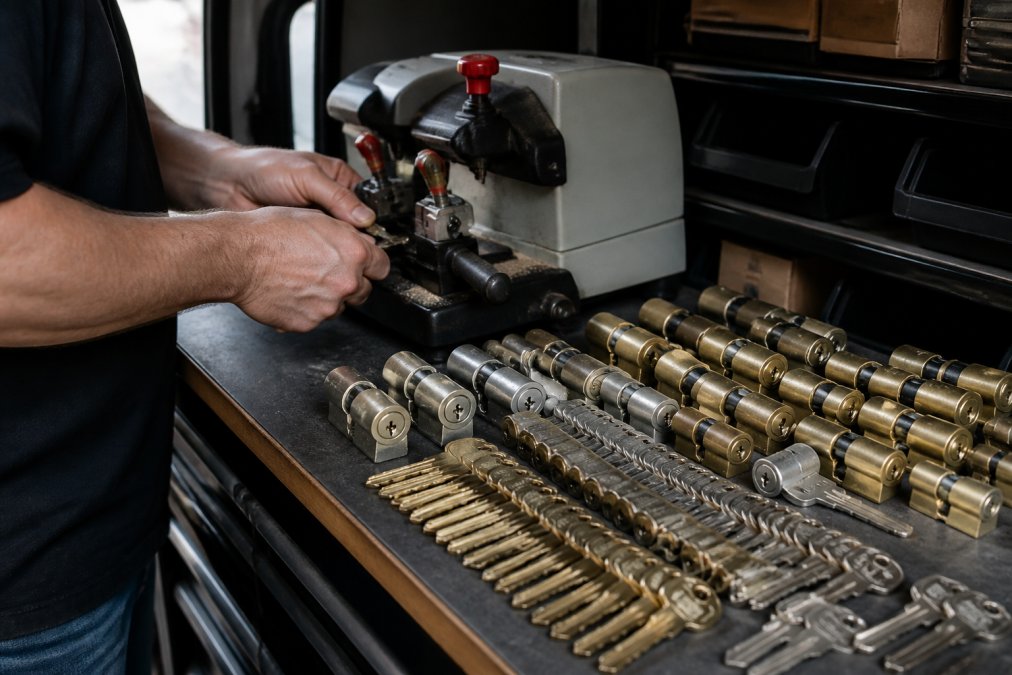
The bulk rekeying process follows a fixed sequence: remove each cylinder, extract the plug, swap the pin stacks to match a new key, reassemble, and test every door. A single unit takes minutes; a portfolio takes a scheduled block.
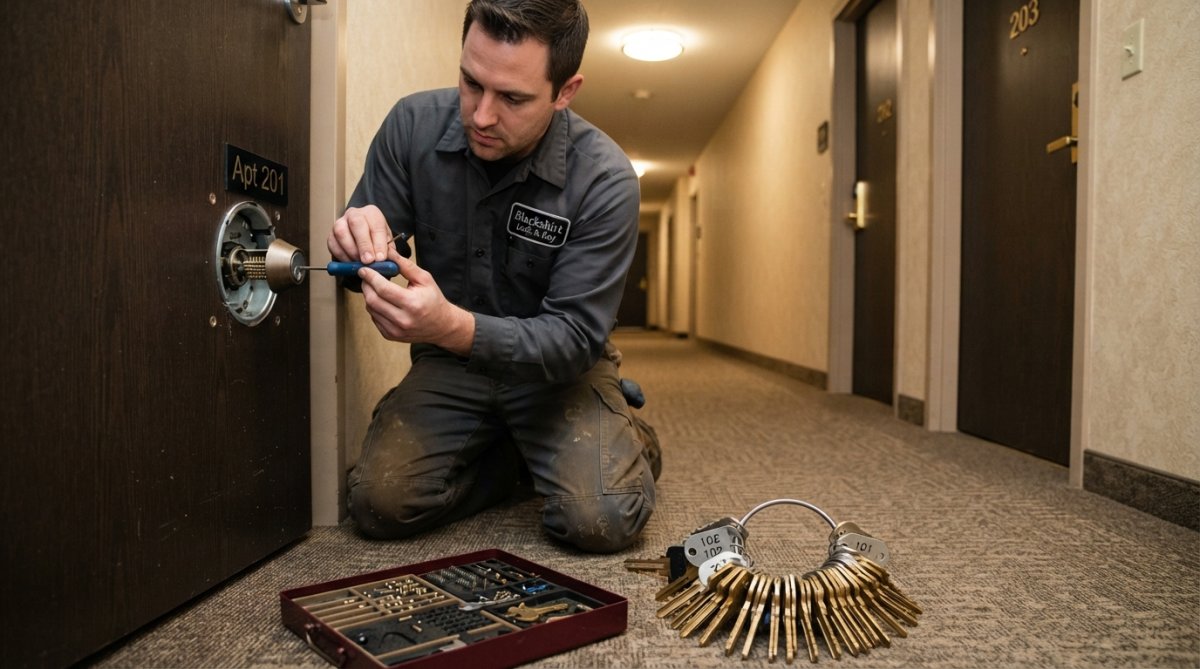
Here's how a professional bulk visit runs:
- Confirm the keying plan. Decide whether every unit gets a unique key or whether you're grouping units under a master key system.
- Remove and tag cylinders. Each cylinder is pulled and labeled by unit so nothing gets mixed up.
- Rekey to the new pinning. Pins are swapped so the new key operates the lock and the old key does not.
- Test every door. Each cylinder is reinstalled and tested with the new key before the technician moves on.
- Cut and distribute new keys. New keys are cut on site and handed over against your unit list.
- Document the job. A written record of which cylinders were rekeyed and how many keys were issued.
That last step is where most landlords lose control of a portfolio.
The Real Cost to Rekey Apartment Locks: What Drives Your Quote
Rekey pricing depends on quantity, hardware type, access difficulty, and whether a master key system is involved. Any provider quoting a flat rate without seeing the property is guessing.
What actually moves your number:
- Number of cylinders. Volume is the biggest factor, and bulk jobs are usually priced per cylinder with a discount at scale: the first cylinder carries the highest labor charge, and each additional cylinder on the same visit drops to a lower rate because travel and setup are already paid for.
- Lock type. Standard residential deadbolts are straightforward. Commercial-grade or high-security cylinders (Medeco, Mul-T-Lock, and similar restricted-keyway brands) take longer and often require proprietary pin kits, so expect a premium.
- Master key complexity. Building a hierarchy into the pinning adds labor, and the more levels in the hierarchy (master, sub-master, change key), the more test cycles each cylinder needs.
- Access and scheduling. Units spread across multiple buildings, or after-hours visits, cost more. A single-building job with all units vacant is the cheapest configuration.
- New keys. Key cutting and the number of copies per unit add to the total. Restricted keyways require the locksmith to order blanks, which adds lead time and cost.
- Hardware replacement. Any cylinder that fails inspection gets swapped, not rekeyed, and that line item is priced as hardware plus installation.
How to Compare Quotes Without Getting Burned
Ask every provider for the same three numbers before you sign:
- Per-cylinder rekey rate at your volume, not the single-lock rate.
- Key cutting cost per key, and how many keys are included per unit.
- Trip or mobilization fee, and whether a second visit (for units not ready on day one) is billed separately.
A quote that only states a total hides the scope and isn't comparable.
DIY vs. Professional: The Real Cost-Benefit
The temptation to rekey in-house is understandable, but the math rarely works for a portfolio. A pin kit, plug follower, cylinder removal tools, and a key machine are a real upfront investment, and the learning curve on master-key hierarchies is steep enough that one mispinned cylinder can silently break the whole system. Add labor hours per unit, liability if a lock fails, and the key machine you still need, and the in-house route only pencils out for owners with dozens of units, an on-staff maintenance tech, and steady turnover. For most landlords, the professional per-cylinder rate beats the fully loaded cost of DIY.
Consumer guidance on lock and key services
Master Key System for Landlords: One Key, Every Door
A master key system for landlords lets one key open every unit while each tenant key opens only their own door. It's the biggest operational upgrade a multi-unit owner can make, and it changes how you handle turnover.
The system works through a pinning hierarchy: each cylinder responds to both the tenant key and the master key. When a tenant moves out, you rekey that one cylinder to a new tenant key and the master key keeps working, so you never reissue the master.
For property management, this collapses a messy key distribution problem into something manageable:
- Key control. One master per manager, one tenant key per unit, nothing else in circulation.
- Faster turnovers. Rekey the single unit, not the building.
- Fewer keys to track. No more ring of twenty keys for twenty doors.
The trade-off is real: a master key system costs more to install and maintain, and if a master key is lost, the entire system needs rekeying. Master keys should be restricted and tracked like cash.
Tracking Keys Across a Portfolio
A master key system only delivers if you can answer one question at any moment: who holds which key, and when was it issued? Most landlords lose that thread within a year. The fix is a key log that travels with the property, not the manager.
At minimum, your log should record:
- Key number and keyway for every key cut, including the master and any sub-masters.
- Unit or door the key operates.
- Holder name and the date the key was issued.
- Return date and condition when a key comes back.
- Rekey date and the new key numbers issued after each turnover.
Paper logs work for a handful of units but break down fast. Property management software with a key-tracking module, or a spreadsheet with a locked-down edit history, keeps the log honest. The point is the discipline: no key leaves your control without a line in the log, and no turnover closes without an update.
Legal and Liability Considerations After Turnover or Eviction
Lock changes sit at the intersection of landlord-tenant law and premises liability, and the rules vary by state and sometimes by city. Two situations deserve specific attention:
After a tenant vacates. Most states do not mandate a rekey by statute, but a landlord who knowingly leaves a former tenant's key in circulation can be exposed if a subsequent crime is traced to it. The practical standard is to rekey between every tenancy and document it.
After an eviction or lockout. Self-help evictions, where a landlord changes the locks to force a tenant out without a court order, are illegal in most states and can expose the landlord to damages and penalties (law.cornell.edu). A lawful eviction follows a court process, and the lock change happens only after the sheriff or constable executes the writ. If you're unsure where your state draws the line, get it in writing from a local attorney first.
Fair housing and habitability. A rekey that leaves a unit with a non-functioning lock can be a habitability violation (hud.gov). Test every door before you consider the job closed, and keep the documentation.
Tenant Turnover Security Checklist for Every Unit
Run this checklist on every turnover, without exception. Skipping a step here is how a vacant unit becomes a liability.
- Collect every key and fob from the departing tenant, in writing
- Confirm the unit is fully vacant and no keys were copied
- Rekey all exterior door cylinders before the unit is shown
- Test every lock with the new key and confirm the old key fails
- Replace or rekey any cylinder with a lost or unaccounted-for key
- Update the key log with the new key numbers and issue date
- Issue new keys to the incoming tenant and record the count
- Check window locks, patio doors, and any secondary entry points
- Note any hardware that needs replacement in the next maintenance cycle
- Store one controlled copy per unit in a locked key cabinet
The rekey step is non-negotiable. Every other item on this list protects the property; the rekey protects the people in it.
Common Mistakes Landlords Make With Bulk Rekeying Services
The biggest mistake is treating a rekey as a one-off emergency instead of a scheduled part of turnover. Landlords who rekey only when they remember end up with units that sat exposed for weeks.
Other mistakes worth avoiding:
- Rekeying after the unit is shown, not before. A prospect who learns the old tenant's key still works will not sign.
- Skipping the key log. Without a record of who holds which key, you have no key control at all.
- Mixing keyways across units. If every unit uses the same keyway, a tenant key from one unit can be cut to fit another. Vary the keyway or use a master system.
- Letting a rekey break a master key setup. Verify the technician understands your hierarchy before they touch a cylinder.
- Ignoring the hardware. A rekeyed lock on a failing deadbolt is still a failing deadbolt.
A bulk visit is the moment to fix all of this at once, cheaper than chasing individual units later.
A turnover is the only reliable window to reset access to a rental unit, and once it closes, every day the old key still works is a day you're carrying risk. Blackshirt Lock & Key handles bulk rekeying for property managers as a fully mobile service that comes to your Omaha and Council Bluffs properties, cutting keys and programming on site so you're not shuttling hardware to a shop. The team is fully insured, and pricing is straightforward with no hidden fees. Call now to schedule a bulk rekeying visit and get every unit back under your control.
Frequently Asked Questions
How much does rekeying usually cost for a rental unit?
There is no single flat rate. A quote for bulk rekeying depends on how many units you have, whether each door has one cylinder or several, whether you want a master key system, and whether any locks need replacing instead of rekeying. Properties booked as one multi-unit job usually cost less per door than a string of single-unit calls. Blackshirt Lock & Key publishes current rates on its pricing page, and you can request a written estimate before any work starts.
Is it cheaper to replace locks or rekey them for rental properties?
Rekeying almost always costs less because you keep the existing lock hardware and only change the internal pins and springs. Replacement makes sense when the lock is damaged, is a cheap builder-grade model, or when you want to upgrade to a keypad or smart lock at the same time. For a standard turnover where the hardware is in good shape, rekeying is the lower-cost path and takes far less time per door.
Can a professional locksmith rekey multiple units in one visit?
Yes, and that is the whole point of scheduling bulk rekeying services for landlords. A mobile locksmith can move unit to unit in a single appointment, cutting travel time and per-door labor. Bring a unit list, note which doors share an entrance, and decide in advance whether you want one key per unit or a master key system. Batching the work also makes it easier to keep your key control records accurate.
What is the difference between rekeying and changing locks?
Rekeying keeps the same lock body and swaps the internal pins so old keys stop working. Changing locks means removing the entire lock and installing a new one, which costs more in parts and labor. Rekeying is the standard move after a tenant moves out because it restores key control without the expense of new hardware. Changing locks is reserved for damaged, worn, or outdated hardware.