 How-to
Avoiding Hidden Locksmith Service Fees: 2026 Guide
Table of Contents
- Why Hidden Locksmith Service Fees Are So Common
- Understanding Standard Service Call Fees and Surcharges
- Questions to Ask a Mobile Locksmith Before You Book
- Avoiding Bait and Switch Locksmith Tactics: Red Flags
- Locksmith Price Transparency: What a Fair Invoice Looks Like
- What to Do If You're Overcharged: Step-by-Step
- Frequently Asked Questions
Last Updated: September 13, 2026
Why Hidden Locksmith Service Fees Are So Common
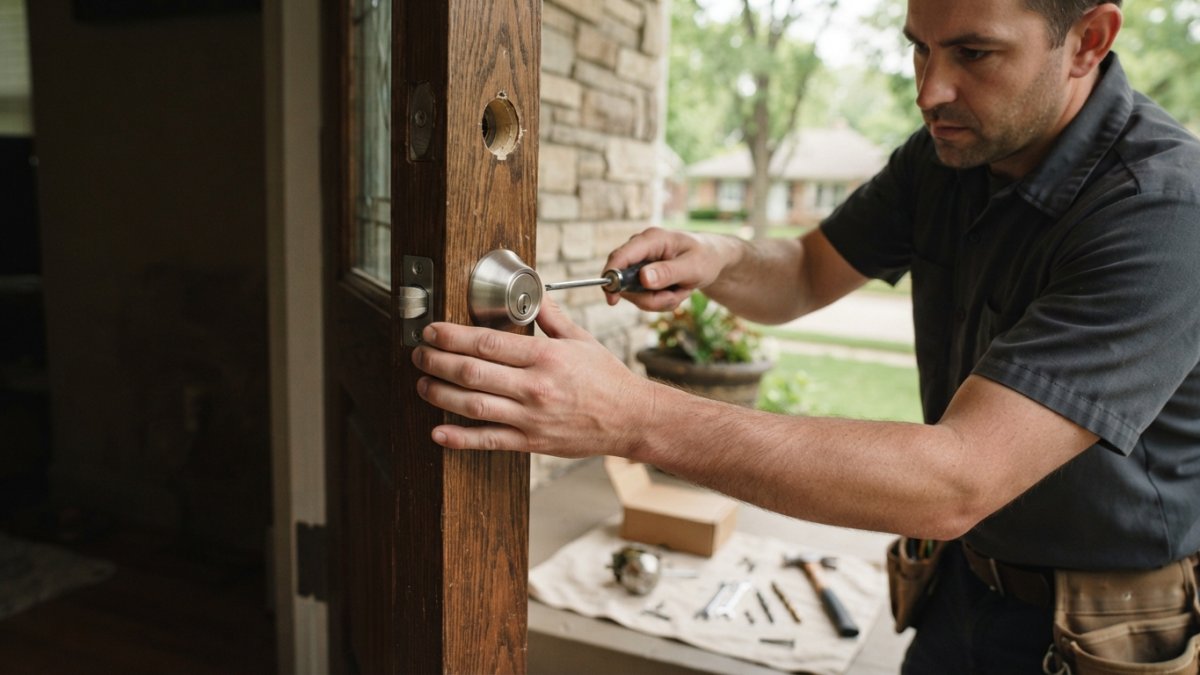
Avoiding hidden locksmith service fees starts with understanding the industry's pricing structure. The trade has almost no uniform pricing standards, so a phone quote and the invoice at your door can look like two different jobs. This guide covers the tactics that inflate final bills, the questions that expose them before a technician arrives, and what to do if you've already been overcharged.
The core problem is how the price gets set. A phone quote is a marketing number, not a binding one; the technician sets the real price after seeing the lock, the time of day, and your urgency.
How the Bait-and-Switch Pricing Tactic Works
The bait-and-switch works in three stages: a dispatcher quotes an unusually low number to win the call, the technician re-diagnoses the job as more complex than described, and the final invoice lands far above the original figure. The lowball quote is the hook, not the price.
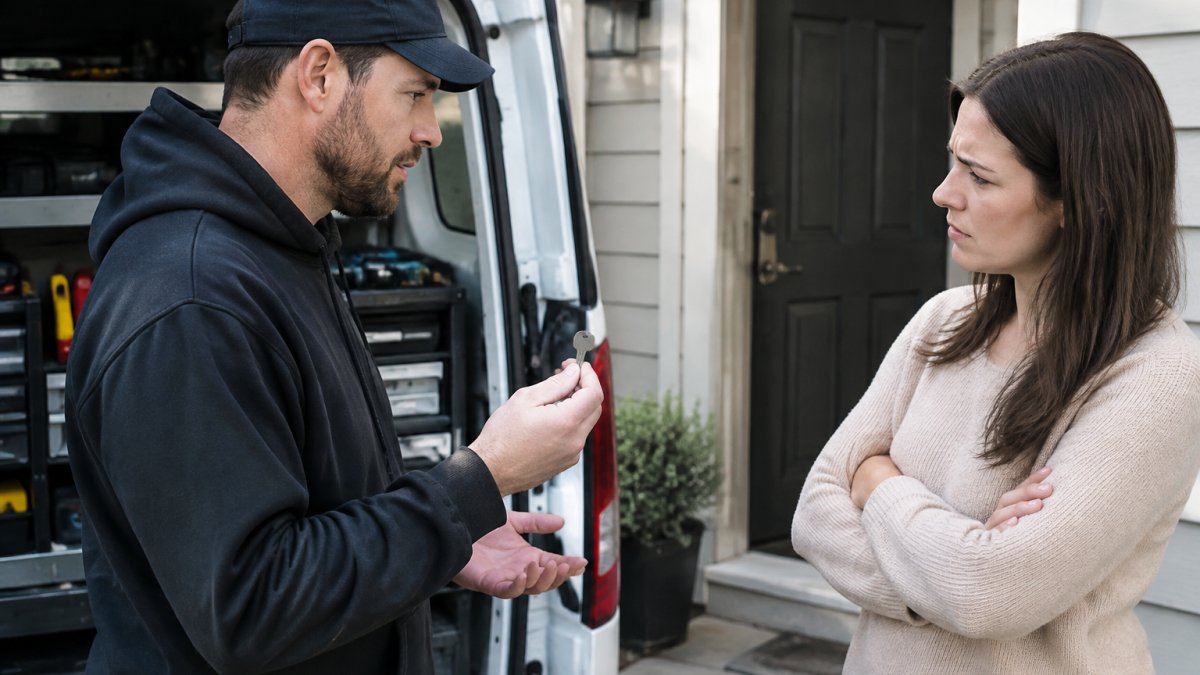
What makes this hard to fight is that the technician never technically lied. The quote was for a "standard lockout." Your lock, according to the person standing at your door, was not standard.
The Real Cost of a Lowball Quote
A quote well below every other provider in your area is a warning sign, not a bargain. Legitimate mobile locksmith work carries real costs, fuel, drive time, insurance, tools, labor, and a number that ignores them has to be recovered somewhere, usually on your invoice.
Understanding Standard Service Call Fees and Surcharges
A service call fee is the flat charge for a technician to travel to your location, separate from the cost of the work. It is the most legitimate line item on a locksmith invoice, and the one most often buried under vague labels.
A fair invoice separates these charges clearly. Watch for a dispatch fee and a service call fee listed as two separate line items for the same trip.
Mobile Service Charges and After-Hours Surcharges
Mobile service means the technician brings the shop to you, which carries a legitimate premium over a walk-in counter price. The problem is when that premium gets applied twice, once as a mobile service charge and again as a trip or fuel fee.
After-hours surcharges for nights, weekends, and holidays are standard. Ask for the exact percentage before you book, not after, and don't assume it applies only to labor, since some providers apply it to the entire invoice including parts.
Hardware Markup and Labor Costs Explained
Hardware markup is where invoices get hardest to read. A deadbolt or lock cylinder has a retail price you can look up, and a fair markup covers the technician's time sourcing and carrying it. An inflated markup turns a modest part into a major line item with no explanation.
Labor should be quoted as a flat rate for the job or an hourly rate with an estimated time window. If a provider will only quote hourly with no time estimate, you have no ceiling on the final bill.
Questions to Ask a Mobile Locksmith Before You Book
The right questions, asked before dispatch, separate a transparent provider from a risky one. Ask these every time, and write down the answers.
- What is the total out-the-door price for my specific situation, including the service call fee?
- Is there a mobile service charge, and is it separate from the service call fee?
- What is your after-hours or weekend surcharge, and does it apply to parts as well as labor?
- Will I receive a written estimate before any work begins?
- Are you bonded and insured, and can you provide proof?
- What is your local business license number?
Avoiding Bait and Switch Locksmith Tactics: Red Flags
Spotting a bait and switch comes down to patterns, not one isolated detail. The clearest red flags cluster around how the provider communicates price, how they identify themselves, and how they want to be paid.
Watch for these warning signs:
- A quote dramatically lower than every other provider you called
- No physical local address, only a call center or a shared answering service
- Refusal to give a written estimate before dispatch
- Pressure to approve work before you see a price
- A technician who arrives in an unmarked vehicle with no identification
- Cash-only payment demands or a sudden "the card reader is down" excuse
- A phone number with an out-of-state area code that routes to a dispatcher who cannot name your neighborhood
- A company name that changes slightly between the website, the invoice, and the vehicle
Online review manipulation is another signal. A page flooded with generic five-star reviews and no specifics about real jobs deserves suspicion. Look instead for reviews naming a street, a lock brand, or a specific problem, details a real customer would remember.
How to Verify a Technician's Identity and Credentials
Ask to see the technician's identification and license before work begins. A legitimate technician carries credentials and expects the request: a name, a company affiliation, and a license or registration number you can check.
Confirm a license by searching your state's licensing database, often run by the Department of Consumer Affairs, the Department of Business and Professional Regulation, or a dedicated locksmith licensing board, using the number on the technician's card. If it does not return a matching name and company, stop the job.
Verifying Bonding and Insurance (The Step Most Homeowners Skip)
A license proves the technician is allowed to work. A bond and an insurance policy prove there is money behind the work if something goes wrong. These are separate documents, and a provider can hold one without the other.
Ask for three things in writing before work begins:
- General liability insurance, a certificate of insurance (COI) naming the company, the policy number, the effective dates, and the carrier. Call the carrier's number on the certificate to confirm the policy is active. Certificates are easy to fake; a carrier confirmation is not.
- A surety bond, the bond amount and the bonding company. Bonds typically cover dishonest acts like theft or damage during a job, not shoddy workmanship.
- Workers' compensation coverage, if a technician is injured on your property and the company carries no workers' comp, your homeowner's policy can become the fallback. This is the single most overlooked exposure in the trade.
For high-value property, a rental portfolio, a commercial storefront, a home with a safe or smart-lock system, these documents matter more than the quoted price. A provider who cannot produce a COI within a business day is telling you something.
Verifying a technician's identity takes thirty seconds and prevents the most common fraud pattern: an unlicensed worker who collects cash and disappears with no traceable record. Verifying insurance takes one phone call and prevents the far more expensive pattern: damage or injury with no one to pay for it.
Cross-Checking the Business Before You Call
Before you dial, run three free checks: your state's licensing database, your secretary of state's business entity search (to confirm the company legally exists and who owns it), and the Better Business Bureau's complaint history. A legitimate local operator appears in all three; a fly-by-night operation often appears in none, or under a name that does not match the truck.
Locksmith Price Transparency: What a Fair Invoice Looks Like
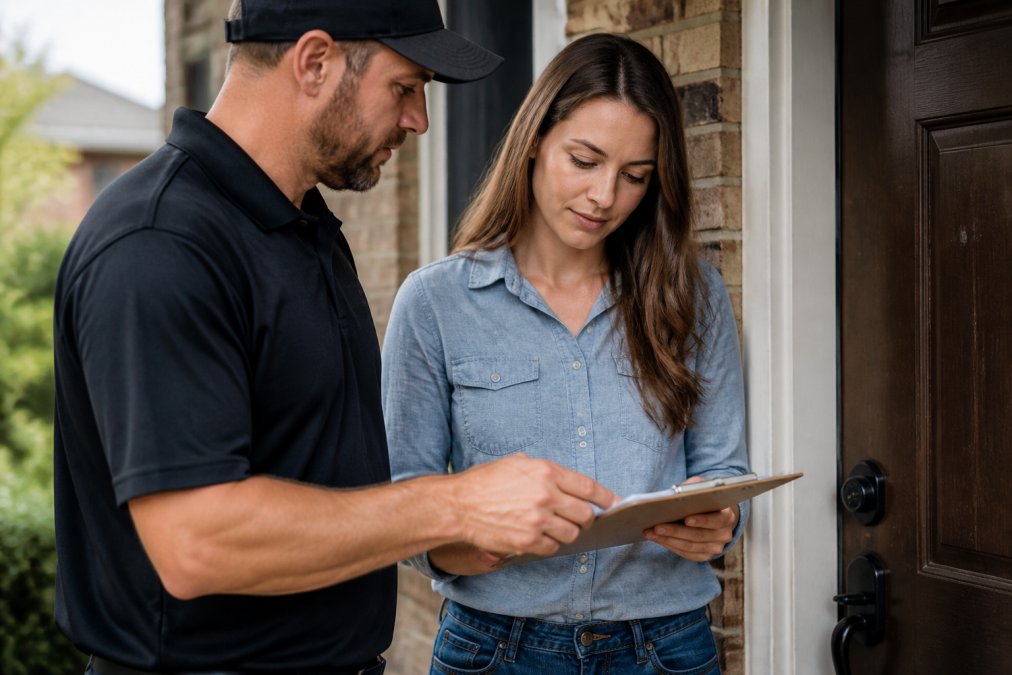
A transparent invoice itemizes every charge with a label you can understand. If you can't tell what a line item is for, that's the problem, not your reading comprehension.
| Line Item | What It Should Show | Red Flag Version |
|---|---|---|
| Service call fee | Flat trip charge, stated upfront | Split into two "dispatch" fees |
| Labor | Flat rate or hourly with time estimate | Open-ended hourly, no ceiling |
| Hardware | Part name and retail markup | Vague "parts and materials" |
| After-hours surcharge | Percentage, applied to labor only | Applied to the whole invoice |
| Mobile service charge | One clear fee for on-site service | Repeated as fuel or trip fee |
Getting a Written Estimate and Invoice Breakdown
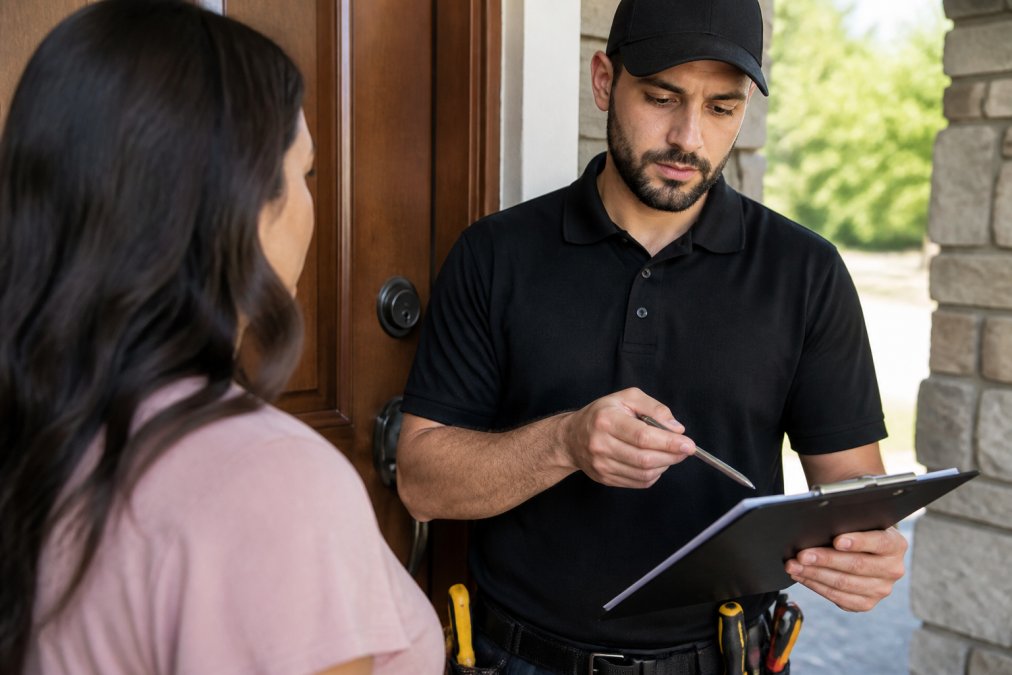
A written estimate protects you by creating a record of what was agreed before work started. Ask for it in writing, even by text or email, and keep it. If the final invoice exceeds the estimate, you have grounds to dispute the difference.
The invoice breakdown should match the estimate line for line. Any new charge that appears without your approval is a billing dispute, not a misunderstanding.
What to Do If You're Overcharged: Step-by-Step
If you've already been overcharged, act quickly and document everything. The digital payment trail is your strongest evidence, so avoid cash. This section covers how to build a dispute file, how a chargeback works, and how to escalate to a regulator who can act.
Build the Dispute File First
Before you call anyone, assemble the evidence in one folder, physical or digital. A complete file makes every later step faster and harder to dismiss.
- The original quote, in whatever form you received it (text, email, screenshot of a website, or a written note of the phone call with the time and the dispatcher's name)
- The final invoice, photographed in full, including any handwritten additions
- Photos of the completed work and the lock or hardware that was installed or replaced
- The technician's name, license number, and vehicle description if you have them
- A written timeline: when you called, when the technician arrived, when work started, when you were told the price, and when you paid
- All texts, emails, and call logs between you and the company
Pay by Card, Not Cash, and Know Why
Paying by credit card is the single most important decision you make in the moment. A card issuer must generally let you dispute a charge for services you did not receive as agreed, and the chargeback process gives you a formal mechanism cash never does. Debit cards offer weaker protections and pull money from your account while the dispute is pending.
If you must pay, pay the amount you agreed to and dispute the rest in writing. Do not pay the full inflated amount "to get it over with" and hope to recover it later, that weakens your position.
Filing the Chargeback
- Contact your card issuer within the dispute window (commonly 60 days from the statement date, though some networks allow longer).
- State the dispute in writing: the amount you agreed to, the amount charged, and the difference.
- Upload the dispute file. A chargeback with documentation is far more likely to succeed than one without.
- Keep the dispute reference number and follow up in writing if you do not hear back within the issuer's stated timeline.
Escalating to Regulators
A chargeback recovers your money. A regulatory complaint can lead to an investigation and disciplinary action. File both.
- State attorney general's consumer protection office, the primary venue for deceptive-pricing complaints. Most states accept complaints online.
- State locksmith licensing board, if the provider is licensed, a complaint here can trigger an investigation and disciplinary action. If the provider is unlicensed, report that fact; unlicensed operation is itself a violation in most states.
- Local consumer affairs agency, county or city consumer protection offices often act faster than state offices on local businesses.
- Federal Trade Commission, the FTC does not resolve individual disputes, but it collects complaints that drive enforcement actions against patterns of deception. Filing takes minutes and adds your case to the record.
FTC consumer guidance on disputing charges and reporting fraud
For prepayment disputes, the Consumer Financial Protection Bureau complaint process lets you submit a formal complaint against a business. If the provider is unlicensed, check your state's licensing board through the USA.gov state consumer protection directory to report them.
Leaving a Review That Actually Helps
A factual review is a public record. Name the specific charges, the date, and the discrepancy between quote and invoice. Avoid accusations you cannot prove, "quoted $X, charged $Y, refused to itemize" is more useful than "scam." Post it where the company advertises, and update it if the dispute resolves.
Do not sign anything the technician presents at the door that waives your right to dispute the charge. If a signature is required for the work order, write "signed under protest, price disputed" next to your name and photograph the page before you hand it back.
Frequently Asked Questions
What is the average call out fee for a locksmith?
A service call fee, sometimes called a dispatch fee, covers the technician's travel to your location. It varies by provider, distance, and time of day. Some locksmiths quote a low fee to get you on the phone, then add mobile service charges or after-hours surcharges once they arrive. Always ask for the total out-the-door price before booking, and confirm whether the fee includes the first 15 to 30 minutes of labor.
How can I tell if a locksmith is legitimate before they arrive?
Ask for their local business license number, proof of insurance, and the name of the technician who will arrive. A legitimate locksmith will provide a written estimate and a clear invoice breakdown. Check that the company is bonded and insured, and confirm the technician carries photo identification. If a provider refuses to give a price upfront or pressures you to pay cash only, treat that as a red flag.
Can you dispute a locksmith charge if you think you were overcharged?
Yes. Start by requesting an itemized invoice that lists the service call fee, labor costs, hardware markup, and any surcharges. If the total does not match the written estimate, ask for a correction in writing. You can dispute the charge with your credit card issuer or bank. Keep all texts, emails, and receipts as documentation.
What should I ask a mobile locksmith about pricing before they come out?
Ask for the total out-the-door price, not just the service call fee. Confirm whether there is a mobile service charge, an after-hours surcharge, or a minimum labor charge. Request a written estimate by text or email. Ask what happens if the job takes longer than expected and whether the price can change on site. A transparent provider will answer all of these without hesitation.
A lockout is stressful enough without a billing fight on top of it. Blackshirt Lock & Key removes that risk with fully mobile service that comes to you, a fully insured team, and straightforward, honest pricing with no hidden fees. We handle emergency lockouts, on-site key cutting and programming, quick re-keying, and professional residential and commercial lock installation, all with pricing you can see before we start. Call now to get a clear out-the-door price and skip the surprise invoice.