 How-to
Are Replacement Car Keys Covered by Warranty? What to Check
Last Updated: November 6, 2026
Quick Summary
Replacement car keys are usually not covered by a standard factory warranty, which covers manufacturing defects rather than lost, stolen, or broken keys. Coverage for those losses typically comes from a separate key replacement protection plan, and its benefit limits and exclusions should be checked before you buy a new key.
- Factory warranties generally cover manufacturing defects, not lost, stolen, or damaged keys.
- Extended warranty key coverage varies by plan, and many contracts exclude it entirely.
- Key replacement protection usually has an annual limit, a per-claim cap, or a deductible.
- Check whether your plan requires pre-authorization and authorized programming before paying anyone.
- Call the dealer with your VIN to find out which coverage is active on your vehicle.
Table of Contents
- Why Replacement Car Keys Are Often Not Covered by Warranty
- Factory Warranty vs. Extended Warranty vs. Key Replacement Protection
- Toyota Key Replacement Protection: What It Covers
- Lost, Damaged, or Failing Key? A Decision Tree
- Car Key Fob Replacement Cost and Coverage Limits
- Key Fob Replacement and Car Key Programming Explained
- Verify Your Coverage and Book Your Next Step in Council Bluffs
- Frequently Asked Questions
Why Replacement Car Keys Are Often Not Covered by Warranty
Most people assume a new car's warranty covers its keys. In many cases, it doesn't. Factory warranties are built to cover defects in how the vehicle was made, not the cost of losing or breaking a key, so replacement car keys are often out of reach. That gap catches a lot of drivers off guard, usually at the worst possible moment.
A standard factory warranty typically covers mechanical and electrical failures that stem from manufacturing defects. A key fob that stops working because of a faulty internal component might fall under that umbrella. A key that gets lost, stolen, cracked, or soaked is a different story, and the warranty usually won't touch it.
Customers often call expecting coverage, then learn the loss was an accident, not a defect. Knowing the difference before you need a replacement saves time and money.
Factory Warranty vs. Extended Warranty vs. Key Replacement Protection
These three terms get mixed up constantly, and the mix-up is expensive because each one pays for a different event. The question is not just whether you have coverage, but which document governs the failure and what it excludes.
- Factory warranty (new-vehicle limited warranty): Covers defects in materials and workmanship for a set time or mileage. A key fob or immobilizer that fails because of a manufacturing defect can fall under the bumper-to-bumper portion while it is active. It generally does not cover lost, stolen, or physically damaged keys, and it does not cover the cost of a key you dropped in a lake.
- Extended warranty (vehicle service contract): A separately sold contract that picks up repairs after the factory warranty ends. Key and fob coverage varies widely by plan and by administrator. Some contracts list key replacement as an optional rider; many exclude it entirely. The contract, not the dealer's sales pitch, controls.
- Key replacement protection: A standalone plan built specifically for lost, stolen, or damaged keys. It usually has an annual benefit limit, a per-claim cap, and sometimes a deductible. It is the product most likely to pay when the key is simply gone.
A practical way to tell them apart is to ask what event triggers payment. A defect triggers the factory warranty. A mechanical breakdown after the factory term triggers a service contract. A loss, theft, or breakage triggers key replacement protection. If the event does not match the trigger, the plan will deny the claim no matter how good the paperwork looks.
Read the exclusions before you assume anything. The warranty booklet or service contract lists what is not covered, and those exclusions decide your claim. Common exclusions include keys that were lost rather than defective, damage from misuse or water exposure, aftermarket keys, and programming performed outside an authorized facility. Eligibility conditions matter too: some plans require the vehicle to be within a certain age or mileage, some require you to be the original owner, and some require pre-authorization before any work is done.
Watch out: a dealer telling you "your warranty should cover it" is not a coverage determination. Ask for the specific section of the contract that applies, and get the answer in writing before you authorize a replacement.
If you cannot find your paperwork, call the dealer with your vehicle identification number (VIN) and ask which contract is active on the vehicle and whether key replacement is a listed benefit. That one call tells you which of the three routes above you are actually on.
The three coverage types pay for different events, so check which trigger applies before assuming you are covered.
| Coverage type | Typically pays for | Key limitation |
|---|---|---|
| Factory warranty | Manufacturing defects | Usually excludes lost, stolen, or damaged keys |
| Extended warranty | Repairs after factory term ends | Key coverage varies; often excluded |
| Key replacement protection | Lost, stolen, or damaged keys | Annual limit, per-claim cap, or deductible |
Toyota Key Replacement Protection: What It Covers
Toyota offers key replacement protection as a separate product, and it works differently from the factory warranty. If you need a replacement now, mobile car key replacement and programming in Omaha is available. Coverage generally applies to lost, stolen, or destroyed keys rather than manufacturing defects.
Check these points on any Toyota plan:
- Eligibility: Confirm the vehicle is a covered model and year.
- Covered events: Look for lost, stolen, and damaged keys.
- Benefit limit: Find the annual maximum and whether it applies per key or per claim.
- Claim process: Note whether you need proof of ownership and an authorized repair.
If you can't find your plan paperwork, call the dealer with your vehicle identification number before you pay for a replacement.
Lost, Damaged, or Failing Key? A Decision Tree
The right next step depends on what happened to the key. Use this quick guide:
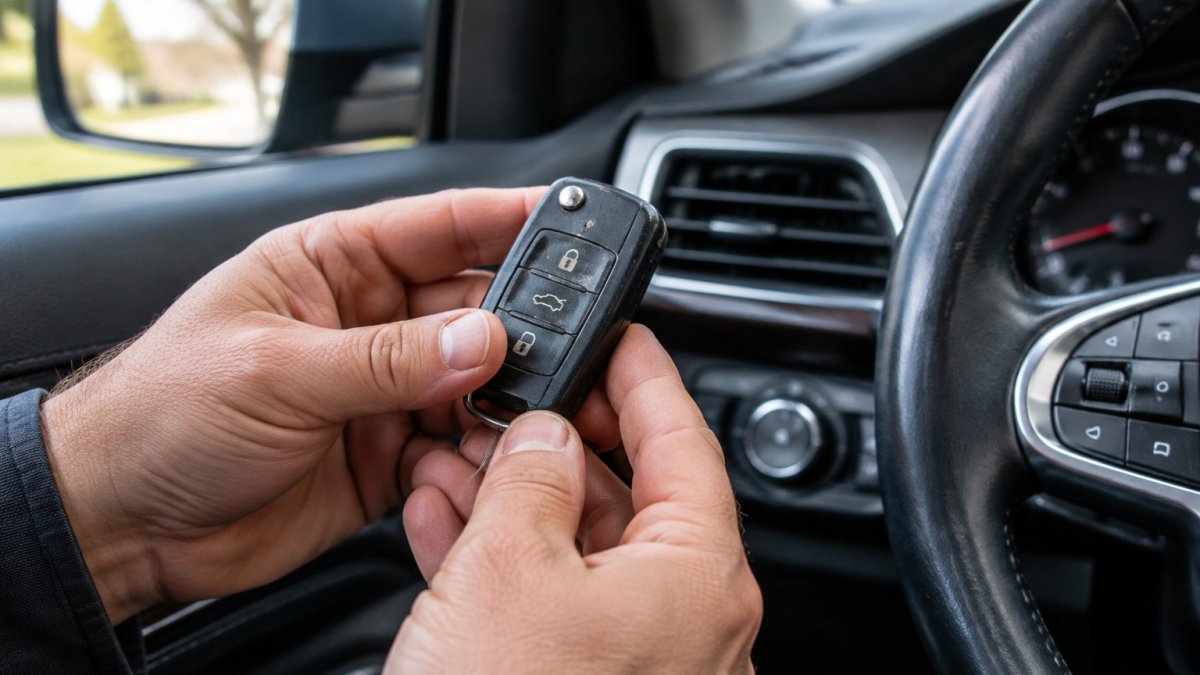
- Is the key lost or stolen? Check for a separate replacement plan first. Warranty coverage rarely applies.
- Is the key damaged (cracked, broken, water-soaked)? Check whether accidental damage is covered. Many plans exclude it.
- Is the key failing while the car is still under warranty? A malfunction from a defect may be covered. Document the failure and contact the dealer.
- Are you locked out right now? Don't wait on a claim. A mobile locksmith can often get you back in and cut a replacement on the spot. Read the emergency car lockout steps for what to do right now.
Getting the cause in writing helps your claim, whichever route you take.
Car Key Fob Replacement Cost and Coverage Limits
Most coverage summaries stop at "costs vary." The useful question is whether your plan's benefit limit will actually clear the bill for your specific key, and that requires comparing the cap against a current quote before you file.
Replacement cost depends on four things: the vehicle make and model, the type of key (traditional blade, transponder, smart key, or proximity fob), whether programming is required, and who does the work. Dealer prices are often the highest because they bundle the key, cutting, and programming at manufacturer rates. A mobile locksmith may be a convenient option for transponder and smart keys, especially when the vehicle is drivable. Insurance is a third route, but filing a claim may trigger a deductible that eats most of the savings on a single key.
Coverage limits work the same way. A key replacement plan might pay up to a fixed annual amount, and that cap can fall short of the full cost of a smart key with programming. Some plans cap per claim rather than per year, some cap per key, and some apply a deductible before the benefit pays. Do the arithmetic in this order:
- Get a written quote for your vehicle that separates the key, the cutting, and the programming.
- Find the plan's benefit limit and whether it is annual, per claim, or per key.
- Subtract any deductible from the benefit limit.
- Compare the net benefit to the quote. If the net benefit is lower, the plan will not cover the full replacement even if the claim is approved.
Watch out: a plan that advertises a generous annual maximum may still deny a claim because the replacement was not pre-authorized or because programming was done outside an approved facility. Confirm both conditions before you pay anyone.
Pricing depends on the vehicle, the key type, and the service, so ask for a quote for your specific car rather than relying on a general range. A locksmith who quotes a transponder key and programming separately is easier to compare against a plan's benefit limit than one who quotes a single bundled price.
Key Fob Replacement and Car Key Programming Explained
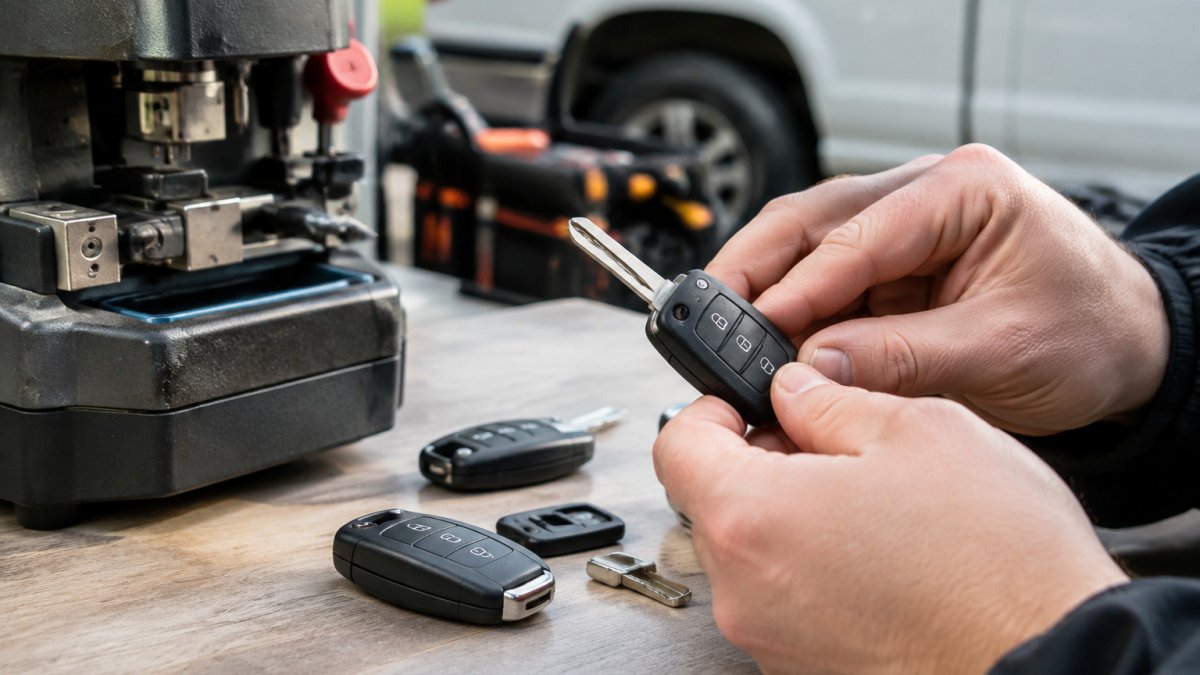
A replacement key often needs programming before it will start the car. This car key replacement guide covers spare keys, transponder keys, and key fob programming in detail. Transponder keys and key fobs send a signal to the immobilizer, and the vehicle only starts when that signal matches.
Blackshirt Lock & Key offers mobile car key replacement and programming in Council Bluffs, IA. Programming requirements differ by make and model, so confirm your vehicle is supported before the visit.
Verify Your Coverage and Book Your Next Step in Council Bluffs
Before you pay for a replacement, do three things:
- Pull out your warranty booklet and any key replacement plan.
- Call the dealer or insurer and ask in writing whether the loss is covered.
- Get a quote for a mobile replacement so you can compare costs.
If your key is lost, damaged, or not working and you're in Council Bluffs, Blackshirt Lock & Key can help you get back on the road. You can book local car key replacement and programming in Council Bluffs directly. Call us now for fast, fully insured service with straightforward, honest pricing.
Frequently Asked Questions
Does car warranty cover key fob replacement?
Usually not. A factory bumper-to-bumper warranty generally covers manufacturing defects, meaning a fob that fails electronically without outside cause. Loss, theft, water damage, and normal wear are typically excluded. Check your warranty booklet for the exclusions section, and if the fob stopped working for a covered defect, the dealer or authorized repair shop should replace it at no charge.
Will my old key fob still work if I get a new one?
Often yes, but it depends on the vehicle. Many replacement fobs must be programmed to the car's immobilizer and the vehicle's identification system before they work. Programming can usually add a new fob without erasing old ones, though some models limit how many fobs can be stored. Ask the locksmith or dealer whether your old fob will remain active before you pay, since a lost fob that still works can be a security risk.
Does Toyota key replacement protection cover lost keys?
Key replacement protection plans, when purchased, are separate from the factory warranty and are typically designed for lost, stolen, or damaged keys. Coverage terms vary by plan, so read the plan contract. Confirm whether the plan covers the specific key type you own, whether you need proof of ownership, and how claims are reimbursed before you need the benefit.
What should I check in my warranty before replacing a car key?
Start with your warranty booklet and look for the coverage period, the list of covered components, and the exclusions. Check whether the key or fob is listed, whether the failure is a manufacturing defect, and whether a separate key protection plan exists. Call the dealer or the plan administrator to confirm coverage in writing before paying, and keep your receipts and any repair records.