 Comparison
Mobile Key Cutting Services in Omaha: What to Know
Table of Contents
- How Mobile Key Cutting Services in Omaha Work
- Mobile Car Key Replacement Cost vs. the Dealership
- Emergency Lockout Services: Response Time and What Happens Next
- Which Keys Can a Mobile Locksmith Cut?
- How to Choose a Reliable Locksmith in Omaha
- Get Your Keys Sorted On-Site Today
- Frequently Asked Questions
Last Updated: September 9, 2026
How Mobile Key Cutting Services in Omaha Work
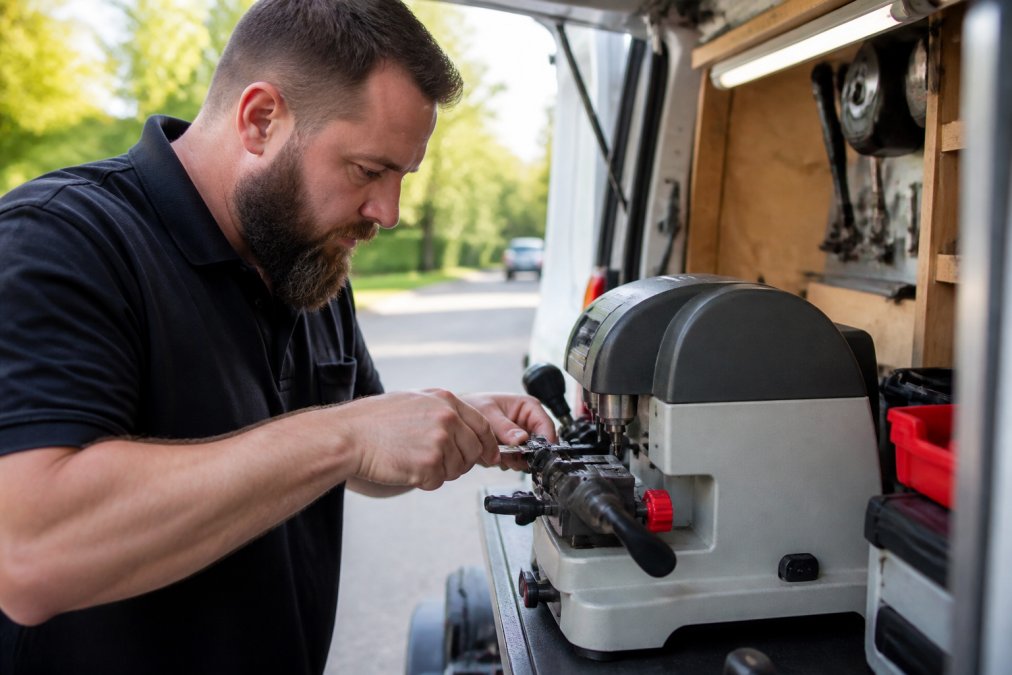
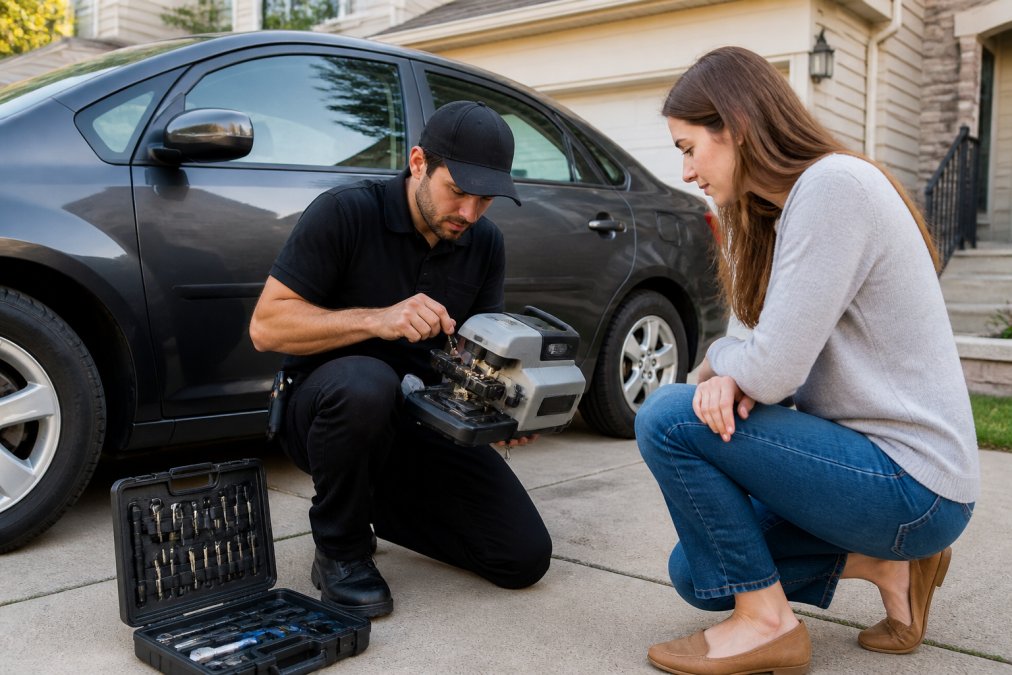
Mobile key cutting services in Omaha bring the locksmith shop directly to your driveway, parking lot, or office curb. Instead of loading a broken key or a dead fob into your car and driving across town, a technician arrives in a fully equipped vehicle and handles the job on-site. At Blackshirt Lock & Key, our mobile units carry professional key cutting machines, programming hardware, and a stock of common blanks so most jobs are finished in a single visit.
The process is straightforward. You call, describe the key or lock type, and the dispatcher confirms the technician can handle it. The tech arrives, verifies your identity and ownership of the vehicle or property, then cuts and programs the new key on the spot. For a standard car key, the entire visit often takes less time than the drive to a dealership would have taken.
What to Expect When the Tech Arrives
Expect a short verification step first. Because locksmiths deal with security credentials, legitimate providers confirm you own the car or home before duplicating a key. This protects you as much as it protects the technician. After verification, the tech inspects the lock or ignition, selects the correct key blank, and uses a key cutting machine to match the original. For chip keys and fobs, programming follows the cutting step.
A common mistake is assuming every locksmith carries the same equipment. High-security laser-cut keys and smart key systems require specialized machinery that not every mobile unit has. Asking about this upfront, before you book, saves a wasted trip.
Mobile Car Key Replacement Cost vs. the Dealership
The biggest advantage of mobile car key replacement cost over a dealership visit is the markup you avoid. Dealerships often charge a premium for the same key cutting and programming that a mobile locksmith performs with identical OEM blanks. Because a mobile service has lower overhead, no showroom, and no service bay, those savings typically pass through to you.
Pricing depends on the key type. A basic metal key costs less to duplicate than a transponder key or a smart key with a proximity fob, because the latter require electronic programming. Laser-cut keys and high-security blanks also carry higher costs due to the specialized key cutting machine and blank materials involved.
The trade-off is convenience versus control. At a dealership, you know the technician is factory-trained, but you trade that certainty for scheduling delays and higher labor rates. With a mobile locksmith, the work comes to you, and the technician's training and equipment determine the quality. Verifying that the provider is licensed and insured closes that gap.
Emergency Lockout Services: Response Time and What Happens Next
Emergency lockout services exist for one reason: being locked out is rarely convenient, and it is often stressful. Whether you are locked out of your car in a parking lot at midnight or your home after a late shift, the priority is restoring access quickly and safely. Most reputable mobile locksmiths in Omaha aim for a fast response time depending on traffic and your location.
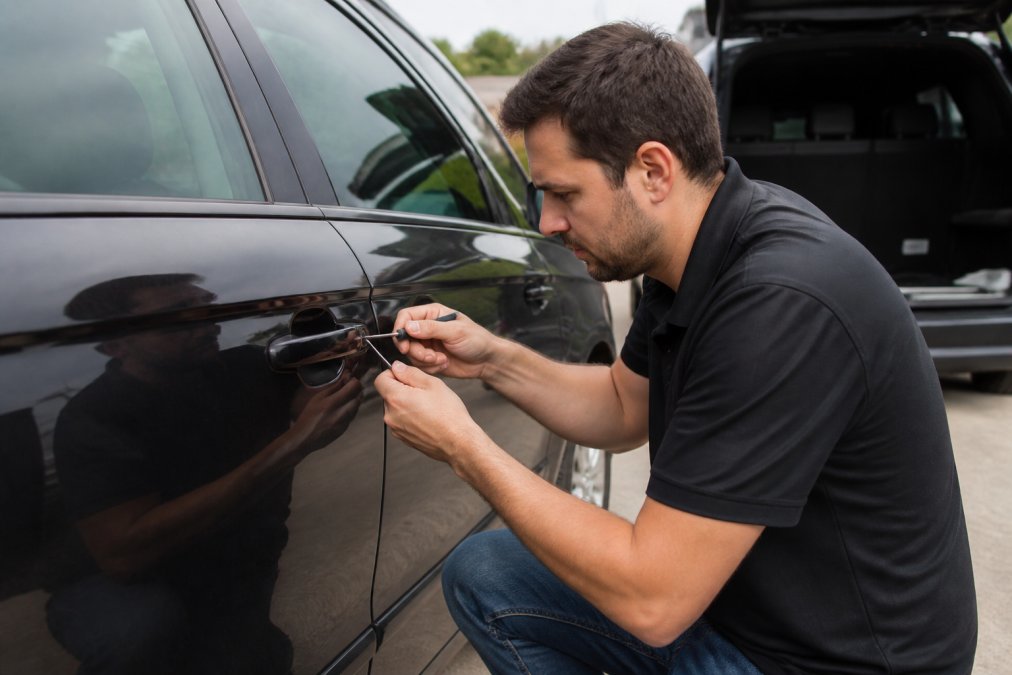
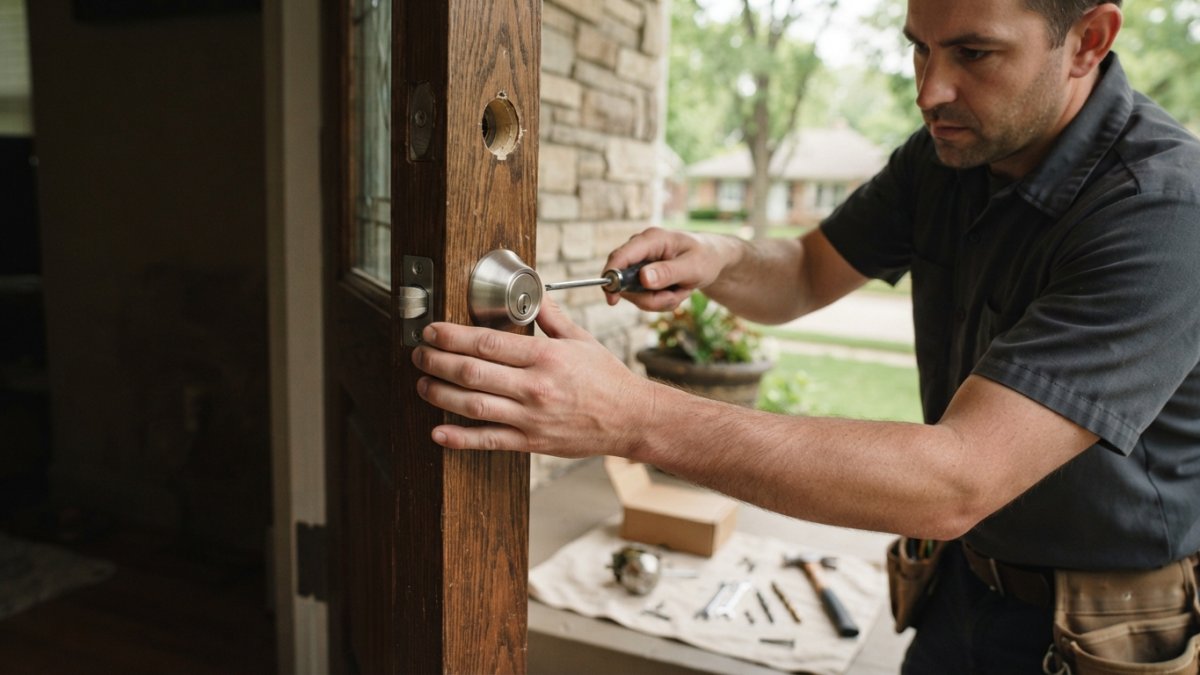
When the tech arrives, the approach depends on the lock. For vehicles, the technician uses specialized tools to manipulate the locking mechanism without damaging the door or window. For homes, the method is either picking the lock or, if the lock is damaged or high-security, drilling and replacing it with a new cylinder.
What happens next matters. A professional will not just open the door and leave. They will check that the lock still functions correctly and advise you if the lock is worn or compromised. If the lock must be drilled, the technician should carry replacement hardware and install it before leaving, so you are not left with an open hole in your door.
Which Keys Can a Mobile Locksmith Cut?
A fully equipped mobile locksmith can cut nearly every key a modern home or vehicle uses. The limitation is rarely the technician's skill; it is whether the mobile unit carries the right key blank and programming hardware for your specific application. Asking this question before booking prevents disappointment.
Vehicle-Specific Compatibility: Not All Keys Are Created Equal
The most common point of confusion is assuming a "car key" is a single product. In practice, the key type varies significantly by vehicle make, model, and model year. Understanding which category your vehicle falls into helps you ask the right questions and set accurate expectations for cost and turnaround.
| Vehicle Make | Common Key Type (Recent Models) | Programming Required? | Typical Mobile Service Notes |
|---|---|---|---|
| Ford (2015+) | Intelligent Access (proximity fob with integrated metal backup key) | Yes - dealer-level software | Requires specialized diagnostic tool; most mobile units carry this |
| Toyota (2013+) | Transponder chip key or smart key with fob | Yes - chip and fob pairing | Standard transponder is routine; smart key requires proximity programming |
| Honda (2016+) | Transponder key with remote head (flip key) | Yes - chip and remote pairing | High-volume job; most mobile techs stock these blanks |
| Chevrolet/GMC (2018+) | Laser-cut key with separate fob or integrated smart key | Yes - immobilizer and fob | Laser-cut blade requires precision milling machine |
| BMW/Mercedes (2010+) | High-security laser-cut key with rolling-code transponder | Yes - dealer-level security access | Independent locksmiths often need special authorization codes; dealership may be the only option for full replacement |
| Older Domestic Models (pre-2000) | Standard metal key (no chip) | No | Simplest job; often completed in under 15 minutes |
This table is not exhaustive, but it illustrates the core point: the year, make, and model of your vehicle determines whether the job is a simple blade cut or a complex electronic pairing. A mobile locksmith that advertises "all keys" should be able to confirm your specific vehicle type over the phone before dispatching a tech.
Transponder Keys, Fobs, and High-Security Blanks
Transponder keys contain a small chip that communicates with the vehicle's immobilizer system. Cutting the metal blade is only half the job; the chip must be programmed to match your car's computer. Key fob programming follows the same principle, pairing the remote entry system with the vehicle. High-security laser-cut keys require a key cutting machine capable of the precision milling these blanks demand.
For homes and businesses, the range is broader. Standard pin-tumbler keys, deadbolt keys, and master key systems are routine. High-security locks, such as those with restricted keyways, require authorization from the lock manufacturer before duplication (nist.gov). A reputable locksmith will verify that authorization rather than risk producing an unauthorized key.
The National Institute of Standards and Technology provides guidance on high-security lock standards and key control notes that restricted keyways exist specifically to prevent unauthorized duplication, so expect a legitimate provider to ask for proof of ownership or authorization.
How to Choose a Reliable Locksmith in Omaha
How to choose a reliable locksmith comes down to verification, not promises. The locksmith industry has more than its share of unlicensed operators, and the consequences of hiring one range from damaged locks to compromised security. A few checks separate a professional from a gamble.
First, confirm the business is licensed and insured. Insurance protects you if the technician damages your vehicle or property during the job. Licensing demonstrates that the business meets local requirements. Second, ask about response time and emergency availability. A provider that only answers during business hours cannot help with a midnight lockout.
Third, verify their equipment. Ask directly whether they handle transponder keys, smart key replacement, and laser-cut keys. A provider that hesitates or deflects may not carry the specialized hardware. Fourth, check their physical presence. A legitimate locksmith has a verifiable business address, not just a cell phone number. The Better Business Bureau's guide to hiring locksmiths recommends confirming the business has a local footprint and a track record of resolved complaints.
Security Verification Protocols: How a Locksmith Confirms Ownership
One aspect of locksmithing that rarely gets discussed but matters enormously is the verification step. A legitimate mobile locksmith is not just cutting metal; they are granting access to a vehicle or property. That responsibility requires a clear protocol to confirm you are the owner or an authorized party. Understanding this process before you book builds trust and protects you from a different risk: someone else obtaining a key to your car or home.
For vehicles, the standard verification process typically includes one or more of the following:
- Proof of registration or title - The most definitive document. A technician may ask to see the vehicle registration matching your name and the VIN.
- Photo ID matching the registration - A driver's license or state ID that matches the name on the registration.
- Proof of insurance - Sometimes accepted as secondary evidence, especially if the registration is inside the locked vehicle.
- For a spare key made while the original is present - The technician will often compare the original key to the VIN and may still ask for ID to confirm you are the registered owner.
For residential properties, the protocol is similar but adapted to the context:
- Photo ID matching the utility bill or lease - Confirms you are the resident or an authorized occupant.
- Presence of mail or personal effects - A technician may ask you to point out identifying items inside the home if you are locked out and have no documents on you.
- Neighbor or property manager confirmation - In multi-unit buildings, a manager may need to vouch for you if you cannot produce documentation.
A reputable provider will explain this process when you call, not surprise you at the door. If a dispatcher says "no questions asked" or "we never ask for ID," that is a red flag, not a convenience. It means the same service would cut a key for anyone claiming to own your car.
| Checklist Item | Why It Matters | Red Flag |
|---|---|---|
| Licensed and insured | Protects you from damage and liability | Hesitates to provide proof |
| 24/7 availability | Lockouts happen after hours | No emergency dispatch |
| Mobile equipment for chip keys | Dealership-level programming on-site | Only cuts basic metal keys |
| Transparent upfront pricing | No surprise fees when the job is done | Vague over-the-phone quotes |
| Verifiable local address | Legitimate business, not a fly-by-night | Cell phone number only |
| Ownership verification protocol | Confirms you are the rightful owner | "No questions asked" policy |
Get Your Keys Sorted On-Site Today
The pattern is clear: mobile key cutting offers convenience, and a vetted locksmith provides security. The remaining step is simply making the call. Whether you need a spare car key, a rekeyed home lock, or a new transponder key programmed, the work can happen in your driveway or parking lot.
Blackshirt Lock & Key operates fully mobile across Omaha and Council Bluffs, carrying the key cutting and programming equipment needed for most vehicles and properties. Every technician is fully insured, and pricing is quoted upfront with no hidden fees. For emergency lockouts, key cutting, or lock rekeying, the response is fast and the work is done on-site.
Frequently Asked Questions
How long does a mobile locksmith take to arrive in Omaha?
For emergency lockout services, most mobile locksmiths in Omaha target a 20- to 40-minute arrival window depending on traffic and your exact location. When you call, ask for a specific estimated arrival time before you agree to the service. A reliable provider gives you a straight answer on the phone, not a vague promise. Confirming this up front helps you avoid the common complaint of waiting hours for help that never shows.
Can a mobile locksmith cut a key without the original?
Yes. If you have lost your only car key, a mobile locksmith can cut a new one using the vehicle's lock or ignition. The tech removes the lock cylinder, reads the code, and cuts a new blank to match. For newer cars with transponder keys or proximity fobs, the locksmith also needs to program the chip to your vehicle. This process happens entirely on-site, so you do not need to tow the car to a shop.
Do mobile locksmiths charge more than a shop with a storefront?
Mobile service usually includes a trip fee. Dealerships charge higher labor rates and may require towing your car to their service bay. A mobile locksmith brings the cutting machine and programming tools to you. Ask for the full price, including the trip fee, before work starts so there are no surprises.
Choosing a locksmith does not have to mean choosing between convenience and trust. A mobile provider that is licensed, insured, and equipped for modern keys delivers both. Call Blackshirt Lock & Key now and get your keys sorted on-site today, with straightforward pricing and a fast response to your Omaha or Council Bluffs location.